

When we envision NASA, images of heroic astronauts orbiting Earth, powerful rockets launching into the cosmos, and rovers traversing alien landscapes often come to mind. These iconic moments of human endeavor in space captivate our imagination, fueling dreams of discovery and innovation. Yet, behind every groundbreaking mission, every successful launch, and every piece of invaluable scientific data, there exists an army of unsung heroes whose meticulous work and specialized skills are absolutely indispensable: the technicians. As an AI specialist with a deep passion for technology and its profound impact, I, André Lacerda, am constantly fascinated by the intricate ballet of human expertise and advanced machinery that makes the impossible possible.
NASA, a global beacon of exploration and scientific advancement, understands that its continued leadership hinges not just on brilliant scientists and visionary engineers, but also on a highly skilled and dedicated workforce across a multitude of technical disciplines. These are the individuals who turn blueprints into reality, ensure systems operate flawlessly, and maintain the complex infrastructure that supports humanity’s reach for the stars. From the precision manufacturing of spacecraft components to the meticulous testing of life-support systems, Technical Careers at NASA form the bedrock upon which all space exploration is built. Without these hands-on experts, the grandeur of spaceflight would remain a mere theoretical concept. This article delves into the profound significance of these roles, exploring their diversity, their evolution, and NASA’s commitment to nurturing the next generation of technical talent.
Technical Careers at NASA: The Unsung Architects of Exploration
The success of NASA’s ambitious missions is a testament to the synergistic efforts of diverse professionals. While the public often focuses on the astronauts or the lead scientists, it’s the technicians who are meticulously crafting the parts, assembling the systems, and running the diagnostics that ensure mission readiness. Their roles are incredibly diverse and demand an extraordinary level of precision, problem-solving acumen, and hands-on expertise. Consider, for example, the Space Launch System (SLS) rocket, the most powerful rocket ever built, designed to transport the Orion spacecraft and astronauts to the Moon as part of the Artemis program. Every single component, from the massive booster segments to the intricate avionics systems, is assembled, tested, and maintained by a cadre of highly trained technicians. Welders with specialized certifications join critical structures, machinists craft components with tolerances measured in thousandths of an inch, and electrical technicians meticulously wire complex circuits that control everything from engine ignition to data transmission.
These specialized technical positions are not confined to the factory floor. They extend to vast test facilities where components are subjected to extreme conditions mimicking space environments – vacuum chambers, thermal cycling units, and vibration tables. Here, aerospace technicians monitor critical parameters, analyze data, and troubleshoot any anomalies, ensuring that every piece of hardware can withstand the rigors of launch and space. In cleanrooms, where even a speck of dust can compromise sensitive instruments, technicians in full bunny suits meticulously assemble and calibrate telescopes like the James Webb Space Telescope. Their work involves aligning mirrors with incredible precision, integrating cryogenic cooling systems, and conducting optical tests that demand unwavering focus and a deep understanding of physics and engineering principles.
Furthermore, consider the operational aspect. Once missions are underway, whether it’s a deep-space probe or a rover on Mars, technicians are vital in ground support. They manage the vast data streams, maintain the powerful antennas and communication networks, and operate the sophisticated control systems that keep our assets functional millions of miles away. Robotics technicians, for instance, are crucial for the development and maintenance of robotic arms on the International Space Station or the intricate mechanisms of Mars rovers like Perseverance. They program, repair, and upgrade these complex machines, allowing scientists to conduct experiments and explore distant worlds without leaving Earth. The breadth of technical careers at NASA is truly astounding, encompassing everything from materials science and metallurgy to hydraulics, pneumatics, cybersecurity, and even environmental control systems within astronaut training facilities.
Bridging the Skills Gap: NASA’s Commitment to Vocational Education
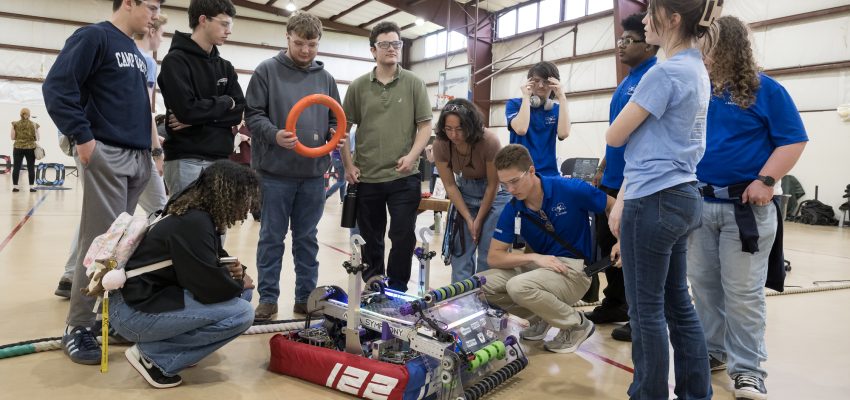
Recognizing the foundational importance of these skilled roles, NASA actively engages in initiatives to inspire and cultivate the next generation of technicians. Events like NASA’s Career Technical Education (CTE) Day, which the original content alluded to, are crucial in highlighting the myriad of rewarding vocational professions available within the agency. These days serve as powerful platforms to connect students, educators, and industry professionals, showcasing the tangible impact of technical skills on real-world space exploration. They aim to dismantle outdated perceptions that vocational training is a lesser path, instead emphasizing its critical role in advanced scientific and engineering endeavors.
The aerospace industry, much like many high-tech sectors, faces a persistent skills gap. There’s a growing demand for individuals with practical, hands-on expertise in areas such as advanced manufacturing, industrial maintenance, precision machining, and data systems management. NASA actively works to bridge this gap by collaborating with educational institutions, particularly community colleges and technical schools, which are often at the forefront of providing relevant, job-ready training. These partnerships can lead to specialized curricula, internship opportunities, and mentorship programs that directly pipeline talent into NASA’s workforce. For instance, many NASA centers offer apprenticeships where aspiring technicians learn directly from experienced professionals, gaining invaluable on-the-job training alongside theoretical knowledge.
Inspiring young minds to pursue these vital paths is paramount. By demonstrating the direct link between a welding certificate or an electronics degree and contributing to missions like sending humans back to the Moon or discovering exoplanets, NASA helps students envision a tangible, exciting future. Educational outreach programs highlight not just the glamour of space but also the rigorous, detail-oriented work performed by thousands of technicians. They emphasize that while astronauts are the face of exploration, the hands that build, test, and maintain the vessels they ride in are equally critical. These efforts ensure a continuous supply of highly capable individuals ready to tackle the ever-evolving challenges of space exploration and maintain America’s leadership in science and technology.
The Future is Now: AI, Robotics, and the Evolving Landscape of NASA’s Technical Roles
As an AI specialist, one of the most exciting aspects of discussing Technical Careers at NASA is contemplating how emerging technologies, particularly artificial intelligence and advanced robotics, are reshaping these roles. Far from rendering human technicians obsolete, AI is augmenting their capabilities, creating new specialties, and demanding an evolved skill set. For example, predictive maintenance algorithms powered by AI can analyze sensor data from complex machinery – rockets, test stands, ground support equipment – to anticipate failures before they occur. This shifts the technician’s role from reactive repair to proactive intervention, requiring skills in data interpretation, machine learning diagnostics, and advanced troubleshooting.
Robotics, too, is transforming the workplace. While robots can perform repetitive or hazardous tasks, human technicians are still essential for their programming, maintenance, and oversight. Robotics technicians at NASA might be involved in developing and calibrating robotic arms for spacecraft assembly, deploying autonomous systems for facility inspections, or training collaborative robots (cobots) to assist human workers in intricate tasks. This necessitates a blend of traditional mechanical and electrical skills with proficiency in programming languages, sensor integration, and human-robot interaction principles.
Moreover, AI plays a significant role in data management and analysis, which increasingly permeates technical roles. Technicians today are often not just fixing hardware but also interpreting diagnostic data from AI-powered systems. They need to understand how to interact with intelligent dashboards, validate AI-generated recommendations, and even contribute to the refinement of AI models based on their hands-on experience. Cybersecurity technicians, for instance, are becoming more crucial as AI systems generate vast amounts of data and automation creates new vulnerabilities. They must safeguard sensitive information and ensure the integrity of AI-driven operational systems.
The future workforce at NASA will therefore require a unique blend of traditional craftsmanship and digital literacy. Lifelong learning will be imperative, as technologies like quantum computing, advanced materials, and enhanced human-machine interfaces continue to evolve. NASA is actively investing in training programs that equip its current and future technicians with these advanced skills, ensuring they remain at the cutting edge. This evolution underscores a powerful truth: human ingenuity, adaptability, and the ability to work alongside intelligent machines will define the next chapter of space exploration. The hands-on expertise of technicians, enhanced by the power of AI, will continue to push the boundaries of what is possible, enabling missions that were once confined to the realm of science fiction.
Conclusion
The journey of space exploration is a grand narrative of human ambition and technological prowess, a story woven together by countless contributions. While the spotlight often shines on the pioneering astronauts and visionary scientists, it is the dedicated and highly skilled technicians who form the backbone of every achievement. Their precision, resilience, and unwavering commitment to excellence are the forces that translate complex designs into tangible realities, ensuring the safe and successful execution of missions that expand our understanding of the universe. From manufacturing intricate components for deep-space probes to maintaining the sophisticated ground systems that communicate with distant spacecraft, the importance of Technical Careers at NASA cannot be overstated. They are, quite literally, the hands that build the future.
As we look ahead, the demand for these crucial technical roles will only grow, evolving to incorporate new technologies like AI and advanced robotics. NASA’s commitment to fostering vocational education and inspiring the next generation of technicians is an investment not just in its own future, but in the future of innovation and discovery for all of humanity. For those with a passion for building, creating, and solving complex problems with their hands and minds, a career within NASA’s technical workforce offers an unparalleled opportunity to contribute to some of the most exciting and impactful endeavors imaginable. These are the careers that truly make the impossible possible, allowing us to continue our reach for the stars.










