

The landscape of work is undergoing a seismic shift, propelled by the relentless march of artificial intelligence. For young people standing at the precipice of their professional lives, the traditional pathways to success are rapidly evolving, making career exploration both more complex and more exciting than ever before. Gone are the days when a ‘firsthand look’ at a single industry, though valuable, was sufficient to prepare for a lifetime of work. Today, understanding the underlying technological currents—especially the profound influence of AI—is paramount. As an AI specialist and enthusiast, I see a future where technology doesn’t just automate tasks, but fundamentally reshapes how we learn, how we work, and how we empower the next generation to thrive in an increasingly intelligent world.
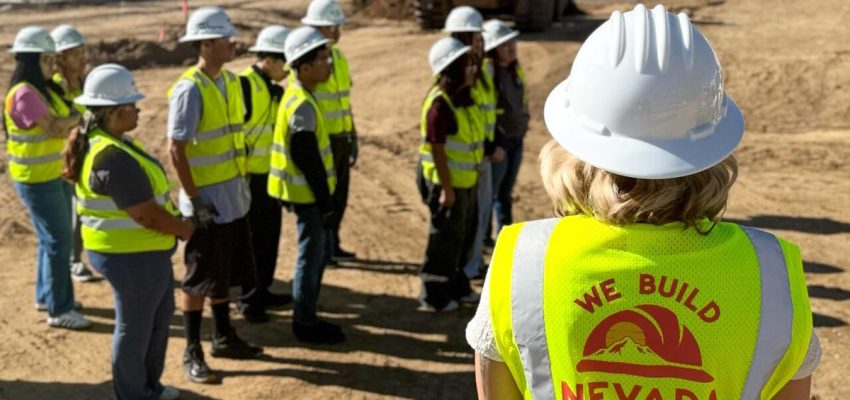
Consider the recent opportunities for local youth to explore construction careers, gaining insights into paths shaping vital workforces. While invaluable, such experiences are now being augmented and transformed by AI. It’s no longer enough to learn the physical craft; understanding the digital tools and AI-driven processes that optimize efficiency, enhance safety, and predict project outcomes is becoming just as crucial. This article delves into how artificial intelligence is not only redefining the very nature of careers, from skilled trades to high-tech sectors, but also how it is revolutionizing the methods by which we prepare our youth to enter these dynamic fields. We’ll explore how AI in vocational training is creating adaptive learning environments, fostering essential future skills, and opening up unprecedented avenues for career discovery and development, ensuring that today’s students are equipped not just for current jobs, but for the jobs of tomorrow.
AI in vocational training: Reshaping the skilled trades landscape
When we talk about the future of work, the conversation often gravitates towards high-tech roles in software development or data science. However, the impact of artificial intelligence extends far beyond these traditional ‘tech’ fields, deeply embedding itself into industries that have long been considered manual or traditional, such as construction, manufacturing, and healthcare. These are the very sectors that often benefit from robust vocational training programs, offering young individuals tangible skills and immediate career entry. The integration of AI in vocational training is proving to be a game-changer, not by replacing human workers, but by augmenting their capabilities, enhancing safety, and optimizing efficiency.
In the construction industry, for instance, AI is no longer a futuristic concept but a present-day reality. AI-powered algorithms analyze blueprints and site conditions to identify potential hazards before they even arise, significantly reducing accidents. Drones equipped with AI vision systems conduct rapid site surveys, monitor progress, and detect discrepancies with unparalleled precision. Robotics handle repetitive, heavy, or dangerous tasks, allowing human workers to focus on more complex problem-solving, supervision, and specialized craft. Predictive maintenance, driven by AI, can anticipate equipment failures, preventing costly downtime and extending the lifespan of machinery. These advancements mean that a ‘construction career’ today demands not just a strong back and hands-on skill, but also a mind capable of interacting with, understanding, and leveraging AI tools.
The implications for AI in vocational training are profound. Training programs must evolve to incorporate AI literacy as a fundamental component. This isn’t about turning every carpenter into a coder, but about ensuring that a young person entering the trades understands how to interpret data from AI-powered sensors, operate automated machinery, and collaborate effectively with AI systems. For example, a student exploring a career in HVAC installation might now learn how AI optimizes energy consumption in smart buildings, or how machine learning algorithms predict system failures based on operational data. This shift necessitates curricula that blend traditional craft skills with digital proficiency, critical thinking, and adaptive problem-solving.
This paradigm shift is not unique to construction. In automotive mechanics, AI diagnostics are becoming standard, requiring technicians to understand complex software interfaces in addition to mechanical systems. In agriculture, AI-driven sensors and robots manage everything from irrigation to pest control, transforming farming into a high-tech profession. According to a report by the World Economic Forum, AI is expected to create 97 million new jobs by 2025, while displacing 85 million, highlighting the critical need for reskilling and upskilling across all sectors. This statistic underscores why embedding AI competencies into vocational training isn’t just an advantage, but a necessity for shaping a resilient, adaptable workforce. It empowers young people to not just keep pace with technological change, but to actively drive innovation within their chosen fields, ensuring that the jobs they pursue remain relevant and rewarding.
Bridging the Skill Gap: AI-Powered Learning and Career Exploration
One of the persistent challenges in education and workforce development is the ever-widening skill gap. Traditional educational models often struggle to keep pace with the rapid changes in industry demands, leaving graduates underprepared for the realities of the modern workplace. This is where AI-powered learning tools and innovative career exploration platforms offer transformative solutions, effectively bridging the chasm between academic preparation and professional readiness. The potential of AI in vocational training is particularly compelling when it comes to personalized learning experiences and immersive practical simulations.
Imagine a student exploring a career in welding. Instead of solely relying on expensive materials and physical supervision, AI-driven virtual reality (VR) and augmented reality (AR) simulations can provide an incredibly realistic and safe training environment. These platforms can offer immediate feedback on technique, identify common errors, and allow for endless practice without material waste. For example, a VR welding simulator can track a student’s torch angle, speed, and consistency, providing data-driven insights that a human instructor might miss, accelerating skill acquisition. This is a profound application of AI for practical, hands-on learning.
Beyond technical skills, AI can revolutionize career guidance itself. AI-powered platforms can analyze a student’s aptitudes, interests, and learning style, then cross-reference this data with real-time labor market demands and emerging job trends. This allows for highly personalized career recommendations that go beyond generic suggestions, pointing students towards specific vocational paths, certifications, or apprenticeship programs that align with both their potential and the future needs of the economy. For instance, if a student shows a natural inclination for problem-solving and spatial reasoning, an AI system might highlight emerging roles in smart infrastructure management or robotics maintenance within the construction sector.
Adaptive learning systems, another facet of AI in vocational training, can tailor educational content to individual student paces and knowledge levels. These systems continuously assess a student’s understanding and adjust the curriculum accordingly, providing remedial modules where needed and accelerating progress where mastery is demonstrated. This personalized approach not only improves learning outcomes but also increases engagement, making the learning process more efficient and enjoyable. Furthermore, AI can act as an ‘intelligent tutor,’ available 24/7 to answer questions, explain complex concepts, and guide students through challenging tasks, democratizing access to high-quality instruction.
The ability of AI to simulate real-world scenarios extends to crucial areas like workplace safety and ethical decision-making. Students can navigate virtual construction sites, identify hazards, and practice emergency protocols in a risk-free environment. This immersive training is particularly vital in high-risk professions, where mistakes can have severe consequences. By providing a ‘firsthand look’ that is both safe and infinitely repeatable, AI not only enhances learning but also instills critical professional competencies that are increasingly vital in all industries.
The Future Workforce: Collaboration Between Human Ingenuity and Artificial Intelligence
As AI continues its rapid advancement, the conversation naturally shifts from job displacement to job transformation and augmentation. The future workforce will not be one where humans are entirely replaced by machines, but rather one characterized by a powerful, synergistic collaboration between human ingenuity and artificial intelligence. This vision holds true across all sectors, from the most technical roles to the skilled trades that form the backbone of our infrastructure. Understanding this collaborative imperative is crucial for preparing the next generation to thrive.
The unique strengths of humans—creativity, critical thinking, emotional intelligence, complex problem-solving, and adaptability—are precisely those qualities that AI, despite its impressive capabilities, struggles to replicate. AI excels at processing vast amounts of data, identifying patterns, automating repetitive tasks, and executing instructions with precision. The magic happens when these two sets of strengths are combined. In a construction context, for example, AI might analyze thousands of architectural designs and structural stress points to identify optimal material usage and potential failure points, but it is the human engineer who applies creative problem-solving and ethical judgment to implement those insights, considering aesthetic, environmental, and community impacts.
Preparing for this future means cultivating what I call ‘AI literacy’ – not just the ability to use AI tools, but to understand their underlying principles, their limitations, and their ethical implications. This includes learning how to ask the right questions of AI systems, how to interpret their outputs critically, and how to govern their use responsibly. This type of literacy is increasingly becoming a core competency, akin to digital literacy, and must be integrated early into educational pathways, including those focused on vocational training. For instance, a skilled tradesperson might use an AI-powered tool to optimize project scheduling but will need human judgment to manage unexpected delays, client relationships, or unique on-site challenges.
The shift towards human-AI collaboration also necessitates a focus on soft skills. Communication, teamwork, adaptability, and emotional intelligence become even more vital in an environment where routine tasks are automated. These are the skills that enable effective collaboration, not just with other humans but with intelligent systems. Furthermore, the capacity for lifelong learning becomes non-negotiable. As AI technologies evolve at an accelerating pace, professionals in every field will need to continuously update their knowledge and skills, embracing a mindset of perpetual growth. This is where AI in vocational training can also play a long-term role, offering modular, adaptive courses for professionals to reskill or upskill throughout their careers.
Indeed, research from McKinsey & Company indicates that while a significant portion of current work activities could be automated, very few occupations will be entirely eliminated. Instead, roles will evolve, requiring new blends of skills. This offers an optimistic outlook where human workers, empowered by AI, can achieve unprecedented levels of productivity, safety, and innovation, leading to more fulfilling and impactful careers. The future workforce is not about competition between humans and machines, but about synergy – a partnership that unlocks greater potential for all.
The integration of artificial intelligence into vocational training and career exploration is not merely an optional upgrade; it is an imperative for preparing the next generation for a dynamic and complex global workforce. From enhancing safety and efficiency in skilled trades like construction to providing personalized learning paths and immersive simulation experiences, AI is fundamentally reshaping how young individuals acquire the knowledge and competencies necessary to thrive. It moves beyond traditional methods of career insight, offering a more adaptive, data-driven, and engaging approach to education. By embracing AI in vocational training, we equip our youth not just with skills for today’s jobs, but with the adaptability and foresight required for the careers of tomorrow.
As we look ahead, the emphasis must be on fostering a symbiotic relationship between human ingenuity and artificial intelligence. The most successful professionals will be those who understand how to leverage AI’s analytical power while applying their unique human attributes—creativity, critical thinking, and emotional intelligence—to solve complex problems. For educators, policymakers, and industry leaders, the task is clear: invest in AI-driven educational tools, redesign curricula to foster AI literacy, and create opportunities for collaborative learning. By doing so, we empower young people to not only navigate the evolving professional landscape but to actively shape it, ensuring that they enter the workforce as confident, capable, and future-ready contributors. The journey beyond the blueprint truly begins with intelligent preparation.










