
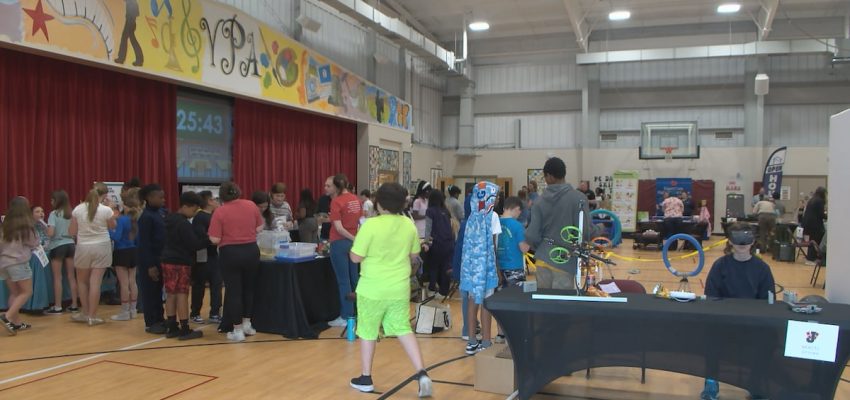

The familiar hum of a career fair is a sound of opportunity, a gateway for young minds to explore their futures. This was certainly the case on Friday, April 10, when the Jonesboro Visual and Performing Arts School hosted its second annual career fair. Students gathered, eager to connect with professionals and envision their paths in the vibrant world of art, music, dance, and theater. Yet, as we stand at the precipice of a technological revolution, such traditional gatherings offer a fascinating lens through which to examine a much larger, often debated, question: How is artificial intelligence fundamentally altering the landscape of creative professions? As an AI specialist, writer, and tech enthusiast, I’m André Lacerda, and I believe this question is not just theoretical; it’s shaping the very fabric of our artistic future, demanding a nuanced understanding from aspiring artists and seasoned professionals alike. The integration of AI into our daily lives is no longer a futuristic concept but a present reality, and its influence on creativity is particularly profound, demanding a re-evaluation of what it means to be an artist in the 21st century.
AI in creative fields: A New Palette of Possibilities
The notion of artificial intelligence interacting with human creativity often conjures images of robotic overlords replacing artists, or soulless algorithms generating uninspired content. However, history teaches us a different lesson. Every major technological advancement, from the invention of the camera challenging traditional portraiture to the introduction of synthesizers in music, has initially been met with skepticism. Yet, each has ultimately served to expand the horizons of artistic expression, creating new mediums, new styles, and entirely new career paths. The rise of **AI in creative fields** is no different, presenting not just challenges but an unprecedented palette of possibilities for visual and performing artists.
Consider the visual arts, for example. Tools like Midjourney, DALL-E, and Stable Diffusion have democratized image creation, allowing users to generate complex, artistic visuals from simple text prompts. This isn’t just about creating pretty pictures; it’s about rapid prototyping for graphic designers, generating conceptual art for illustrators, or even aiding architects in visualizing intricate designs. While some argue this diminishes the role of the human artist, it simultaneously elevates the importance of prompt engineering, curation, and the unique human vision that guides these powerful algorithms. A designer can now iterate on hundreds of design concepts in minutes, focusing their human ingenuity on refining the best options rather than laboring over initial sketches. The global market for generative AI, a key driver in these advancements, is projected to grow significantly, with some estimates suggesting it could reach over $100 billion by the end of the decade, signaling a massive shift in how content is produced and consumed.
In the realm of music, AI is composing symphonies, generating unique beats, and even performing alongside human musicians. Platforms like Amper Music and AIVA can create original scores in various genres, providing composers with fresh ideas or background music for content creators. This doesn’t mean human composers are obsolete; rather, AI becomes a powerful assistant, automating tedious tasks, exploring unfamiliar harmonic territories, and allowing musicians to experiment with sounds and structures previously inaccessible. Live performances are also evolving, with AI-driven interactive installations responding to audience movements or generating dynamic visuals that complement a musical performance. Even in scriptwriting and poetry, advanced language models can assist in brainstorming plots, developing characters, or even crafting entire verses, acting as a collaborative partner rather than a replacement. The potential for **AI in creative fields** to augment, rather than simply automate, is becoming increasingly clear, opening doors to hybrid art forms and interdisciplinary collaborations that were once unimaginable. This collaborative paradigm empowers artists to transcend traditional boundaries, pushing the very definition of what art can be.
The Evolving Skillset: What Future Artists Need
As technology continues its relentless march forward, the skills required for success in any industry inevitably evolve, and the arts are certainly no exception. For students attending career fairs today, understanding this shifting landscape is paramount. The future artist will not merely master a brushstroke or a musical instrument; they will also need to be adept at navigating the digital tools and intelligent systems that are becoming intrinsic to the creative process. This necessitates a profound shift in educational priorities and personal development, moving beyond traditional techniques to embrace a more technologically integrated approach.
One of the most crucial emerging skills is ‘prompt engineering’ – the art and science of communicating effectively with AI models to achieve desired creative outputs. It requires not only a deep understanding of the artistic medium but also an intuitive grasp of how AI interprets instructions. Beyond technical proficiency, critical thinking remains indispensable. Artists must discern the quality and originality of AI-generated content, understand its limitations, and ethically integrate it into their work. Curatorial skills, too, gain new importance; in a world awash with AI-generated art, the ability to select, refine, and present meaningful pieces becomes a hallmark of human artistic judgment. Ethical reasoning, perhaps more than ever, is vital. Artists must grapple with questions of intellectual property, algorithmic bias, and the societal implications of their AI-enhanced creations.
Educational institutions, including forward-thinking schools like Jonesboro Visual and Performing Arts, are increasingly challenged to adapt their curricula. The goal isn’t to turn artists into programmers, but to foster ‘computational fluency’ – an understanding of how these systems work and how to leverage them creatively. This means integrating interdisciplinary approaches, combining traditional artistic talent with foundational technological literacy. Ultimately, while AI can simulate, generate, and even perform, it cannot yet replicate the uniquely human elements of creativity: genuine emotion, deeply personal storytelling, and the authentic expression that connects artist to audience. These are the superpowers that differentiate human artists, and they are the skills that will ensure their enduring relevance. Therefore, adaptability, a thirst for lifelong learning, and a commitment to nurturing one’s unique human perspective are the true currencies for navigating a successful career path in this exciting new era of **AI in creative fields**.
Ethical Considerations and the Future of Artistic Integrity
The rapid proliferation of artificial intelligence in creative domains has undeniably sparked vibrant discussions, and often heated debates, around a spectrum of ethical considerations. While the opportunities for innovation and efficiency are vast, overlooking the complex ethical landscape would be a disservice to both artists and the integrity of art itself. Questions surrounding copyright, originality, and the potential for misuse, such as deepfakes, stand at the forefront of these crucial conversations, shaping the regulatory and artistic norms of tomorrow.
One of the most pressing concerns revolves around data ethics and intellectual property. Many generative AI models are trained on vast datasets that often include existing artistic works without explicit permission or compensation to the original creators. This raises fundamental questions about fair use, artist rights, and whether outputs derived from such training data constitute derivative works. The debate about whether AI-generated content can truly be considered ‘original art’ also continues to rage. If an algorithm composes a song or paints a picture, where does the creativity lie? Is it with the programmer who built the algorithm, the prompt engineer who guided it, or the algorithm itself? These philosophical quandaries have real-world implications for attribution, ownership, and the value placed on human artistic endeavor. Organizations like the Copyright Office are actively seeking input on these matters, acknowledging the need for new frameworks to address these unprecedented challenges.
Furthermore, the potential for algorithmic bias poses a significant risk. If AI models are trained on datasets that reflect historical biases in art or society, their outputs may inadvertently perpetuate stereotypes or exclude diverse perspectives. For instance, an AI trained predominantly on Western art might struggle to generate compelling images in other cultural styles without specific instruction. This underscores the need for diverse datasets and ethical AI development practices to ensure that the future of **AI in creative fields** is inclusive and representative.
Navigating these challenges requires a collaborative effort from artists, technologists, policymakers, and legal experts. It’s about establishing clear guidelines for transparency, ensuring fair compensation for artists, and developing robust frameworks for intellectual property in the age of AI. Ultimately, the goal is not to stifle innovation but to ensure that AI serves as a responsible and equitable force in augmenting human creativity, rather than undermining it. The dialogue is ongoing, and the solutions will require careful thought and a commitment to protecting the intrinsic value of human artistic expression.
The future of creativity, profoundly influenced by artificial intelligence, is undeniably complex, presenting both exhilarating prospects and formidable challenges. While the Jonesboro Visual and Performing Arts School career fair offered a glimpse into traditional career paths, it simultaneously illuminated the vast and evolving landscape that young artists must prepare to navigate. As an AI specialist, I firmly believe that this transformation isn’t about replacing the human artist, but rather about empowering them with unprecedented tools and opening doors to previously unimagined forms of expression.
Embracing AI in creative fields requires foresight, adaptability, and a commitment to lifelong learning. It demands that we, as a society, engage in critical discussions about ethics, ownership, and the very definition of art itself. The canvas, the stage, and the studio are expanding beyond their physical limits, extending into the digital and algorithmic realms. For the next generation of artists, this means not shying away from technology, but learning to harness its power responsibly, ethically, and creatively. The journey ahead promises to be one of constant discovery, where human ingenuity, amplified by artificial intelligence, will continue to push the boundaries of what is possible in the beautiful, ever-evolving world of the arts. Let us champion this era of augmented creativity with open minds and an unwavering passion for innovation.










