

The world of professional sports is a captivating blend of skill, strategy, and sheer unpredictability. Fans are drawn to the drama of a last-second shot, the underdog triumphing against the odds, or the sudden emergence of a star. Yet, behind every thrilling moment lies a complex ecosystem of planning, training, and strategic adaptation. What happens, however, when the meticulously planned is suddenly thrown into disarray? What if a key player is sidelined mere minutes before a crucial game, forcing an unprepared rookie into the spotlight? This scenario, familiar to any sports enthusiast, is precisely where the cutting-edge capabilities of artificial intelligence are beginning to make a profound difference.
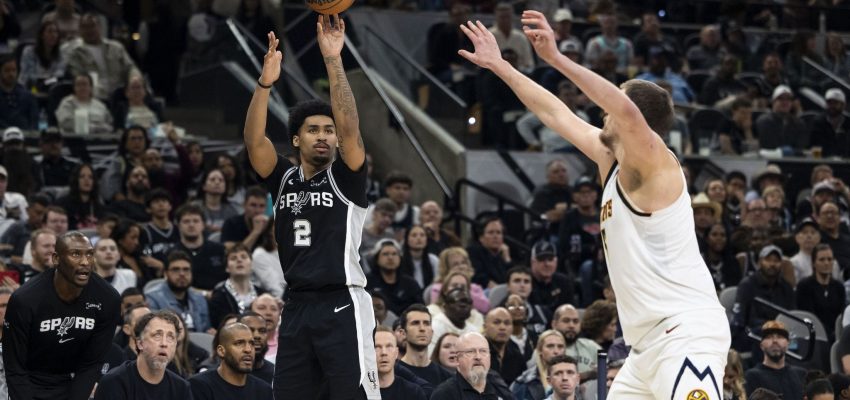
Consider the recent situation involving the Spurs’ rookie, Dylan Harper. The anticipation for any No. 2 overall pick is immense, but his professional debut was perhaps more dramatic than anyone could have foreseen. Dylan Harper found himself thrust into the starting lineup due to a tight hamstring sidelining Devin Vassell just minutes before Saturday’s game. This wasn’t a planned strategic substitution; it was a reactive measure to an unforeseen circumstance. While Harper’s performance undoubtedly garnered significant attention, the incident itself highlights a fundamental challenge in elite athletics: managing the unexpected. How do teams prepare for such instantaneous shifts? How can they mitigate the impact of sudden injuries or optimize a player’s readiness for an unplanned role? The answer, increasingly, lies in the sophisticated application of artificial intelligence and machine learning.
### AI in Sports Performance: A Game-Changer for Athletes and Teams
The integration of **AI in sports performance** is rapidly transforming how professional teams operate, from player development and injury prevention to tactical analysis and fan engagement. Gone are the days when intuition and traditional statistical analysis alone governed decision-making. Today, AI models are sifting through colossal datasets – everything from biometric readings and training loads to historical game footage and sleep patterns – to uncover insights that were previously unimaginable. This shift is not about replacing human expertise but augmenting it, providing coaches, trainers, and athletes with an unprecedented level of data-driven intelligence.
One of the most critical areas where AI is making an impact is in mitigating the very unpredictability seen with Devin Vassell’s injury. Imagine a system that could analyze a player’s daily training metrics, monitor their sleep quality via wearables, track their biomechanical movements during practice, and even assess their nutritional intake. Machine learning algorithms can then process this vast stream of data to identify subtle patterns and deviations that might indicate an increased risk of injury. For instance, a slight alteration in running gait, combined with a dip in sleep quality and an unexpected spike in training intensity, could flag a player as being at a higher risk for a hamstring strain. This proactive approach allows medical staff and trainers to intervene *before* an injury occurs, perhaps by adjusting training loads, recommending specific recovery protocols, or suggesting targeted physical therapy. The goal is to maximize player availability and extend careers, a significant return on investment for any professional franchise.
Beyond injury prevention, AI is also revolutionizing player development and performance optimization. For a rookie like Dylan Harper, making an unexpected start, every ounce of preparation counts. AI-powered platforms can create hyper-personalized training regimens. By analyzing a player’s strengths, weaknesses, and playing style, AI can recommend specific drills, optimize shot selection strategies, and even simulate game situations to improve decision-making under pressure. This granular level of customization ensures that athletes are not just training harder, but training smarter, with every session designed to address their unique needs and accelerate their growth. For established stars, AI continually refines their peak performance, analyzing recovery data to ensure they are always operating at their optimal level. The insights derived from machine learning help unlock an athlete’s full potential, pushing the boundaries of what was once considered possible on the court or field.
### Revolutionizing Game Strategy and Coaching
The impact of AI extends far beyond individual player development; it is fundamentally reshaping game strategy and coaching methodologies. Professional sports are an elaborate chess match, and AI is providing coaches with an unparalleled analytical engine. Consider how much data is generated during a single basketball game: every pass, every shot, every defensive rotation, every possession. Human analysts, no matter how skilled, can only process a fraction of this information in real-time or even post-game. AI, however, thrives on such complexity.
Sophisticated vision systems and tracking technologies now capture the precise movements of every player and the ball throughout an entire game. AI algorithms then analyze this data to identify intricate patterns in opponent strategies. They can discern recurring offensive sets, identify defensive vulnerabilities, track the efficiency of specific plays against different defensive schemes, and even predict an opponent’s likely next move based on the current game state. This deep level of tactical insight allows coaches to prepare with unprecedented precision. Instead of relying on general observations, they can present their team with data-backed breakdowns of opposing players’ tendencies – their preferred shot locations, their defensive weak spots, how they react under pressure, or even their fatigue levels during specific game segments. This strategic advantage can be the difference between a win and a loss, especially in tightly contested matchups.
Furthermore, AI is enhancing in-game decision-making. While human judgment remains paramount, real-time analytics dashboards powered by AI can provide coaches with immediate insights into player performance, energy levels, and the effectiveness of current strategies. Should a struggling player be benched? Is it time for a specific defensive adjustment? What’s the optimal time to call a timeout to disrupt an opponent’s momentum? AI can crunch historical data and current game dynamics to offer probabilistic outcomes for various decisions, giving coaches a powerful tool to complement their experience and intuition. It’s like having an impossibly fast, infinitely patient assistant coach with access to every piece of relevant data, always ready to provide an objective perspective.
### The Future of Sports: An AI-Enhanced Arena
As AI technology continues to advance, its integration into professional sports will only deepen, promising an even more sophisticated and data-rich future. The arena of sports, already a spectacle of human achievement, is becoming an increasingly fertile ground for technological innovation. We can anticipate even more precise injury prediction models, perhaps with the ability to identify specific tissues at risk through advanced imaging and biomechanical analysis. This could lead to a significant reduction in chronic injuries and a remarkable extension of athletic careers across various sports. The vision of an aging star continuing to perform at an elite level well into their late 30s or early 40s could become more common, thanks to AI-driven longevity strategies.
Beyond the athletes and coaching staff, AI also holds immense potential for enhancing the fan experience. Personalized content delivery, where AI curates highlights, statistics, and narratives tailored to an individual fan’s preferences, is already emerging. Imagine AI-powered augmented reality overlays during live broadcasts, providing real-time player stats, strategic explanations, and even predictive insights into game outcomes. For sports betting enthusiasts, AI can offer increasingly sophisticated predictive analytics, though ethical considerations regarding fairness and responsible gaming will remain critical.
However, the widespread adoption of AI in sports also brings important ethical considerations. Data privacy for athletes, the potential for algorithmic bias in player evaluation, and the balance between data-driven decisions and the human element of intuition and passion are all discussions that will continue to evolve. The essence of sport lies in human endeavor, emotion, and the unpredictable narrative of competition. AI’s role, as André Lacerda, an AI specialist and tech enthusiast, would argue, is not to diminish this human element but to elevate it, to provide the tools that allow athletes to push their boundaries, coaches to craft master strategies, and fans to engage with the game on an entirely new level of understanding and appreciation.
In conclusion, the unexpected debut of Dylan Harper serves as a vivid reminder of the inherent unpredictability in professional sports. Yet, it also underscores the growing importance of advanced technologies like AI in navigating such challenges. From preventing injuries and optimizing individual performance to revolutionizing game strategy and enhancing the fan experience, **AI in sports performance** is no longer a futuristic concept but a present-day reality.
As we look ahead, the continuous refinement and ethical application of artificial intelligence will undoubtedly unlock new frontiers in athletic achievement and strategic excellence. The synergy between human talent and intelligent machines promises to make sports not just more competitive and safer, but also more compelling and insightful for everyone involved, ensuring that the drama and excitement of the game continue to captivate audiences worldwide, albeit with a powerful, invisible assistant working behind the scenes.










