
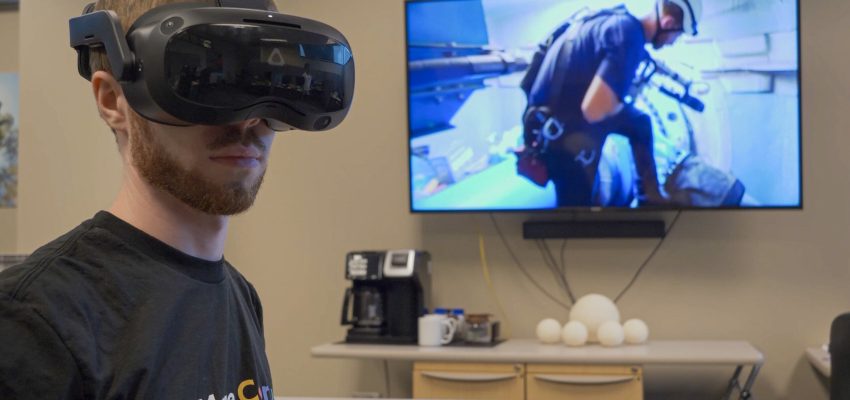

The journey from student to professional is often fraught with uncertainty. In an increasingly complex and rapidly evolving job market, young people face immense pressure to make informed career choices, often with limited real-world exposure. Traditional guidance methods, while valuable, sometimes struggle to convey the true essence of a daily work experience. Imagine, however, a world where students could ‘try on’ a profession like a new outfit, stepping into the shoes of a surgeon, an engineer, a chef, or an architect, all before ever leaving the classroom. This seemingly futuristic scenario is no longer confined to science fiction; it is rapidly becoming a tangible reality, revolutionizing how the next generation discovers their calling. As an AI specialist and a fervent advocate for technological innovation in education, I find the emergence of immersive technologies, particularly virtual reality, in career guidance profoundly exciting. This transformative approach to career guidance, often referred to as Virtual Reality Career Exploration, offers a glimpse into professions that were once distant or abstract. It represents a paradigm shift, moving beyond theoretical discussions to provide practical, visceral insights into diverse professional paths.
Virtual Reality Career Exploration: Pioneering the Future of Professional Discovery
Innovation often springs from necessity, and the need for more effective career guidance is undeniable. Across schools, from bustling urban centers to the serene expanses of North Dakota, a groundbreaking initiative is taking root. Platforms like CareerViewXR are at the forefront, leveraging the power of virtual reality to provide students with an unprecedented opportunity: to literally step into various job roles and gain firsthand experience. This isn’t merely watching a video or listening to a presentation; it’s an interactive, immersive simulation that allows students to perform tasks, solve problems, and understand the day-to-day realities of a profession in a safe, controlled digital environment. For instance, a student curious about medicine might find themselves in a virtual operating room, observing a procedure up close, or even assisting a virtual medical team. Aspiring architects could design and walk through their own creations, while future welders might practice intricate tasks without the hazards of a real workshop. This form of Virtual Reality Career Exploration offers a level of engagement and practical insight that traditional methods simply cannot match.
The benefits of this approach are multifaceted and profound. Firstly, it democratizes access to experiences that were once exclusive or difficult to arrange. Not every student has connections for shadowing opportunities or access to diverse industries in their local area. VR transcends these geographical and socioeconomic barriers, bringing a world of careers directly to the classroom. Secondly, it allows for risk-free experimentation. Students can make mistakes, explore different approaches, and learn from virtual consequences without any real-world repercussions, fostering a deeper understanding and reducing the anxiety often associated with career decisions. Thirdly, the immersive nature of VR significantly boosts engagement and retention. Research consistently shows that experiential learning leads to higher knowledge retention and better decision-making capabilities than passive learning. By actively participating in a simulated work environment, students develop a more authentic connection to the profession, helping them discern genuine interest from fleeting curiosity. This active engagement is crucial, as studies by organizations like the U.S. Bureau of Labor Statistics indicate that a significant percentage of college graduates end up working in fields unrelated to their degrees, often due to a lack of realistic exposure during their formative years. The ability to engage in meaningful Virtual Reality Career Exploration can help mitigate such misalignments.
Moreover, these virtual experiences can be incredibly sophisticated. Developers are employing advanced haptic feedback systems, realistic physics engines, and AI-driven characters to create scenarios that mirror real-world complexities. Imagine a student exploring a career in environmental science, not just reading about it, but collecting virtual data in a simulated forest, analyzing pollution levels in a digital river, and presenting findings to virtual stakeholders. Such detailed simulations not only illuminate the practical aspects of a job but also highlight the critical thinking, problem-solving, and communication skills required. This level of depth empowers students to make more informed decisions about their academic pathways and future professional endeavors, fostering a generation better prepared for the demands of the modern workforce.
The Broader Canvas: Immersive Technologies Beyond Career Paths
The impact of immersive technologies extends far beyond specific career try-outs, reshaping the entire educational landscape. Virtual Reality (VR) and Augmented Reality (AR) are powerful tools for experiential learning across disciplines, from science and history to arts and technical training. Imagine history students not just reading about ancient Rome, but virtually walking through the Forum, interacting with historical figures, and witnessing key events unfold around them. Science classrooms are being transformed into virtual laboratories where students can conduct dangerous experiments safely, dissect virtual organisms, or explore molecular structures in three dimensions. This shifts learning from abstract concepts to tangible, memorable experiences, dramatically improving comprehension and retention.
In the realm of skill development, VR is proving invaluable. Medical students can practice complex surgical procedures repeatedly without risk to patients. Aspiring pilots can log countless hours in flight simulators. Technicians can learn to repair intricate machinery by interacting with detailed 3D models. These simulations offer a safe space for deliberate practice, allowing learners to master skills at their own pace and receive instant, personalized feedback. When integrated with artificial intelligence, these immersive environments become even more powerful, capable of adapting to individual learning styles, identifying knowledge gaps, and providing customized challenges. An AI-powered VR tutor could guide a student through a difficult concept, offer remedial exercises, or even simulate the emotional stress of a real-world scenario, preparing them not just technically, but psychologically. This convergence of AI and immersive tech is accelerating the development of competency-based learning models, where mastery of skills, rather than seat time, is the primary metric. The potential for enhancing educational equity is also significant; students in underserved areas, who might otherwise lack access to state-of-the-art facilities or specialized instructors, can now experience world-class training through a VR headset.
The rise of remote work and global collaboration further underscores the importance of virtual environments. Immersive platforms can facilitate virtual team meetings, collaborative design sessions, and international cultural exchanges, preparing students for a future where geographical boundaries are increasingly blurred. As the workforce continues to evolve, demanding adaptability, critical thinking, and digital literacy, the early exposure to and comfort with immersive technologies gained through initiatives like Virtual Reality Career Exploration will be an invaluable asset for students entering the professional world.
Navigating the New Frontier: Challenges and Considerations for Widespread Adoption
While the promise of virtual reality in education and career guidance is immense, its widespread adoption is not without challenges. One significant hurdle is the initial investment in hardware. High-quality VR headsets and the powerful computing resources required to run complex simulations can be costly, potentially exacerbating the digital divide between well-funded and under-resourced schools. However, as technology matures, prices are steadily decreasing, and more affordable standalone headsets are becoming available, making VR more accessible. Furthermore, the development of high-quality, educationally sound content is crucial. Creating effective virtual experiences requires specialized expertise in instructional design, 3D modeling, game development, and subject matter knowledge. This demands collaboration between educators, technologists, and industry experts to ensure the content is not only engaging but also pedagogically robust and aligned with learning objectives.
Another consideration is the potential for motion sickness or discomfort for some users, although advancements in VR technology are continuously mitigating these issues through improved refresh rates, optics, and tracking systems. There’s also the question of integration into existing curricula and the need for comprehensive teacher training. Educators require support and professional development to effectively leverage VR tools in their classrooms, moving beyond novelty to truly transformative learning experiences. Ethical considerations, such as data privacy in virtual environments and the appropriate balance between screen time and traditional learning methods, must also be carefully addressed as these technologies become more pervasive.
Despite these challenges, the trajectory for immersive learning is clearly upward. Research and development continue at a rapid pace, leading to more intuitive interfaces, increasingly realistic simulations, and more robust platforms. The collaborative efforts of companies, educational institutions, and policymakers are essential to overcome these barriers, ensuring that the transformative potential of VR is realized equitably. By strategically planning for infrastructure, fostering content creation, and prioritizing teacher empowerment, we can pave the way for a future where every student has the opportunity to engage in meaningful Virtual Reality Career Exploration and holistic immersive learning.
Conclusion
The landscape of career discovery is undergoing a profound transformation, driven by the innovative application of virtual reality. What began as a local initiative in places like North Dakota, exemplified by platforms such as CareerViewXR, is rapidly evolving into a global movement to empower students with unprecedented insight into their professional futures. By offering risk-free, immersive experiences, VR not only demystifies complex professions but also ignites curiosity, fosters genuine interest, and enables students to make choices rooted in practical understanding rather than abstract notions. This revolution in career guidance is more than just a technological upgrade; it’s an investment in human potential, equipping the next generation with the foresight and confidence needed to navigate the dynamic demands of the 21st-century workforce.
As an AI specialist, I believe this convergence of immersive technology and intelligent systems holds the key to unlocking new dimensions of learning and personal growth. The future promises even more sophisticated VR environments, enhanced by AI’s adaptive capabilities, offering personalized learning paths and real-time guidance that could truly redefine education. We are on the cusp of an era where every student, regardless of their background or location, can virtually explore countless career avenues, develop critical skills, and forge their own path with clarity and purpose. The journey of career exploration, once a daunting maze, is now being illuminated by the brilliant possibilities of Virtual Reality Career Exploration, paving the way for a more informed, engaged, and ultimately, a more fulfilling future for all.










