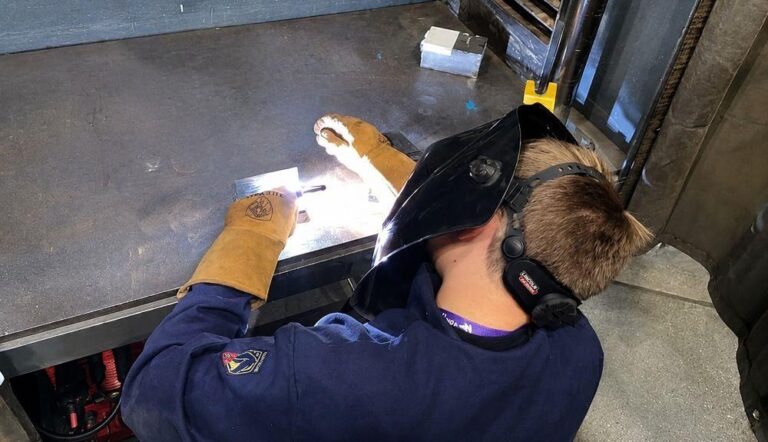
In an era defined by accelerating technological advancement, where artificial intelligence reshapes industries and innovation dictates progress, the foundational pillars of our future lie firmly within scientific inquiry, technological prowess, engineering ingenuity, and mathematical acumen – collectively known as STEM. As an AI specialist and enthusiast, I’m constantly observing how quickly the landscape evolves, demanding new skills and innovative approaches to problem-solving. This relentless pace underscores the critical importance of preparing the next generation not just to adapt, but to lead this transformation. It’s in this spirit that the expansion of institutions like the Polaris Career Center resonates so profoundly, marking a significant step in cultivating the minds that will build tomorrow.
STEM education: Building the Foundation for Future Innovation
The term STEM, an acronym for Science, Technology, Engineering, and Mathematics, represents more than just a collection of academic disciplines; it encapsulates a mindset, a problem-solving methodology, and the very engine driving modern societal progress. From developing life-saving medical technologies to architecting the intelligent systems that power our cities, the applications of STEM are ubiquitous and ever-expanding. The Polaris Career Center, with its rich 50-year history of empowering students with practical skills, is now taking a monumental leap forward with its new facility in Middleburg Heights. This expansion is not merely about adding square footage; it’s a strategic investment in the intellectual capital of the future, designed to equip students with the robust understanding and hands-on experience vital for the coming decades.
Consider the sheer demand for talent in these fields. The U.S. Bureau of Labor Statistics projects that employment in STEM occupations will grow 10.8 percent from 2022 to 2032, significantly faster than the 2.8 percent growth for all occupations, adding 1.5 million new jobs. These roles are not only numerous but also offer competitive salaries, with a median annual wage of $99,290 in 2022, compared to $46,310 for non-STEM occupations. This data vividly illustrates why proactive investment in STEM education is paramount. Polaris’s enhanced programs, spanning engineering, advanced manufacturing, robotics, and innovative technologies, are specifically tailored to meet this burgeoning demand. They move beyond theoretical learning, immersing students in real-world scenarios, using state-of-the-art equipment that mirrors industry standards. This practical approach is crucial, as it bridges the gap between classroom knowledge and professional application, preparing students to hit the ground running in diverse technical roles. The ability to design, build, test, and refine is a core competency that transcends specific tools or platforms, making these students highly adaptable to emerging technologies, including those in artificial intelligence and machine learning. This comprehensive training ensures that graduates are not just job-ready but future-ready, capable of navigating and shaping an increasingly complex technological landscape.
From Robotics Labs to Real-World Impact: The Polaris Model
The heart of Polaris Career Center’s expansion lies in its commitment to experiential learning, particularly evident in its specialized robotics labs and engineering workshops. Imagine a high school student, not just reading about automation, but actively programming robotic arms to perform complex tasks, designing intricate circuit boards, or utilizing advanced CAD software to prototype innovative solutions. This is the reality taking shape at Polaris. The new facilities are equipped with cutting-edge machinery and software, offering students an unparalleled environment to develop competencies that are directly transferable to industry. For example, in robotics, students learn about kinematics, sensors, control systems, and human-robot interaction – fundamental principles that underpin everything from automated manufacturing lines to surgical robots in hospitals and autonomous vehicles. The skills acquired here are not merely theoretical; they are tangible, measurable, and highly sought after.
The curriculum is meticulously crafted to encourage problem-solving and critical thinking. Students aren’t simply instructed; they are challenged to identify problems, brainstorm solutions, and iterate on their designs, fostering an entrepreneurial spirit. This includes diving into areas like mechatronics, which blends mechanical engineering, electronics, computer engineering, telecommunications engineering, systems engineering, and control engineering. Such interdisciplinary exposure is invaluable in today’s complex technological environment. Furthermore, the emphasis on project-based learning means students regularly collaborate, mirroring the team dynamics of professional engineering environments. They learn to communicate technical ideas, manage projects, and troubleshoot collaboratively – essential soft skills that complement their technical prowess.
The impact extends beyond individual skill development; it fuels regional economic vitality. By producing a highly skilled workforce, Polaris contributes directly to attracting and retaining high-tech industries in the Middleburg Heights area and beyond. These well-trained individuals become the backbone of local innovation ecosystems, driving economic growth and creating new opportunities. Moreover, the center’s ability to offer certifications and college credit pathways means students graduate with a significant head start, whether they choose to enter the workforce directly or pursue higher education in competitive engineering and technology programs. This dual pathway approach maximizes student potential and provides flexibility in their career trajectories, ensuring that every graduate is positioned for success in a rapidly evolving job market. This practical, forward-thinking model is a testament to how specialized educational institutions can effectively bridge the gap between academic learning and industry demands, creating a robust talent pipeline for critical sectors.
Nurturing the Next Generation of AI Architects and Tech Leaders
As an AI specialist, I frequently emphasize that the future of artificial intelligence isn’t solely about algorithms; it’s about the people who design, implement, and ethically govern them. A strong foundation in STEM education, particularly in engineering and technology, is the bedrock upon which future AI architects and innovators will build their expertise. The logic gates of electrical engineering, the statistical methodologies of mathematics, the structured thinking of computer science, and the iterative design processes of engineering all converge to create the fertile ground necessary for understanding and advancing AI. Polaris Career Center’s robust curriculum, while perhaps not overtly labeled “AI development,” inherently provides students with the critical building blocks for this sophisticated field.
Consider the skills fostered within their robotics and engineering programs: programming logic, data interpretation from sensors, control system design, and complex problem decomposition. These are precisely the cognitive tools required to tackle challenges in machine learning, natural language processing, computer vision, and autonomous systems. Students who learn to troubleshoot a robotic arm are developing the same analytical rigor needed to debug an AI model. Those who design efficient mechanical components are understanding optimization principles relevant to neural network architectures. This early, hands-on exposure demystifies complex technologies and instills a confidence that is invaluable when confronting the abstract challenges of AI development.
Beyond the purely technical, successful AI development demands a blend of creativity, critical thinking, and ethical awareness. Polaris’s focus on innovation and project-based learning encourages students to think creatively about solutions and consider the broader implications of their designs. As AI becomes more integrated into every facet of society, professionals need to be acutely aware of its ethical dimensions, potential biases, and societal impact. Fostering a mindset that values responsible innovation from an early age is paramount. Institutions like Polaris play a pivotal role in this, not just by teaching “how” to build, but by implicitly encouraging students to consider “why” and “what for.” They are nurturing a generation that will not only advance technology but also wield it responsibly, ensuring that AI serves humanity’s best interests. This holistic approach to developing talent—combining rigorous technical skills with critical thinking and an innovative spirit—is precisely what we need to navigate the opportunities and challenges presented by the ongoing AI revolution.
The expansion of the Polaris Career Center is far more than a local development; it is a powerful microcosm of the global imperative to invest deeply and strategically in the next generation. In a world increasingly shaped by algorithms and automation, the foundational strength of a nation, its economic resilience, and its capacity for innovation will undeniably hinge on the quality and accessibility of its STEM education programs. Institutions that embrace hands-on learning, foster critical thinking, and align their curricula with the dynamic demands of industry, such as Polaris, are not merely educating students; they are actively shaping the future, one skilled innovator at a time. They are building the human infrastructure necessary for a thriving technological landscape, ensuring that the promise of AI and other advanced technologies can be fully realized and responsibly guided.
As we look towards a future where AI continues to push the boundaries of what’s possible, the role of comprehensive and forward-thinking educational centers becomes ever more critical. The commitment demonstrated by Polaris Career Center to evolving its facilities and programs underscores a vital understanding: that preparation for tomorrow begins today. By empowering students with the tools, knowledge, and mindset to excel in science, technology, engineering, and mathematics, we are not just filling job vacancies; we are cultivating the architects of progress, the ethical innovators, and the visionary leaders who will define the coming decades. This investment is an investment in human potential, a testament to the belief that with the right education, there are no limits to what humanity can achieve.