
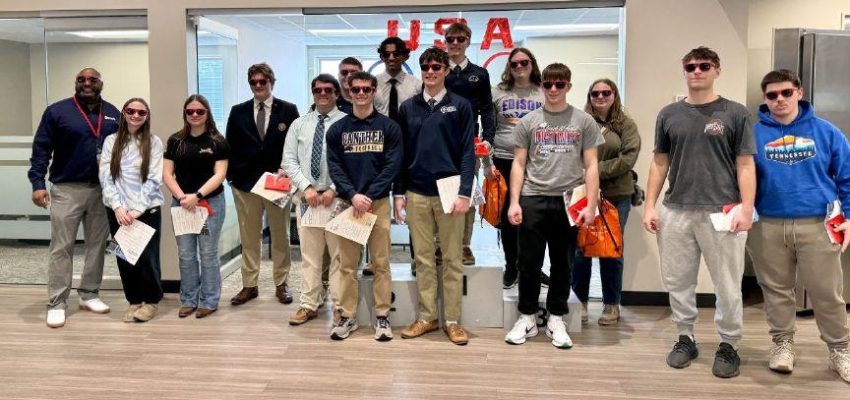

In an era defined by rapid technological advancement and an increasingly complex global economy, preparing the next generation for successful careers is more critical than ever. While traditional education provides foundational knowledge, the real magic often happens when theoretical concepts meet practical application. This is particularly true in the dynamic world of finance, where understanding goes far beyond equations and economic theories. It requires insight into real-world operations, market dynamics, and the human element behind the numbers. Recently, an initiative that brought together approximately 80 local students for a career camp focused on finance beautifully exemplifies this proactive approach, highlighting the immense value of early exposure to professional pathways.
As an AI specialist and tech enthusiast, I’ve observed how quickly industries evolve, and finance is certainly no exception. The traditional image of a banker or an accountant, while still valid, only scratches the surface of a vast and interconnected ecosystem. Without direct exposure, students often form perceptions based on limited information, potentially missing out on fulfilling and impactful careers. Programs like these career camps serve as vital bridges, connecting curious young minds with the intricacies and opportunities within the financial sector. They are not merely about ‘what to do’ but ‘how to think’ within this critical domain, fostering an intelligent preparation that resonates deeply with the demands of our future-forward world.
Finance Career Exploration: Unveiling a World of Opportunity
The financial industry is a colossal engine driving global economies, encompassing a dizzying array of sectors and specializations. From the high-stakes world of investment banking to the meticulous realm of risk management, the innovative sphere of FinTech, and the essential services of wealth management and corporate finance, the opportunities are vast and varied. Yet, for many students, the perception of a career in finance can be narrow, often limited to stockbrokers or traditional banking roles. This limited understanding can be a significant barrier to entry, preventing talented individuals from even considering a path that could be incredibly rewarding.
This is precisely where dedicated programs focusing on finance career exploration become indispensable. They serve as windows into a world that might otherwise remain opaque. By bringing together roughly 80 students, as seen in the recent career camp, these initiatives actively demystify the industry. Students learn that finance is not just about complex algorithms or vast sums of money; it’s about problem-solving, strategic thinking, managing resources, understanding human behavior, and even driving social impact through responsible investment. They discover roles that blend technology with traditional financial principles, identify pathways that align with their diverse skills and passions, and gain a broader appreciation for how financial systems underpin everything from individual savings to global trade.
Early exposure through structured exploration can dismantle preconceived notions and replace them with informed perspectives. For instance, a student who might initially be intimidated by the quantitative aspects of finance could discover a passion for financial journalism, marketing financial products, or even designing user-friendly interfaces for banking apps. These programs often highlight the human side of finance – the importance of ethical decision-making, client relationships, and contributing to community development through local financial institutions. The economic health of any region relies on a robust and innovative financial sector, fueled by a well-informed and enthusiastic workforce. By investing in youth through initiatives like these, communities are effectively nurturing their future economic architects and ensuring a sustainable pipeline of talent capable of navigating future financial landscapes.
Bridging the Gap: Experiential Learning in Action
The success of any career exploration program hinges on its ability to move beyond passive information delivery and engage students in active, experiential learning. Theoretical knowledge, while foundational, truly comes alive when applied in practical scenarios. These camps are designed to do just that: bridge the gap between classroom learning and real-world application, offering a tangible glimpse into what a financial career truly entails.
Imagine students participating in simulated stock market challenges, where they learn about portfolio diversification and risk assessment in a low-stakes environment. Or engaging in workshops on personal budgeting and financial planning, skills that are not only career-relevant but also critical for their personal lives. These hands-on activities, often facilitated by industry professionals, provide invaluable context. Guest speakers — seasoned financial advisors, investment bankers, FinTech innovators, and economists — share their career journeys, challenges, and successes, offering authentic perspectives that textbooks simply cannot convey. They might discuss the daily routines of their jobs, the skills they rely on most, or pivotal moments in their professional development, making abstract concepts relatable and inspiring.
Beyond structured activities, these programs often incorporate mentorship opportunities and networking sessions. Connecting students with professionals allows them to ask questions, gain advice, and begin building their professional networks long before they enter college or the workforce. These interactions foster a sense of belonging and provide role models, particularly important for students from backgrounds with limited access to financial industry connections. Furthermore, such camps are fertile ground for developing essential soft skills. Collaborative projects encourage teamwork and communication. Problem-solving challenges hone critical thinking and decision-making abilities. Presenting findings to peers or professionals builds confidence and presentation skills – all highly valued attributes in any financial role.
The transformative power of experiential learning lies in its ability to convert abstract ideas into concrete experiences. It allows students to test potential career paths, understand their aptitude and interests, and make more informed decisions about their academic and professional futures. For the 80 students who participated in the recent camp, this hands-on engagement likely ignited passions, clarified career aspirations, and provided a critical head start in understanding the diverse landscape of financial professions.
The Future of Finance: AI, Innovation, and New Skillsets
As an AI specialist, I’m particularly fascinated by how technology is not just changing but fundamentally redefining the financial sector. Artificial intelligence, machine learning, blockchain, and big data analytics are no longer futuristic concepts; they are integral components of modern finance. From algorithmic trading and fraud detection to personalized financial advice and automated compliance, AI is enhancing efficiency, accuracy, and accessibility across the industry. This technological revolution means that future finance professionals will require a diverse skillset that extends beyond traditional financial acumen.
The roles of tomorrow’s finance leaders will increasingly demand computational thinking, data literacy, and a profound understanding of emerging technologies. We are seeing the rise of roles like AI ethicists in finance, data scientists specializing in financial markets, and quantitative analysts who are proficient in machine learning frameworks. Traditional roles, such as financial advisors, are being augmented by AI-powered tools that provide deeper insights and more personalized client solutions, allowing advisors to focus on high-value human interaction and complex problem-solving. Risk managers now leverage predictive analytics to foresee market volatilities, and investment strategists use AI to identify patterns and opportunities in vast datasets.
Therefore, effective finance career exploration must now integrate these technological dimensions. Students need to understand not just how a bank operates, but how AI is transforming banking services. They need to appreciate how blockchain technology underpins new financial instruments and digital currencies. Exposure to programming languages, data visualization tools, and basic AI concepts should become a staple of modern financial education. Furthermore, the ethical implications of AI in finance—such as algorithmic bias, data privacy, and the transparency of automated decision-making—are crucial considerations that future professionals must grapple with. These are not merely technical challenges but fundamental questions about fairness, accountability, and the responsible deployment of powerful technologies.
Programs that prepare students for these technological shifts are not just teaching them about finance; they are equipping them for a future where adaptability and continuous learning are paramount. By understanding the interplay between technology and finance early on, students can better tailor their education, pursue relevant internships, and position themselves at the forefront of innovation within the industry. The goal is to cultivate a generation of financial professionals who are not only adept at traditional financial practices but are also fluent in the language of technology, ready to harness its power responsibly to drive economic progress and solve complex global challenges.
Conclusion: Investing in Tomorrow’s Financial Leaders
The initiative that brought together 80 students for a finance career camp is a powerful testament to the value of proactive engagement in youth development. It underscores the critical importance of providing early, hands-on exposure to career pathways, particularly in a sector as vital and dynamic as finance. By demystifying the industry, offering experiential learning opportunities, and highlighting the profound impact of technology, these programs do more than just introduce students to potential jobs; they empower them with the knowledge and confidence to make informed decisions about their futures.
Ultimately, finance career exploration is about cultivating a generation of capable, adaptable, and ethically-minded individuals who are prepared to navigate and shape the financial landscape of tomorrow. As the world continues to evolve at an unprecedented pace, driven by technological advancements like AI, it becomes increasingly imperative to invest in educational initiatives that bridge the gap between academic theory and real-world application. Such programs are not merely an educational luxury; they are a fundamental necessity for fostering economic resilience, driving innovation, and ensuring that our future financial leaders are equipped with the diverse skillsets required to thrive in a complex and interconnected global economy.










