
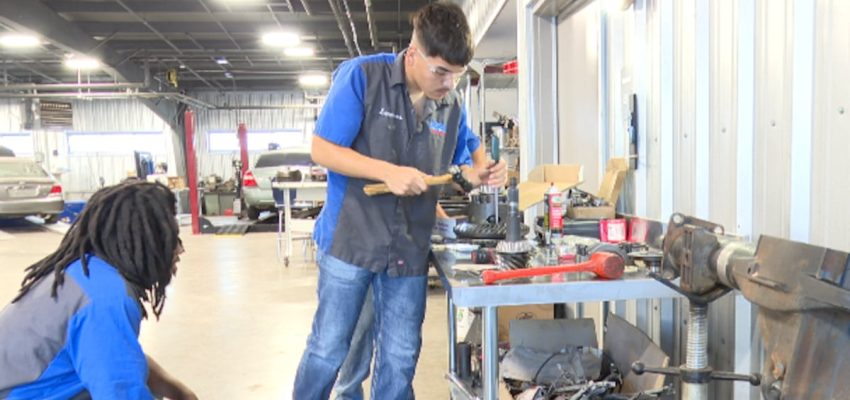

The rapid ascent of Artificial Intelligence (AI) has redefined industries, reshaped job markets, and ignited a global conversation about the future of work. From autonomous vehicles to personalized medicine, AI’s transformative power is undeniable, promising innovations that once belonged solely to the realm of science fiction. As an AI specialist and enthusiast, I, André Lacerda, have witnessed firsthand the breathtaking pace of this revolution. However, this exhilarating progress also presents a critical challenge: Are our educational systems truly preparing the next generation for the realities of the AI-powered workforce? Or is there a growing chasm between academic theory and the pragmatic skills demanded by cutting-edge AI roles?
Traditional learning models, while invaluable for foundational knowledge, often struggle to keep pace with the fluid, dynamic nature of AI development. Students can emerge with a deep understanding of algorithms and neural networks, yet lack the hands-on experience of deploying models in complex, real-world scenarios, troubleshooting unforeseen issues, or collaborating effectively on interdisciplinary teams. This article delves into the imperative of bridging this gap, exploring how a focus on practical application and genuine **AI career readiness** is not just an advantage, but a necessity for individuals and industries alike in shaping a capable and ethical AI future.
AI Career Readiness: Beyond the Classroom and into the Real World
The journey to mastering AI extends far beyond textbooks and lectures. While a solid theoretical grounding in mathematics, statistics, and computer science is non-negotiable, the true test of an AI professional lies in their ability to translate that knowledge into tangible solutions. Real-world experience in AI is a multifaceted concept, encompassing everything from developing and debugging robust machine learning models to understanding the nuances of data pipelines, MLOps (Machine Learning Operations), and ethical AI deployment.
Consider the typical academic environment: students might train models on clean, well-curated datasets provided for specific assignments. In contrast, the real world often presents messy, incomplete, or biased data, requiring extensive preprocessing, feature engineering, and a keen eye for potential pitfalls. Furthermore, deploying an AI model in a production environment involves considerations far removed from a Jupyter Notebook—scalability, latency, security, and integration with existing systems are paramount. This practical deployment expertise is precisely where many new graduates find themselves unprepared.
The skills gap in AI is well-documented. A 2023 report by LinkedIn highlighted AI and Machine Learning Specialists as one of the fastest-growing job categories globally, yet companies frequently cite a lack of candidates with practical implementation experience. It’s not just about knowing *how* an algorithm works, but *when* and *where* to apply it, *how* to optimize its performance, and *how* to ensure its responsible operation. This demands a shift in educational focus, moving beyond purely theoretical constructs to embrace project-based learning, hackathons, open-source contributions, and robust internship programs that embed students directly within industry settings. These experiences cultivate problem-solving acumen, adaptability, and the critical thinking necessary to navigate the complexities of real-world AI challenges. Ultimately, fostering true **AI career readiness** means equipping individuals not just with knowledge, but with the practical wisdom gained through direct engagement and iterative problem-solving.
Cultivating Practical AI Skills: A New Educational Paradigm
To effectively prepare individuals for a thriving career in AI, a paradigm shift in education is essential. This new approach must prioritize hands-on application, mimicking the challenges and demands of the professional AI landscape. Project-based learning, for instance, stands as a cornerstone of this new model. Instead of abstract assignments, students should engage in end-to-end projects: from problem definition and data collection to model development, evaluation, deployment, and maintenance. This process exposes them to the entire lifecycle of an AI solution, forcing them to confront issues like data quality, computational constraints, and user interface considerations.
Simulated environments and AI sandboxes also play a crucial role. These controlled settings allow aspiring AI professionals to experiment with different algorithms, frameworks, and deployment strategies without the risks associated with real-world production systems. Companies like Google and Microsoft offer cloud-based AI platforms that provide practical experience with enterprise-grade tools, allowing students to train and deploy models on powerful infrastructure, thereby gaining exposure to industry-standard practices. Furthermore, academic institutions are increasingly partnering with technology companies to offer specialized co-op programs and mentorships. These collaborations provide invaluable industry exposure, allowing students to work on real-world problems under the guidance of experienced professionals, ensuring their skills are directly aligned with market needs.
Beyond technical proficiencies, the modern AI professional requires a diverse skill set. Ethical AI development, for example, is not merely a philosophical discussion; it’s a practical discipline. Students must learn to identify and mitigate biases in data and models, understand the implications of their AI solutions on society, and implement principles of fairness, transparency, and accountability in their work. This involves integrating ethics into project design, conducting bias audits, and developing robust explainable AI (XAI) capabilities. Moreover, soft skills—such as critical thinking, collaboration, communication, and adaptability—are paramount. AI teams are inherently interdisciplinary, often comprising data scientists, machine learning engineers, domain experts, and product managers. The ability to communicate complex technical concepts to non-technical stakeholders, work effectively in agile teams, and continuously learn new technologies are traits that define genuine **AI career readiness** and resilience in a rapidly evolving field. The emphasis is on producing not just skilled technicians, but thoughtful innovators capable of navigating the complex ethical and practical landscapes of AI.
Navigating the Future of Work: Strategic Preparation for AI Roles
The landscape of AI careers is not static; it’s constantly evolving, giving rise to new specializations and demanding a proactive approach to professional development. Beyond the traditional roles of Data Scientist and Machine Learning Engineer, we are seeing the emergence of highly specialized positions such as AI Ethicist, focused on ensuring responsible AI deployment; MLOps Engineer, bridging the gap between development and operations for AI systems; Prompt Engineer, optimizing interactions with large language models; and AI Product Manager, guiding the strategic vision for AI-powered products. Preparing for these roles requires a strategic mindset that goes beyond simply acquiring technical skills.
A key element of strategic preparation is building a robust portfolio of practical projects. This showcases not just what an individual knows, but what they can *do*. Whether it’s developing a personalized recommendation system, creating a computer vision application, or contributing to an open-source AI library, a strong portfolio demonstrates practical problem-solving abilities and a commitment to applying AI in meaningful ways. Networking within the vibrant AI community—through conferences, online forums, and professional organizations—is equally vital. These connections offer insights into industry trends, potential opportunities, and mentorship from seasoned professionals. Understanding specific industry niches and their unique AI demands can also provide a competitive edge. For instance, an AI professional interested in healthcare might focus on medical imaging analysis, while someone passionate about finance might delve into algorithmic trading or fraud detection.
Moreover, in an era where AI can automate many routine tasks, the uniquely human skills become even more valuable. Critical thinking, creativity, complex problem-solving, and emotional intelligence are skills that complement AI, rather than being replaced by it. The future workforce will increasingly involve human-AI collaboration, where individuals leverage AI tools to augment their capabilities, making decisions more informed and processes more efficient. Strategic preparation for **AI career readiness** means cultivating these uniquely human attributes alongside technical prowess, ensuring one can effectively lead, innovate, and adapt in an AI-driven world. The journey is continuous, demanding a commitment to lifelong learning and an open mind to the exponential changes AI will undoubtedly bring.
Conclusion
The promise of Artificial Intelligence is immense, offering unprecedented opportunities for innovation and societal advancement. However, to truly harness this potential, we must ensure that our future workforce is not just familiar with AI concepts, but genuinely equipped to build, deploy, and ethically manage AI solutions in the real world. The traditional educational model, while foundational, must evolve to prioritize practical, hands-on experience, bridging the critical gap between academic theory and industry demands. This means fostering environments where students engage in project-based learning, collaborate with industry, and continuously refine their skills in a dynamic technological landscape.
For individuals, the path to genuine **AI career readiness** involves cultivating a diverse skill set—encompassing technical expertise, ethical considerations, and crucial soft skills. For educators and industry leaders, it calls for collaborative efforts to create comprehensive programs that blend rigorous academic foundations with invaluable practical application. By embracing this holistic approach, we can empower the next generation of AI professionals to not only navigate the complexities of this transformative field but also to innovate responsibly, drive progress, and shape an intelligent future that benefits all.










