
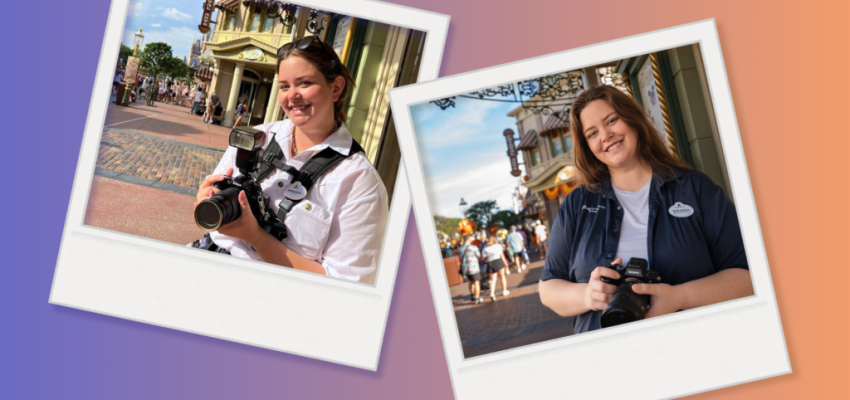

Before the meticulously organized social media content calendars, the carefully crafted, catchy captions, and the brainstormed viral-worthy videos, there was often a simpler beginning. For many, it starts with a flicker of curiosity, a nascent passion for capturing moments, or simply a deep-seated desire to tell a story. This journey, often commencing with nothing more than a camera and a budding dream, embodies the essence of **creative career development**. It’s a testament to how personal passion can blossom into a dynamic professional path, constantly evolving with the technological landscape.
As an AI specialist and someone deeply fascinated by the convergence of technology and human potential, I’ve observed firsthand how the digital age has reshaped traditional career trajectories. The story of a nascent photographer becoming a seasoned digital content strategist isn’t just about mastering new tools; it’s about embracing continuous learning, adapting to paradigm shifts, and understanding how innovation, particularly in artificial intelligence, can amplify human creativity. This article delves into that transformative journey, exploring how a career born through the lens, literally and metaphorically, navigates and thrives in an increasingly AI-driven professional world.
### Creative Career Development: From Passion to Profession
The initial spark for many creative professionals is deeply personal. Imagine a young individual, perhaps still in their formative years, clutching a camera – whether a disposable film model, a clunky digital point-and-shoot, or a smartphone – and seeing the world through a unique filter. This act isn’t merely about taking pictures; it’s about developing an eye, understanding light, composition, and the subtle nuances that transform a fleeting moment into a lasting image. It’s the beginning of a lifelong pursuit where an innate curiosity about visual storytelling takes root. This raw, untamed passion is the bedrock of **creative career development**.
For someone starting this journey, the early days are a blend of experimentation and self-discovery. They learn by doing: snapping countless photos, editing them with rudimentary software, and sharing them with a small circle of friends and family. This informal apprenticeship builds foundational skills – not just technical proficiency with equipment and software, but also a deeper understanding of narrative, audience, and impact. Over time, this hobby often transitions into a serious endeavor. The desire to refine skills, to learn from professionals, and to immerse oneself in a creative community becomes paramount. This often leads to formal education, internships, or participation in programs like the Disney College Program, which provides a structured environment to hone skills while gaining real-world experience in a dynamic creative industry.
What sets this trajectory apart is the relentless drive to innovate. A creative professional isn’t content with merely reproducing existing ideas; they strive to push boundaries, to find new ways to connect with audiences, and to tell stories that resonate. This requires not just artistic talent but also a strategic mindset – understanding how to translate creative vision into tangible results, whether that’s boosting engagement on social media or crafting compelling narratives for marketing campaigns. The journey from capturing personal moments to managing professional content calendars marks a significant leap, demonstrating a comprehensive approach to **creative career development** that integrates artistic sensibility with strategic foresight.
### The Evolving Landscape of Digital Storytelling
The advent of the internet and social media platforms fundamentally altered the landscape for creative professionals. The ‘lens’ no longer just referred to a camera’s aperture; it became a metaphor for the digital window through which stories are consumed by millions. Suddenly, a single image or video could reach a global audience, democratizing content creation and distribution in unprecedented ways. This shift meant that the skills honed behind a physical lens needed to be translated and expanded for the digital realm.
Digital storytelling is a multi-faceted discipline. It demands not only visual expertise but also an understanding of platform algorithms, audience analytics, and engagement strategies. Content calendars, once the domain of large marketing agencies, became essential tools for individual creators and small businesses alike. Crafting catchy captions is no longer a trivial task; it’s an art form requiring conciseness, wit, and a deep understanding of brand voice and audience psychology. Brainstorming trendy videos means staying abreast of rapidly changing cultural currents, predicting viral potential, and producing high-quality content at an astonishing pace.
Consider the sheer volume of content uploaded daily: hundreds of thousands of hours of video to YouTube, billions of images to Instagram. Standing out in such a crowded space requires more than just talent; it demands strategic thinking. Creatives must become adept at A/B testing different content types, analyzing performance metrics, and iteratively refining their approach. The feedback loop is immediate and relentless, offering both challenges and immense opportunities for growth. This data-driven approach, where creativity meets analytics, has become a cornerstone of effective digital storytelling and a crucial component in modern **creative career development**.
Platforms like TikTok, Instagram Reels, and YouTube Shorts have further accelerated this evolution, emphasizing short-form, authentic, and highly engaging content. The narrative structures have become more condensed, the visual language more dynamic, and the reliance on trends more pronounced. This constant flux necessitates continuous learning and adaptation, pushing creatives to expand their skill sets beyond traditional photography and videography into areas like motion graphics, sound design, and interactive storytelling. The digital lens is always shifting, and so too must the creative professional’s perspective.
### AI as a Catalyst for Creative Evolution
The most significant transformation, however, is arguably yet to fully unfold with the accelerating integration of artificial intelligence into creative workflows. As an AI specialist, I’ve witnessed firsthand how these technologies are not merely tools for automation but potent collaborators that can fundamentally reshape the trajectory of **creative career development**.
AI’s role in content creation is multifaceted. Take image and video editing, for example. What once took hours of meticulous manual work can now be achieved in minutes with AI-powered tools. Background removal, object selection, color grading, image upscaling, and even generative fill capabilities (like those seen in Adobe’s Firefly) empower creatives to execute complex visions with unprecedented efficiency. A single artist can now achieve production values that previously required a team, freeing them to focus on the conceptual and narrative aspects of their work. This is not about replacing human artists but augmenting their capabilities, allowing them to iterate faster, experiment more boldly, and bring more ambitious projects to life.
Beyond visual manipulation, AI is becoming an invaluable asset in the ideation and strategy phases. Large Language Models (LLMs) can assist with brainstorming content ideas, generating multiple caption options, drafting script outlines, and even analyzing sentiment from audience feedback to help tailor future content. Imagine asking an AI to generate ten catchy hooks for a new video campaign, or to analyze market trends and suggest visual styles that resonate with a target demographic. This level of intelligent assistance transforms the creative process, injecting efficiency and data-backed insights without stifling originality.
Furthermore, AI plays a crucial role in content distribution and personalization. Algorithms powered by machine learning determine what content users see, when they see it, and in what format. Understanding these dynamics, and leveraging AI tools that can predict optimal posting times or identify emerging trends, becomes a strategic advantage for any creative professional. AI can also help analyze vast datasets of content performance, providing insights that were previously inaccessible or too time-consuming to extract. This allows for truly data-driven decisions that refine creative output and maximize impact.
However, this partnership with AI also introduces new skills requirements. The modern creative must learn to ‘prompt engineer’ effectively, guiding AI tools with clear and concise instructions to achieve desired outcomes. They must also develop an understanding of AI’s limitations, ethical considerations regarding bias and intellectual property, and the critical importance of human oversight to maintain authenticity and artistic integrity. The future of **creative career development** isn’t just about mastering software; it’s about mastering the art of collaboration with intelligent machines.
### Navigating the Future of Creative Work
The journey of **creative career development** in the digital age is one of continuous evolution. The core passion for storytelling and visual communication remains constant, but the tools and methodologies for expressing that passion are perpetually advancing. For professionals operating in this dynamic field, adaptability is not just a desirable trait; it is an absolute necessity. The ability to embrace new technologies, learn new skills, and pivot strategies in response to emergent trends defines success.
What this evolving landscape underscores is the enduring value of human creativity. While AI can generate images, write text, and even compose music, it lacks the lived experience, emotional depth, and unique perspective that define truly compelling human art. AI serves as an immensely powerful co-pilot, handling the mundane, accelerating the technical, and opening doors to previously unimaginable creative avenues. But the spark, the vision, the narrative soul – these remain firmly in the human domain.
The future of creative work demands a blend of artistic intuition, technological literacy, and strategic acumen. Professionals must be curious explorers, constantly experimenting with new AI tools, understanding their potential, and critically evaluating their application. They must also cultivate a strong network, collaborate with diverse teams, and maintain a learner’s mindset. The landscape of content creation is no longer linear; it is a rich, interconnected ecosystem where human ingenuity, amplified by artificial intelligence, can achieve truly extraordinary things.
In conclusion, the journey from a simple camera and a dream to a sophisticated career in digital content is a testament to the power of passion meeting innovation. The story of **creative career development** in our time is inextricably linked to the rapid advancements in technology, particularly in artificial intelligence. What began as an individual’s unique lens on the world has expanded into a global canvas, where stories are told, shared, and consumed with unprecedented speed and scale.
As we look ahead, the synergy between human creativity and AI will only deepen, unlocking new possibilities for storytelling, engagement, and professional growth. For anyone embarking on or continuing their creative path, the message is clear: embrace the tools, cultivate your unique voice, and never stop learning. The most exciting chapters in creative careers are yet to be written, and with AI as our ally, the potential for impactful, inspiring work is limitless.










