

The relentless march of artificial intelligence continues to reshape our world, fundamentally altering industries, economies, and indeed, the very fabric of human labor. As an AI specialist and enthusiast, I often find myself pondering the future of work, particularly through the eyes of the generation poised to inherit this AI-augmented landscape: Gen Alpha.
Born roughly between 2010 and 2024, this cohort is the first to be truly immersed in a digital-first reality, where AI tools are becoming as ubiquitous as the internet itself. One might naturally assume that their career aspirations would lean heavily into coding, data science, and purely digital endeavors. However, recent insights challenge this conventional wisdom, revealing a fascinating and perhaps counter-intuitive trend: a significant portion of Gen Alpha expresses a strong desire for hands-on careers.
A new survey has illuminated this surprising preference, indicating that a vast majority of this young generation is not just contemplating but actively yearning for professions that involve tangible creation, direct interaction, and physical engagement. This revelation offers a compelling narrative, prompting us to delve deeper into what drives these choices and what they might signify for the evolving relationship between humanity and artificial intelligence in the professional sphere.
Gen Alpha Careers: A Glimpse into the Next Generation’s Ambitions
To understand this emerging trend in Gen Alpha careers, we first need to define who Gen Alpha truly is. They are the offspring of Millennials, digital natives in the truest sense, never knowing a world without smartphones, tablets, and increasingly, AI-driven applications that simplify daily tasks. From smart assistants that answer their questions to educational apps powered by adaptive learning algorithms, AI is an invisible hand guiding much of their early development and interaction with the world. Given this backdrop, the expectation is often that these children will seamlessly transition into highly technical, digitally-focused roles, perhaps even becoming the architects of the next generation of AI itself.
However, the survey findings paint a different picture, one that suggests a deep-seated human desire for connection and tangibility persists, even thrives, amidst the digital deluge. The study, which notably found that 90% of parents have already engaged in discussions about different career opportunities with their children, highlighted a strong inclination among Gen Alpha towards roles that are distinctly ‘hands-on’. These aren’t just fleeting childhood fantasies; they represent a significant inclination that parents are already observing and discussing with their offspring.
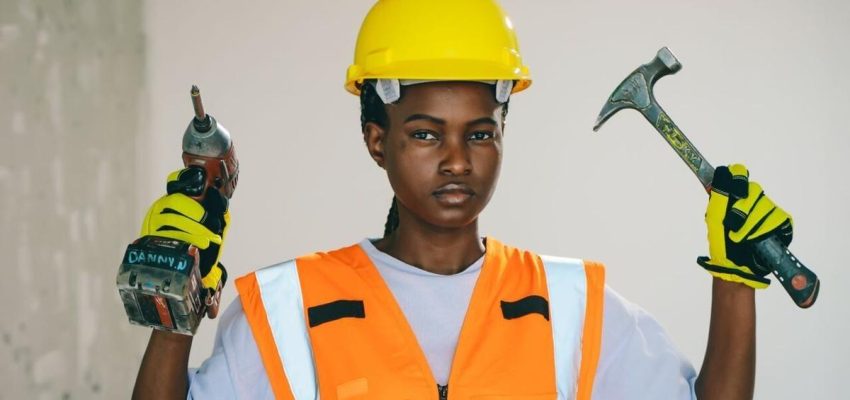
What exactly constitutes a ‘hands-on’ career in the context of Gen Alpha’s aspirations? We’re talking about professions like skilled trades – carpentry, plumbing, electrical work – which require intricate physical dexterity and problem-solving. We’re also looking at healthcare roles such as nursing, physical therapy, and even specialized surgical professions, where human touch, empathy, and precise motor skills are irreplaceable. Creative fields, too, fall into this category: artisans, chefs, designers, architects, and even performing artists, all of whom engage directly with materials, people, or their own bodies to produce tangible outcomes. These fields, often seen as traditional, appear to hold a renewed allure for a generation growing up surrounded by screens and algorithms.
This preference for hands-on engagement might stem from several factors. Psychologically, there’s an inherent satisfaction in creating something tangible, in seeing the direct result of one’s labor. The ability to physically manipulate objects, solve real-world problems with one’s own hands, and provide direct, human-centric services offers a sense of purpose and accomplishment that can be elusive in purely digital environments. Furthermore, in an age where AI can generate text, images, and even code with increasing sophistication, there might be an unconscious drive towards roles that inherently emphasize human uniqueness, creativity, and the tactile experience—qualities that AI struggles to replicate authentically. The future of Gen Alpha careers seems to be one rooted in the tangible.
The AI Landscape and the Evolving Definition of “Work”
It’s impossible to discuss the future of work without acknowledging the transformative power of artificial intelligence. We are living through an unprecedented period of technological advancement, where AI is not just automating routine tasks but also augmenting human capabilities across nearly every sector. From predictive analytics in finance to advanced robotics in manufacturing, from AI-powered diagnostics in medicine to generative AI assisting in creative endeavors, the landscape of work is undergoing a profound metamorphosis.
For many, the rise of AI evokes fear of job displacement. While it’s true that certain tasks and even entire job categories will be automated, this narrative often overlooks the equally significant phenomenon of job augmentation and creation. AI is not merely replacing; it is also empowering. It’s allowing professionals to achieve more, faster, and with greater precision. For instance, a chef might use AI to optimize recipes based on nutritional content and flavor profiles, while a carpenter could employ AI-powered tools for highly precise cuts or to design complex structures with efficiency.
The real insight lies in understanding where human value truly stands in an AI-driven economy. Skills that emphasize human uniqueness – such as emotional intelligence, critical thinking, complex problem-solving, creativity, adaptability, and cross-cultural communication – are becoming increasingly paramount. These are the ‘power skills’ that AI, despite its rapid advancements, cannot yet genuinely replicate. The inclination towards hands-on roles among Gen Alpha may be an intuitive response to this understanding, a subconscious recognition of where enduring human value lies.
Consider the healthcare professional: while AI can analyze medical images, predict disease outbreaks, and assist in diagnostics, the empathetic touch of a nurse, the nuanced communication of a therapist, or the delicate precision of a surgeon’s hand guided by years of experience and intuition remain indispensable. Similarly, a skilled artisan creating a custom piece of furniture offers not just an object, but a story, a human connection, and a unique aesthetic that AI can simulate but not originate with genuine human intent and flair. These are the areas where Gen Alpha careers could truly shine, blending traditional craft with modern augmentation.
Nurturing Tomorrow’s Innovators: Parental Guidance and Educational Pathways
The finding that 90% of parents are already discussing career options with their Gen Alpha children is incredibly significant. It underscores the awareness among parents about the rapidly changing world and their desire to equip their children for success. This early engagement is crucial, as it allows for exploration, discovery, and the cultivation of a diverse skill set that will be vital in navigating the complexities of the future job market.
For parents and educators, the challenge lies in fostering an environment that encourages both digital literacy and practical, hands-on skills. It’s not an either/or proposition, but rather a holistic approach. Children should be exposed to the fundamentals of computational thinking, data literacy, and how AI operates, not necessarily to become AI engineers, but to become informed citizens and professionals in an AI-powered world. Simultaneously, opportunities for hands-on learning—whether through vocational programs, art classes, science experiments, or community service—are equally vital. These experiences develop fine motor skills, spatial reasoning, problem-solving abilities in a tangible context, and the invaluable capacity for human connection and collaboration.
Education in the era of AI should transcend traditional subject boundaries. The integration of STEM with the Arts (STEAM) becomes even more critical, allowing for the fusion of logical, analytical thinking with creativity and design. Vocational training, once viewed as a secondary option, is regaining its rightful prestige as it equips individuals with specialized, resilient skills that often complement AI advancements rather than being superseded by them. The future of Gen Alpha careers will likely be characterized by this blend.
The goal is to prepare Gen Alpha not for a static set of jobs, but for a dynamic future where career paths are fluid, often hybrid, and require continuous learning and adaptability. A future nurse might use AI for rapid diagnostic support, but their core value will still be human care. An architect might leverage AI for generative design, but their artistic vision and understanding of human interaction with space will be paramount. The hands-on worker of tomorrow will not be divorced from technology but will integrate it intelligently, using AI as a powerful tool to enhance their craft, productivity, and the quality of their human-centric output.
In conclusion, the emerging career aspirations of Gen Alpha present a fascinating paradox: a generation raised in the digital ether, yet drawn to the tangible and the human-centric. This trend is not a rejection of AI, but rather a profound recalibration of what human contribution means in an increasingly intelligent world. It suggests an innate understanding that while AI can amplify efficiency and intellect, it cannot replicate the nuanced empathy, the intricate dexterity, or the unique creative spark that defines humanity.
As we look ahead, the future of work will undoubtedly be a blend of human ingenuity and artificial intelligence. The surprising preference for hands-on Gen Alpha careers serves as a powerful reminder that professions requiring direct human interaction, fine motor skills, and empathetic engagement will not only endure but thrive. Our collective task, as parents, educators, and innovators, is to empower this generation with the versatile skill sets – a fusion of digital fluency and tangible expertise – to navigate this evolving landscape, ensuring they can craft fulfilling careers that leverage AI as a partner, rather than perceiving it as a threat. The future, it seems, is not just intelligent, but also profoundly human.










