
In an era defined by rapid technological advancement and unprecedented global connectivity, the landscape of education is undergoing a profound transformation. As an AI specialist and a passionate advocate for forward-thinking pedagogy, I often reflect on what truly prepares young minds for the complexities of tomorrow. While academic prowess remains undeniably important, the metrics by which we measure success are evolving. Today, genuine preparedness for an AI-driven future extends far beyond grades; it encompasses a rich tapestry of skills, character traits, and practical readiness.
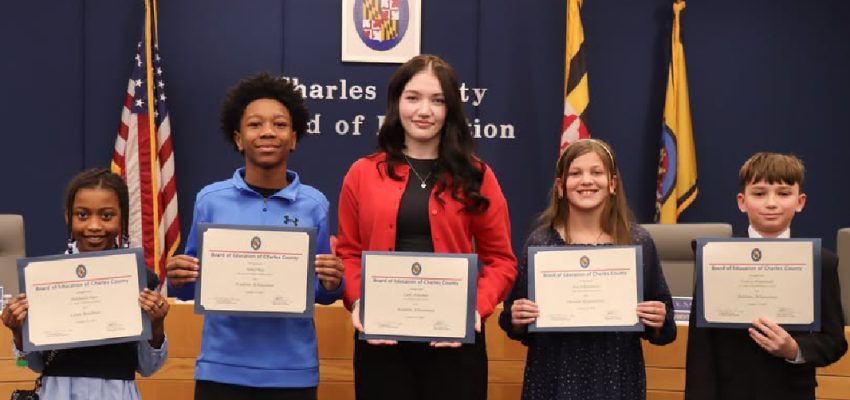
The recent recognition of students in Charles County Public Schools (CCPS) by their Board of Education serves as a compelling testament to this evolving philosophy. Honoring students for achievements not just in academics, but also in personal responsibility and career readiness, highlights a progressive approach that understands the multifaceted demands of the 21st century. This isn’t merely about celebrating individual accomplishments; it’s about acknowledging the fundamental pillars upon which resilient, innovative, and impactful citizens are built. Such initiatives underscore a vital shift towards nurturing well-rounded individuals capable of thriving in a world increasingly shaped by artificial intelligence, automation, and dynamic change. It is a commitment to fostering a generation that possesses not only the knowledge to innovate but also the ethical grounding and adaptability to lead.
### Holistic Student Development: Beyond the Grades
The concept of **holistic student development** is gaining unprecedented traction, and rightly so. For decades, educational systems predominantly focused on academic performance as the primary indicator of a student’s potential. While strong grades are undoubtedly valuable, they offer only a partial view of a young person’s capabilities. The real world, especially one influenced by advanced AI, demands a much broader skill set.
What does **holistic student development** truly entail? It’s an approach that considers the whole child: their cognitive, emotional, social, physical, and creative growth. It recognizes that learning isn’t confined to textbooks and classrooms but extends to character building, critical thinking, problem-solving, and interpersonal skills. This comprehensive view acknowledges that emotional intelligence, resilience, and a sense of personal accountability are just as vital as understanding complex mathematical equations or historical events. Consider the shift in employer demands: studies from organizations like the World Economic Forum consistently highlight critical thinking, creativity, complex problem-solving, and emotional intelligence as top skills for the future workforce – competencies that are rarely measured solely by academic scores.
Programs like the one in Charles County are leading the way by explicitly rewarding students for embodying these broader traits. Recognizing a fourth grader for personal responsibility or a fifth grader for career readiness sends a powerful message: that these attributes are valued, cultivated, and essential. It helps students understand that their growth is a continuous journey, encompassing every facet of their being. In an educational landscape that can often feel like a race for test scores, celebrating a student’s initiative in a group project, their perseverance through a challenging assignment, or their empathy towards a peer provides crucial validation for efforts that extend far beyond the syllabus. This kind of recognition fosters intrinsic motivation and helps children develop a growth mindset, understanding that their abilities can be developed through dedication and hard work.
### Cultivating Future Leaders: The Role of Soft Skills and Personal Responsibility
The bedrock of any thriving society rests on the strength of its leaders and the responsibility of its citizens. In the context of education, nurturing leadership and personal responsibility translates into cultivating what are often called ‘soft skills’ – capabilities that are anything but soft in their impact. These include effective communication, collaboration, adaptability, problem-solving, and ethical decision-making. These are precisely the human-centric skills that AI, for all its sophistication, struggles to replicate.
Leadership, in this sense, isn’t about holding a formal title; it’s about taking initiative, inspiring peers, demonstrating empathy, and guiding discussions toward productive outcomes. For a fifth grader, this might mean organizing a successful group project or mentoring a younger student. For a high schooler, it could be leading a community service initiative or passionately advocating for an important cause within the school. These are the formative experiences that build confidence, foster a sense of purpose, and prepare individuals to navigate complex social and professional dynamics.
Equally crucial is personal responsibility. This encompasses accountability for one’s actions, demonstrating integrity, managing time effectively, and showing resilience in the face of setbacks. In a world where information is abundant and easily accessible, the ability to discern truth, act ethically, and manage one’s digital footprint is paramount. Developing this early on instills a robust moral compass and a sense of self-reliance that empowers students to make sound decisions independently. When students are recognized for these qualities, it reinforces their importance, encouraging not just individual growth but also a positive school culture where these values are championed.
Educational institutions that intentionally integrate and celebrate these ‘soft skills’ are effectively future-proofing their students. As AI automates more routine cognitive tasks, the demand for uniquely human skills – those that involve creativity, critical judgment, interpersonal finesse, and ethical reasoning – will only escalate. Investing in these areas now ensures that the next generation will not merely be users of technology but thoughtful creators, responsible leaders, and innovative problem-solvers who can harness AI for the betterment of humanity.
### Bridging Education and Industry: Preparing for the AI-Driven Future
Career readiness today looks drastically different from even a decade ago. It’s no longer solely about acquiring a specific vocational skill; it’s about developing adaptability, digital fluency, and a commitment to lifelong learning. The rapid evolution of AI means that many of the jobs that exist today will transform, and entirely new professions will emerge. Therefore, preparing students for an AI-driven future requires a forward-thinking curriculum that integrates theoretical knowledge with practical application and foresight into emerging industry trends.
Programs that recognize career readiness in students, even at elementary levels, are instilling fundamental habits that will serve them throughout their professional lives. This might include encouraging an inquisitive mindset about different professions, developing basic financial literacy, fostering teamwork skills applicable in any workplace, or engaging in early exposure to STEM/STEAM fields. By recognizing these efforts, schools help students understand the connection between their studies and their future aspirations, making learning more relevant and motivating.
In the context of AI, career readiness extends to understanding how artificial intelligence functions, its ethical implications, and its potential applications across various sectors. It’s not about teaching every student to code complex AI algorithms, but rather equipping them with AI literacy – the ability to interact with, understand, and critically evaluate AI systems. This includes developing skills in data analysis, computational thinking, and even the “human-in-the-loop” aspects of AI, where human oversight and judgment remain crucial. These skills, coupled with robust communication and collaboration abilities, create a workforce that is not only prepared for change but is also capable of driving it.
Furthermore, career readiness involves fostering an entrepreneurial spirit and a comfort with iterative problem-solving – skills that are inherently valuable in the fast-paced tech world. Recognizing students who demonstrate ingenuity, take calculated risks, or show initiative in developing new ideas helps to cultivate the innovators and entrepreneurs of tomorrow. These are the individuals who will harness AI not just to optimize existing processes but to imagine and build entirely new industries and solutions.
The thoughtful approach taken by Charles County Public Schools, honoring students for their achievements in academics, personal responsibility, and career readiness, encapsulates a vision for education that is both profound and pragmatic. It acknowledges that true success in the 21st century is multifaceted, demanding not just intellectual prowess but also strong character and practical preparation for a dynamic world. As we continue to integrate advanced technologies like AI into every facet of our lives, the importance of nurturing these well-rounded human capabilities will only grow.
These initiatives are more than just award ceremonies; they are powerful affirmations of the values we wish to instill in the next generation. By shining a spotlight on **holistic student development**, schools are fostering an environment where curiosity is celebrated, challenges are embraced, and every student feels empowered to become a thoughtful, responsible, and innovative contributor to society. As an AI specialist, I am incredibly optimistic about a future shaped by individuals who possess such a robust foundation, ready to navigate and co-create an increasingly intelligent world with empathy and ingenuity.