
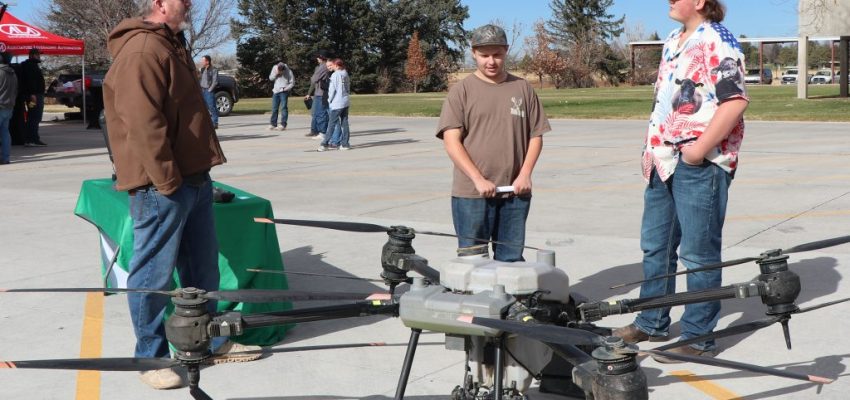

In an increasingly complex world, few sectors hold as much fundamental importance as agriculture. It is the bedrock of our sustenance, the source of our fibers, and a vital engine of global economies. Yet, for many, the image of ‘agriculture’ remains rooted in tradition: a lone farmer tilling fields, a pastoral scene untouched by the rapid advancements of the 21st century. This perception, while charming, obscures a vibrant reality. Modern agriculture is a dynamic, high-tech, and incredibly diverse field, brimming with opportunities for innovation, scientific discovery, and profound global impact. As an AI specialist and tech enthusiast, I’ve often been captivated by the transformative power of technology, and nowhere is this more evident than in the evolution of this essential industry.
Events like the ‘Careers in Ag Day’ held at institutions such as the University of Nebraska-Lincoln Panhandle Research Extension and Education Center in Scottsbluff, which brought together over 170 students to explore a variety of career paths, are crucial in bridging this knowledge gap. These initiatives serve as vital windows into a world far more expansive and technologically advanced than many realize. They highlight that pursuing a path in agriculture today means stepping into a future rich with possibilities, where cutting-edge technology intersects with fundamental human needs. This article aims to peel back the layers of misconception, revealing the exciting and multifaceted landscape of modern agriculture careers and the pivotal role they play in shaping our collective future.
Agriculture Careers: A Spectrum of Opportunity in the Modern Era
The traditional view of agriculture, often limited to primary production roles like farming or ranching, barely scratches the surface of the vast ecosystem that supports our food and fiber systems. Today’s agricultural sector is a sophisticated network encompassing science, technology, engineering, business, policy, and environmental stewardship. It’s a global industry, projected to grow significantly as the world population inches towards 10 billion by 2050, demanding ever more efficient and sustainable food production methods.
Consider the sheer economic scale: in the United States alone, the agriculture sector contributes over a trillion dollars to the Gross Domestic Product (GDP) annually and supports millions of jobs across various sub-sectors. Globally, it’s an even larger employer, with an estimated 2.5 billion people relying on agriculture for their livelihoods, either directly or indirectly. This immense scale naturally generates a broad spectrum of agriculture careers, from field to fork and beyond.
For instance, an event like the ‘Careers in Ag Day’ would likely introduce students to roles in agronomy, the science of soil management and crop production, which now involves intricate data analysis and remote sensing. They might learn about animal science, exploring careers in veterinary medicine, livestock genetics, or animal nutrition. Food science offers pathways into developing new food products, ensuring food safety, and enhancing nutritional value – a field critical for public health. Agribusiness professionals manage the economic and logistical complexities of getting products from farm to market, involving finance, marketing, supply chain management, and international trade.
Furthermore, the sector’s increasing focus on sustainability has opened up new avenues in environmental consulting, water resource management, and conservation, where specialists work to minimize agriculture’s ecological footprint. Educational roles, from university researchers to extension agents, are also vital, tasked with disseminating knowledge and innovation to producers and the public. The diversity of these roles underscores that a career in agriculture is no longer a niche pursuit but an invitation to engage with some of humanity’s most pressing challenges and contribute to their solutions.
Beyond the Tractor: The Scientific and Technological Revolution in Ag
What truly sets modern agriculture apart is its embrace of technology. From artificial intelligence to biotechnology, the tools at our disposal today are revolutionizing how food is grown, harvested, processed, and distributed. This technological infusion has not only enhanced efficiency but has also created entirely new categories of agriculture careers that demand a blend of traditional agricultural knowledge and advanced technical skills.
One of the most impactful areas is Precision Agriculture. This involves using GPS, satellite imagery, sensors, drones, and the Internet of Things (IoT) to monitor and manage crop and livestock production with unprecedented accuracy. Agronomists now work alongside geospatial analysts, drone operators, and data scientists to interpret vast datasets, optimize fertilizer application, predict yields, and detect disease outbreaks early. For example, AI-powered systems can analyze drone imagery to identify individual plants stressed by lack of water or pests, allowing farmers to target interventions precisely, reducing waste and environmental impact.
Agricultural Biotechnology is another frontier, pushing the boundaries of what crops can achieve. Scientists in this field work on genetic engineering to develop crops resistant to pests, diseases, and extreme weather conditions, or to enhance their nutritional content. This involves specialists in genomics, bioinformatics, and molecular biology. Similarly, advancements in animal genetics aim to improve livestock health and productivity, requiring expertise in areas like genetic engineering and animal husbandry.
The rise of Data Science and Analytics is transforming every facet of agriculture. Farms are increasingly generating petabytes of data from sensors, machinery, and market trends. Professionals in this domain use machine learning algorithms and statistical models to extract actionable insights, from optimizing planting schedules to forecasting market prices. These roles are critical for making informed decisions, enhancing profitability, and ensuring sustainability across the entire agricultural value chain.
Robotics and Automation are also steadily making their way into the fields and farm operations. Autonomous tractors, robotic harvesters, and automated milking systems are becoming more common, requiring engineers, robotics technicians, and software developers to design, maintain, and program these complex machines. These innovations are not just about replacing manual labor but about performing tasks with greater precision, speed, and safety, often in challenging environments.
Finally, the entire agricultural Supply Chain Management has been supercharged by technology. AI and advanced analytics are used to optimize logistics, reduce food waste, and ensure timely delivery of produce from farms to consumers. This involves experts in logistics, supply chain analytics, and information technology, who work to create more resilient and transparent food systems.
Cultivating the Future: Environmental Stewardship, Food Security, and Global Impact
Beyond the immediate technological marvels, agriculture careers are increasingly defined by their profound connection to global challenges. Environmental stewardship and food security are not merely buzzwords but foundational principles driving innovation and creating new professional pathways within the sector. The modern agricultural professional often finds themselves at the nexus of ecological responsibility, economic viability, and social impact.
The imperative for Sustainability and Conservation has led to a burgeoning field of specialized careers. Professionals in regenerative agriculture, for example, focus on practices that improve soil health, enhance biodiversity, and sequester carbon, moving beyond simply minimizing harm to actively restoring ecological balance. Water resource managers develop efficient irrigation systems and conservation strategies, critical in regions facing water scarcity. Environmental scientists assess agricultural practices’ impact and recommend sustainable alternatives, often leveraging remote sensing and GIS technologies.
Addressing Food Security and Nutrition remains a core mission. As the global population grows, ensuring access to sufficient, safe, and nutritious food for everyone is a monumental task. This drives demand for experts in food science and technology, who develop novel food products, fortify existing ones, and establish rigorous food safety protocols. Public health specialists and nutritionists also play vital roles, working to educate communities and influence policy to combat malnutrition and promote healthy eating habits. The development of alternative proteins, vertical farming, and controlled environment agriculture also represents cutting-edge areas where innovation is key to future food systems.
The Agribusiness and Economics arm of agriculture ties all these strands together. Marketing specialists craft compelling narratives for sustainable products, finance professionals secure investments for agricultural innovation, and policy analysts shape regulations that support both farmers and the environment. International trade specialists navigate global markets, ensuring fair prices and efficient distribution. These roles require a keen understanding of economic principles, market dynamics, and ethical considerations, often with a global perspective.
Institutions like the University of Nebraska-Lincoln, with their research and extension centers, play a critical role in fostering these future-oriented careers. They are not just places of learning but hubs of innovation, where cutting-edge research in genetics, precision farming, and sustainable practices directly translates into practical applications and informs policy. They are instrumental in equipping the next generation with the knowledge and skills necessary to tackle the complex challenges facing our planet.
The landscape of agriculture careers is undeniably in a state of exciting transformation. Far from being a relic of the past, agriculture stands as a beacon of innovation, driven by technology and guided by a commitment to sustainability and global well-being. From the precision engineer optimizing crop yields with AI to the biotechnologist crafting resilient plant varieties, and the food scientist developing nutritious alternatives, the opportunities are as vast as the fields themselves.
As we look to the future, attracting and nurturing talent in this sector is paramount. Events that showcase the diversity and technological sophistication of modern agriculture are more crucial than ever in inspiring students to consider these rewarding paths. By embracing advancements in AI, robotics, biotechnology, and sustainable practices, those who choose agriculture careers are not just joining an industry; they are becoming stewards of our planet, innovators for human sustenance, and architects of a more secure and prosperous future for all. It’s a field where passion meets purpose, and every innovation has the potential to leave a lasting, positive impact on a global scale.










