
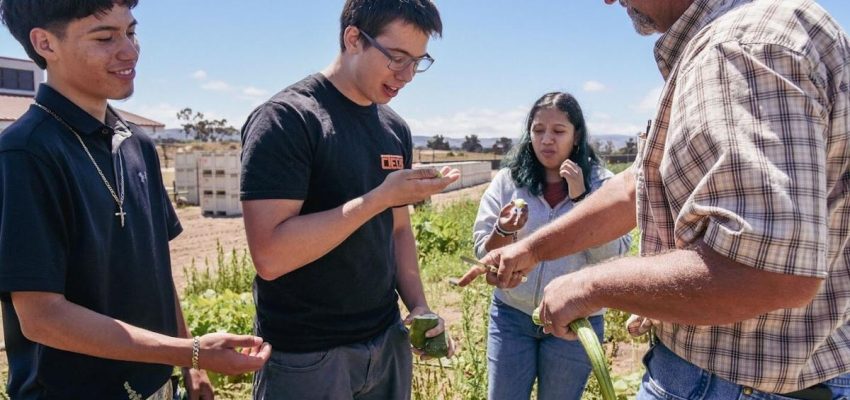

The future is built on innovation, and nowhere is this more evident than at the intersection of education, technology, and community. While a local ‘Farm Day’ event at the Mark Richardson Career Technical Education (CTE) Center might seem rooted in traditional hands-on learning, it subtly underscores a profound truth: practical, skill-based education is the bedrock of societal advancement. Yet, as we stand on the precipice of an AI-powered era, the nature of these essential skills is rapidly evolving.
As André Lacerda, an AI specialist, writer, and tech enthusiast, I believe it’s imperative to look beyond the immediate spectacle of student-led agriculture and consider the broader implications for career preparedness. How are institutions like the Mark Richardson CTE Center—or any vocational training hub, for that matter—preparing students for a world increasingly shaped by algorithms, automation, and intelligent systems? The answer lies in the strategic integration of artificial intelligence into the very fabric of Career Technical Education.
### AI in CTE: Shaping Tomorrow’s Workforce
Career Technical Education (CTE) has long been the unsung hero of workforce development, providing students with the tangible skills needed for in-demand professions. From welding to nursing, culinary arts to automotive repair, CTE programs bridge the gap between academic theory and practical application. However, the advent of artificial intelligence is not merely adding another layer to these fields; it’s fundamentally reshaping their landscapes. The demand for new competencies means that **AI in CTE** is no longer a futuristic concept but an immediate necessity.
Consider the agricultural sector, vividly highlighted by ‘Farm Day’ with its focus on ‘corn, careers, community.’ Traditionally, farming has been a labor-intensive, often weather-dependent endeavor. Today, it’s transforming into ‘smart agriculture,’ driven by data, sensors, and machine learning. Drones map fields for optimal irrigation, AI-powered systems detect crop diseases early, and autonomous tractors handle planting and harvesting. Students entering this modernized agricultural landscape won’t just need to know about soil composition; they’ll need to understand data analytics, robotics, and predictive modeling. This shift underscores how critical it is for vocational training programs to embrace AI literacy.
This isn’t an isolated phenomenon. AI’s pervasive influence touches virtually every CTE pathway. In manufacturing, AI drives predictive maintenance, optimizing machinery performance and preventing costly downtime. In healthcare, AI assists in diagnostics, personalizes treatment plans, and streamlines administrative tasks, requiring medical technicians to be adept at interacting with intelligent systems. Even in traditionally ‘human-centric’ fields like hospitality or retail, AI is being used for customer service, inventory management, and personalized marketing. Integrating AI concepts, tools, and ethical considerations into CTE curricula ensures that graduates are not just job-ready but future-proof.
### Smart Farms and the Algorithmic Harvest: AI’s Agricultural Revolution
The image of ‘student-led agriculture’ presented by the Mark Richardson CTE Center offers a fascinating lens through which to view AI’s transformative power. Imagine a student today learning to cultivate corn not just with their hands but also with a tablet displaying real-time soil moisture data, guided by a drone’s thermal imaging, or using a machine learning model to predict optimal planting times based on historical weather patterns. This isn’t science fiction; it’s the reality of precision agriculture, a field being rapidly reshaped by AI.
Precision agriculture utilizes advanced technologies to optimize inputs and maximize outputs, leading to increased efficiency, reduced waste, and greater sustainability. AI algorithms analyze vast datasets—from satellite imagery and weather forecasts to sensor readings and market prices—to provide farmers with actionable insights. For example, AI-powered computer vision systems can identify individual weeds, allowing for targeted herbicide application, dramatically reducing chemical usage. Robotic systems, guided by AI, can harvest delicate crops with greater speed and less damage than manual labor, addressing critical labor shortages. Furthermore, predictive analytics, fueled by AI, can forecast crop yields, helping farmers make informed decisions about resource allocation and market strategy.
What does this mean for careers? It means a burgeoning demand for agricultural technologists, data scientists specializing in agronomy, AI-driven equipment operators, and drone pilots for surveying. CTE programs have an unparalleled opportunity to train students for these emerging roles, offering hands-on experience not just with traditional farming methods but with the cutting-edge AI tools that are redefining what it means to be a farmer in the 21st century. The ‘community’ aspect of Farm Day also becomes relevant here: understanding how these technologies can be democratized and applied to benefit local food systems and economies is a vital part of holistic education.
### Beyond the Bytes: Fostering Human-Centric AI Skills in CTE
While technical proficiency in AI tools and concepts is essential, a truly robust **AI in CTE** curriculum extends beyond mere coding or data manipulation. The human element remains paramount. The ‘careers’ and ‘community’ focus of the original event also points towards the broader skills necessary for navigating an AI-driven world: critical thinking, problem-solving, ethical reasoning, collaboration, and adaptability. As AI takes over repetitive and data-intensive tasks, uniquely human skills become even more valuable.
CTE programs are uniquely positioned to foster these ‘human-centric’ AI skills. Project-based learning, a hallmark of vocational education, can involve students in designing, implementing, and evaluating AI solutions for real-world problems. This not only builds technical competence but also encourages students to consider the societal impact of their work, address biases in data, and design user-friendly interfaces for AI systems. For instance, students developing an AI-powered inventory system for a local business might also explore its implications for job displacement and propose solutions for worker retraining.
Furthermore, communication and teamwork are critical. AI projects are rarely solitary endeavors; they require interdisciplinary collaboration. A student learning about AI in automotive repair might need to communicate complex diagnostics to customers, while another developing smart agricultural tools might collaborate with farmers to understand their needs. By emphasizing these transversal skills, CTE ensures that graduates are not just technically proficient but also emotionally intelligent, ethical, and effective communicators—qualities that AI cannot replicate and which are increasingly in demand in the modern workforce. The ‘community’ focus of Farm Day, bringing together students and the public, perfectly exemplifies how hands-on learning can embed these lessons in a broader social context, encouraging responsible innovation.
### The Mark Richardson Model (Metaphorical) and Global Implications
The spirit of the Mark Richardson CTE Center—a place dedicated to practical, hands-on learning and community engagement—serves as an exemplary model for how educational institutions globally can approach the integration of AI. While the original Farm Day might highlight traditional agricultural practices, the *essence* of a CTE center is its adaptability and responsiveness to industry needs. This adaptability is precisely what’s required to navigate the rapid advancements in AI.
Integrating AI effectively into CTE requires more than just new courses; it demands a holistic rethinking of curricula, pedagogical approaches, and industry partnerships. This might involve setting up AI labs, providing teachers with specialized training, or collaborating with local tech companies and agricultural businesses to offer internships and real-world project opportunities. The goal is to move beyond teaching students *about* AI to teaching them how to *work with* AI, how to *create* AI solutions, and how to *understand the implications* of AI.
Globally, countries are grappling with how to prepare their workforces for the AI era. Nations like Singapore and Germany, known for their strong vocational training systems, are investing heavily in AI literacy programs, apprenticeships focused on AI-driven industries, and research into future job roles. The challenges are significant—ranging from funding to curriculum development and teacher training—but the opportunities are even greater: to create a workforce that is not only resilient but also innovative and capable of leveraging AI for economic growth and societal benefit. The Mark Richardson CTE Center, by fostering practical skills and community ties, provides a local blueprint for this global imperative, reminding us that the future of work begins with practical education today.
In conclusion, as we marvel at the ingenuity displayed at local events like the Mark Richardson CTE Center’s Farm Day, it’s essential to recognize that the foundations of future careers are being laid not just in traditional fields but increasingly at the intersection of those fields and cutting-edge technology. The integration of **AI in CTE** is not an option but a strategic imperative to ensure that the next generation is equipped with the skills to thrive in an ever-evolving digital landscape.
By embracing AI, CTE programs can continue their vital role in preparing students for meaningful employment, fostering innovation, and contributing to resilient communities. The ‘hands-on look at student-led agriculture and career’ that such centers offer must evolve to include a hands-on look at AI-driven solutions, ethical considerations, and the dynamic careers they will enable. Only then can we truly cultivate a future where human ingenuity, amplified by artificial intelligence, continues to drive progress.










