
In the relentless march of scientific discovery and technological advancement, the conventional, linear career path is increasingly becoming a relic of the past. The world we navigate today, especially within the spheres of artificial intelligence and advanced engineering, demands a different kind of professional – one who is not merely specialized but dynamically adaptable, capable of traversing disciplines and continually reinventing their expertise. As an AI specialist, writer, and tech enthusiast, I, André Lacerda, have witnessed firsthand this profound shift, a paradigm I like to call the emergence of kinetic careers.
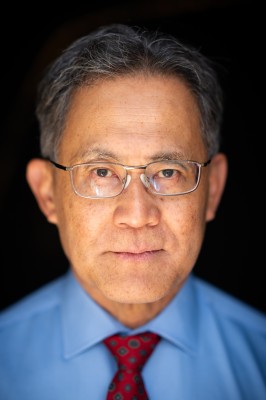
Consider the very essence of science: an endless frontier of inquiry, often requiring researchers to pivot, merge ideas, and draw insights from seemingly unrelated fields. This dynamism is now mirrored in the professionals who drive innovation. A recent recognition by the Society of Asian Scientists and Engineers (SASE) highlighted three engineers from Sandia National Laboratories, celebrated precisely for their ability to push beyond established boundaries. Their stories serve as compelling examples of individuals who have expanded their knowledge and impact across multiple fields, embodying the very spirit of a kinetic professional journey. This isn’t just about changing jobs; it’s about a fundamental redefinition of professional growth, where fluidity and interdisciplinary exploration become the cornerstone of meaningful contribution.
Kinetic Careers: A Paradigm Shift in Professional Development
What exactly defines a kinetic career? At its core, it’s a professional trajectory characterized by continuous motion, adaptation, and multi-directional growth, rather than a fixed, upward climb within a single domain. Individuals pursuing these dynamic paths are not content with mastering one niche; they actively seek to broaden their horizons, acquire new skills, and apply their expertise to diverse challenges across various scientific and technological landscapes. This contrasts sharply with the traditional model, where a career might progress in a predictable, linear fashion, often within a single specialization or department for decades.
The drivers behind this shift are manifold and interconnected. Firstly, the sheer pace of technological change, particularly in fields like artificial intelligence, demands constant learning and re-skilling. What was cutting-edge five years ago might be foundational or even obsolete today. Professionals cannot afford to rest on their laurels; they must be perpetual students, eager to embrace new tools, methodologies, and conceptual frameworks. Secondly, the complexity of modern global challenges – from climate change to disease eradication and cybersecurity – rarely fits neatly into single disciplinary boxes. Addressing these grand challenges requires collaborative, interdisciplinary approaches, necessitating professionals who can bridge gaps between fields like data science, ethics, engineering, and social sciences.
Furthermore, organizations themselves are evolving. The rise of agile methodologies, project-based work, and cross-functional teams inherently fosters an environment where versatility is highly valued. Companies are increasingly seeking “T-shaped” individuals – those with deep expertise in one area (the vertical bar of the ‘T’) but also a broad understanding and ability to collaborate across multiple disciplines (the horizontal bar). This broad applicability and willingness to engage with diverse problems are hallmarks of a dynamic professional path.
The engineers recognized by SASE are prime examples of this phenomenon. While the details of their specific projects are not publicly elaborated in the snippet, their recognition for “pushing beyond the boundaries of linear research” strongly implies a willingness to venture into uncharted territory, apply their foundational engineering knowledge in novel contexts, and cultivate new skill sets that transcend their initial training. This isn’t merely curiosity; it’s a strategic, impactful approach to professional development that delivers broader value and accelerates innovation.
The Symbiotic Relationship Between AI and Kinetic Professionals
My work in artificial intelligence has made it abundantly clear that AI is not just a field benefiting from kinetic careers; it is also a powerful catalyst for their emergence. This relationship is deeply symbiotic, creating a feedback loop where adaptable professionals drive AI innovation, and AI, in turn, empowers professionals to be more kinetic.
How does AI enable kinetic professional journeys? Consider the unprecedented access to knowledge and learning platforms. AI-powered educational tools, personalized learning pathways, and intelligent content curation make it easier than ever for professionals to acquire new skills and delve into new domains, often outside their immediate expertise. An engineer specializing in robotics, for instance, can use AI-driven platforms to rapidly grasp concepts in neuroscience or psychology to build more empathetic human-robot interfaces.
Beyond learning, AI revolutionizes the research process itself. Machine learning algorithms can sift through vast datasets, identify complex patterns, and generate hypotheses at speeds impossible for humans. This frees up researchers from tedious data analysis, allowing them to spend more time on creative problem-solving, interdisciplinary collaboration, and exploring novel research directions. A materials scientist, leveraging AI for predictive modeling, might quickly pivot from traditional alloy design to biomimetic structures, driven by insights AI provides from biological data.
Moreover, AI’s ability to automate routine tasks across almost every sector allows professionals to reallocate their time and cognitive energy towards higher-value, more exploratory work. An AI developer might use automated code generation tools to quickly prototype solutions, then spend the liberated time exploring the ethical implications of their algorithms, consulting with social scientists, or even dabbling in fields like cognitive psychology to better understand human-AI interaction. This liberation from the mundane directly fuels the ability to pursue diverse interests and cultivate a more dynamic professional path.
Conversely, kinetic professionals are absolutely critical for driving meaningful AI innovation. The development of AI is not a purely technical endeavor; it’s deeply intertwined with ethics, societal impact, psychology, and even philosophy. Professionals who are comfortable crossing disciplinary boundaries are essential for addressing issues like algorithmic bias, ensuring AI development is equitable, and applying AI solutions to complex, real-world problems that require a holistic understanding of human systems. A machine learning engineer who also understands sociological dynamics or legal frameworks is invaluable in designing AI systems that are both effective and responsible.
The very nature of AI, which often involves integrating diverse data types and algorithms to solve complex problems, inherently favors individuals who can think across domains. From natural language processing that draws on linguistics to computer vision that mimics human perception, AI itself is a fundamentally interdisciplinary field. Therefore, individuals who naturally gravitate towards integrating knowledge from various sources – the very definition of a kinetic mindset – are precisely those who will push the boundaries of AI’s capabilities and ensure its ethical and beneficial application across society. They are the ones who can see beyond the code to the broader implications and potential, acting as crucial translators and innovators between the technical and human worlds.
Navigating the Future: Cultivating a Kinetic Mindset
In a world increasingly shaped by AI and rapid technological evolution, cultivating a kinetic mindset is no longer merely an advantage; it’s becoming a necessity for both individual professionals and the organizations that employ them. For individuals aspiring to thrive in this dynamic landscape, several strategies can help foster a truly kinetic career.
First and foremost, embrace lifelong learning with genuine enthusiasm. This goes beyond formal education; it means actively seeking out new knowledge through online courses, workshops, industry conferences, reading, and even side projects. Developing a ‘T-shaped’ skill set, as mentioned earlier, is vital: cultivate deep expertise in your core area, but also intentionally develop broad knowledge and foundational understanding across adjacent and even seemingly disparate fields. For an AI specialist, this might mean not only mastering new neural network architectures but also exploring psychology to understand user behavior or ethics to navigate responsible AI deployment.
Networking across disciplines is another critical component. Break out of your professional echo chamber. Engage with experts from different fields, attend conferences outside your immediate domain, and actively seek out interdisciplinary collaboration opportunities. These interactions often spark unexpected insights and open doors to new avenues for applying your skills. Cultivate curiosity and adaptability as core personal traits. The willingness to experiment, to fail fast, and to pivot when new information emerges is crucial. The future belongs to those who are not afraid to learn, unlearn, and relearn.
For organizations, fostering environments that support kinetic professional development is equally important. This involves breaking down traditional departmental silos and encouraging cross-functional teams and projects. Invest heavily in continuous learning and development programs for employees, making it easy for them to acquire new skills and explore different areas of interest. Furthermore, recognize and reward diverse contributions – not just linear career progression within a specific ladder. Celebrate individuals who bring insights from different fields or apply their skills in novel ways.
Creating a culture of psychological safety where experimentation and even ‘intelligent failure’ are seen as learning opportunities can significantly empower employees to venture beyond their comfort zones. Diverse and inclusive workplaces are naturally more conducive to kinetic growth, as they bring together a multitude of perspectives and experiences, fueling innovative problem-solving. Leaders must articulate a vision that values versatility and continuous evolution, demonstrating through their actions that growth is encouraged in multiple directions, not just upwards.
Ultimately, the future of work, particularly in advanced fields like AI and engineering, will not be defined by rigid job titles or narrow specializations. It will be characterized by dynamic professional journeys, where individuals are empowered to adapt, learn, and contribute across an ever-evolving spectrum of challenges. The ability to cultivate a kinetic career will be the differentiator, allowing professionals and organizations alike to not merely keep pace with change but to actively shape the future.
The stories of the Sandia National Laboratories engineers, recognized by SASE, serve as powerful reminders that true impact often comes from daring to venture beyond the expected. Their journeys underscore a critical lesson for us all: to truly innovate and thrive in the era of AI, we must embrace the fluidity, curiosity, and boundless potential that define a kinetic approach to our professional lives. The future isn’t about choosing a path and sticking to it; it’s about continuously charting new courses, driven by a thirst for knowledge and a passion for making a difference.
As we look ahead, the interplay between human adaptability and artificial intelligence will undoubtedly unlock unprecedented opportunities. It is through nurturing professionals who embody the spirit of kineticism that we will harness AI’s full potential, ensuring it serves humanity in the most dynamic and beneficial ways imaginable. Let us all strive to be the architects of our own evolving careers, building bridges between disciplines and driving innovation forward with every thoughtful pivot and courageous leap.