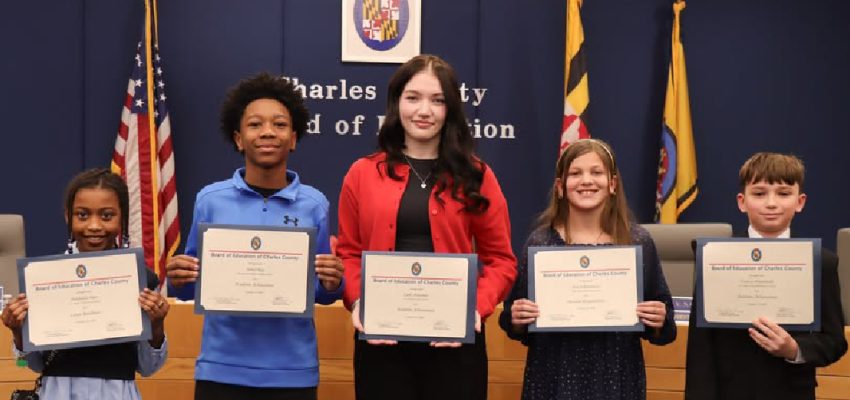

In an era defined by rapid technological advancement, the spotlight on student achievement shines brighter than ever, particularly when considering the skills necessary for tomorrow’s world. Recently, the Board of Education of Charles County, Maryland, honored a remarkable group of students for their accomplishments in academics, personal responsibility, and career readiness. While events like these traditionally celebrate current successes, they also serve as a poignant reminder of the evolving landscape of education and the critical need to prepare young minds for a future increasingly shaped by artificial intelligence.
As an AI specialist, writer, and tech enthusiast, I, André Lacerda, believe such recognition underscores a vital truth: the core tenets of educational excellence — intellectual curiosity, ethical leadership, and practical preparedness — are more crucial than ever. But what does it truly mean to be ‘ready’ in an age where algorithms learn, machines think, and new industries emerge at an unprecedented pace? This article will delve into how educational institutions, students, and parents can collaborate to foster a new paradigm of learning, one that doesn’t just adapt to AI but actively leverages it to build a generation of confident, creative, and ethical innovators.
Future-Ready Education: Redefining Success in the AI Era
The traditional metrics of academic success, while still important, are being reshaped by the advent of artificial intelligence. The ability to recall facts or execute routine procedures, once cornerstones of learning, are increasingly being handled by sophisticated algorithms. This shift doesn’t diminish the value of knowledge but rather elevates the importance of applying that knowledge in novel ways. For instance, while AI can analyze vast datasets in seconds, it’s human intelligence that poses the right questions, interprets the nuanced context, and makes ethical decisions based on the insights generated. This pivot demands a **Future-Ready Education** system that emphasizes critical thinking, complex problem-solving, and creativity as paramount skills.
Consider the global economic transformation already underway. Reports from the World Economic Forum consistently highlight that skills such as analytical thinking, innovation, complex problem-solving, and critical thinking will be among the most sought-after in the coming years. These are precisely the skills that AI complements rather than replaces. Educational environments must, therefore, evolve from mere information dissemination centers to incubators of these higher-order cognitive abilities. Project-based learning, interdisciplinary studies, and real-world challenges, much like the endeavors that lead to student recognition in Charles County, are becoming indispensable tools. Students need opportunities to not just learn *about* a subject, but to *do* a subject – to experiment, to fail, to iterate, and to collaborate. This hands-on engagement fosters a deeper understanding and develops the adaptive mindset crucial for navigating an unpredictable future. Furthermore, digital literacy extends beyond simply using computers; it now encompasses understanding the ethical implications of AI, recognizing algorithmic bias, and engaging responsibly with intelligent systems. This holistic approach to learning ensures that students are not just consumers of technology, but informed and ethical contributors to the digital landscape.
Cultivating Leadership and Personal Responsibility in a Digital World
The recognition of leadership and personal responsibility among students, like those celebrated in Charles County, speaks volumes about the enduring values we impart to the next generation. In an AI-driven world, these qualities take on new dimensions. Leadership, for example, is no longer solely about commanding a team but also about guiding ethical technology development, fostering human-AI collaboration, and leading with empathy in increasingly automated environments. As AI systems become more autonomous, leaders must grapple with complex moral dilemmas, such as the fair distribution of AI’s benefits, data privacy, and accountability for AI-driven decisions. The leaders of tomorrow will be those who can navigate these ethical quandaries with integrity and foresight.
Personal responsibility, too, broadens its scope. It now includes digital citizenship – understanding one’s role and impact in online communities and with AI systems. This means taking ownership of one’s digital footprint, contributing positively to online discourse, and being accountable for the use and creation of AI tools. Beyond the digital realm, personal responsibility in an AI age also entails a commitment to lifelong learning. The pace of technological change means that skills acquired today may be obsolete tomorrow. Students must cultivate a growth mindset, embracing continuous learning and adaptation as fundamental aspects of their personal and professional lives. Initiatives that encourage self-directed projects, community service, and ethical discussions can help students internalize these values. Programs that teach students to critically evaluate sources, understand different perspectives, and engage in constructive dialogue are essential for developing responsible citizens who can thrive in a world saturated with information, some of which may be AI-generated or manipulated. The goal is to nurture individuals who are not just skilled, but also morally grounded and socially aware.
Navigating Career Readiness: Bridging the Gap Between Academia and the AI Workforce
Career readiness, as highlighted by the Charles County Board of Education, is arguably one of the most dynamic aspects of modern education. The jobs market of 2030 will look dramatically different from today’s, with AI poised to automate many routine tasks while simultaneously creating entirely new roles. According to a report by Accenture, AI could boost corporate profitability by an average of 38 percent and lead to an economic boost of $14 trillion across 16 industries in 12 economies by 2035. This massive economic shift necessitates a profound change in how we prepare students for their professional lives. **Future-Ready Education** must actively bridge the gap between academic learning and the demands of the AI workforce.
This means fostering a deeper understanding of STEM (Science, Technology, Engineering, and Mathematics) fields, not just as isolated subjects but as interconnected disciplines. It involves integrating computational thinking into various curricula, allowing students to understand the logic behind algorithms, even if they aren’t all destined to be AI engineers. Furthermore, exposure to AI tools and concepts from an early age can demystify the technology and build familiarity. This doesn’t mean every student needs to code neural networks, but rather that they should understand how AI impacts their world, from recommendation engines to autonomous vehicles.
Beyond technical skills, career readiness in the AI era demands adaptability and resilience. The ability to pivot, to learn new tools, and to retrain for emerging roles will be critical. Internship programs, apprenticeships, and partnerships between schools and technology companies can provide invaluable real-world experience, exposing students to the practical applications of AI and the dynamic nature of the modern workplace. It’s about creating individuals who are not only employable upon graduation but are also equipped for a lifetime of learning and evolving careers. The students recognized in Charles County for their career readiness exemplify the foundational traits – initiative, problem-solving, and a willingness to engage – that will serve them well as they enter a world where their careers will likely involve continuous learning and adaptation to new technological paradigms. By intertwining academic rigor with practical exposure to the evolving digital landscape, we empower students to not merely survive but to thrive and innovate within the AI-driven economy.
In conclusion, the recognition of academic achievement, leadership, and career readiness in students across Charles County is more than just a local celebration; it is a microcosm of the global challenge and opportunity that artificial intelligence presents to education. As we navigate this transformative era, our mission is clear: to cultivate a generation that is not only proficient in traditional subjects but also adept at critical thinking, ethical reasoning, and continuous learning – skills that are inherently human and synergistically powerful when combined with AI.
Achieving truly **Future-Ready Education** requires a concerted effort from educators, policymakers, parents, and students themselves. It means embracing innovation in teaching methodologies, investing in technological infrastructure, and fostering an environment that encourages curiosity and resilience. The future belongs to those who are prepared to learn, adapt, and lead with integrity in a world where intelligence, both human and artificial, is rapidly reshaping our reality. Let us continue to empower our students to be the architects of this exciting, AI-powered future, ensuring they are equipped not just with knowledge, but with wisdom, empathy, and an unyielding spirit of innovation.