
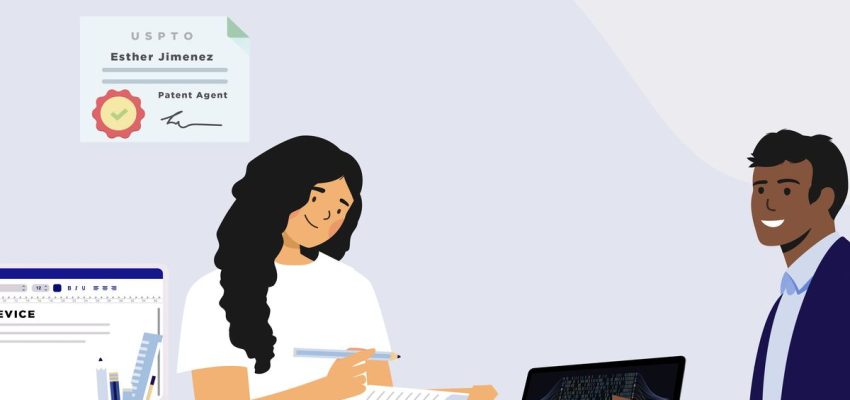

Innovation is the lifeblood of progress, the very engine that propels humanity forward. From the simplest tools to the most complex artificial intelligence algorithms, every significant advancement begins as an idea, a spark in the mind of an inventor. Yet, an idea, no matter how brilliant, remains vulnerable until it is properly protected. In today’s hyper-competitive and technologically driven landscape, safeguarding these intellectual assets is not merely a formality; it is a strategic imperative. This is where a critical, often unsung hero emerges: the **patent agent**. These highly specialized professionals serve as the crucial bridge between an inventor’s passion and the tangible, legally defensible framework that allows new technologies to thrive in the market.
As an AI specialist and tech enthusiast, I’ve witnessed firsthand the incredible speed at which new concepts emerge and transform industries. The journey from a nascent idea to a market-ready product is fraught with challenges, and intellectual property (IP) protection stands as one of the most significant. Think of the groundbreaking work being done in areas like generative AI, quantum computing, or biotechnology; each field pushes the boundaries of what’s possible, but also introduces new complexities in terms of ownership and commercialization. Without robust patent protection, even the most revolutionary inventions risk being replicated, diluted, or outright stolen, stifling the very innovation they represent. The expertise of a **patent agent** becomes invaluable, guiding inventors through the labyrinthine process of securing rights that can make or break a venture. They are the guardians of intellectual capital, translating intricate technical details into precise legal language, ensuring that the visionary efforts of creators are not just recognized, but also legally shielded for future success.
Patent Agent: The Architect of Innovation Protection
What exactly does a **patent agent** do, and why are they so indispensable in the innovation ecosystem? At its core, a patent agent is a technical expert with a profound understanding of patent law and procedures. Unlike patent attorneys, who are also qualified lawyers, patent agents primarily focus on the technical and legal aspects of drafting and prosecuting patent applications before patent offices, such as the United States Patent and Trademark Office (USPTO) or the European Patent Office (EPO). They possess a unique blend of scientific or engineering acumen and a mastery of the intricate legal requirements for obtaining a patent. Their role begins long before an application is filed, often engaging with inventors at the conceptual stage to understand the novelty and scope of their invention.
The process typically kicks off with an invention disclosure, where the inventor details their breakthrough. The patent agent meticulously dissects this information, identifying the core innovative elements and distinguishing them from existing ‘prior art’ – the body of public knowledge already available. This initial analytical phase is critical, as a patent must demonstrate novelty, non-obviousness, and utility. A truly skilled **patent agent** can discern subtle distinctions that might not be immediately apparent to an inventor, ensuring the claims are broad enough to provide meaningful protection yet specific enough to be patentable. They then embark on the arduous task of drafting the patent application, a highly specialized document that includes a detailed specification, drawings, and, most crucially, a set of carefully crafted claims. These claims are the legal heart of the patent, defining the exact scope of the invention and what can be legally protected. Poorly drafted claims can render an otherwise brilliant invention vulnerable, making the precision and expertise of the patent agent paramount. The average cost for securing a patent can range from $10,000 to $30,000 or more, underscoring the significant investment inventors make and the need for expert guidance to ensure that investment yields robust protection.
Beyond drafting, the patent agent is deeply involved in the ‘prosecution’ phase, which entails ongoing communication and negotiation with patent examiners. This can involve responding to office actions, arguing for the patentability of claims, and making necessary amendments. It’s a complex, often drawn-out process that requires both technical fluency and persuasive legal argumentation. In essence, the **patent agent** acts as an inventor’s advocate, translating their vision into a legally robust asset that can stand the test of time and scrutiny. Their work is the bedrock upon which companies build competitive advantage, secure funding, and, ultimately, bring transformative technologies to the global market.
Navigating the Intricacies of Intellectual Property
Securing a patent is a strategic game, requiring foresight, meticulous attention to detail, and a deep understanding of legal nuances. It’s not just about what you invent, but how you describe it and, crucially, how you defend it. The **patent agent** plays a pivotal role in strategizing the scope of protection. Should the patent be broad, covering a wide range of potential embodiments, or narrow, focusing on a specific, commercially viable aspect? These decisions have long-term implications for market exclusivity and licensing opportunities. For instance, consider the fundamental patents behind touch screen technology or early internet protocols – their broad claims set the stage for entire industries. Conversely, overly broad claims might be deemed unpatentable due to prior art, while overly narrow claims might be easily circumvented by competitors.
Another critical aspect is the global dimension of intellectual property. An invention protected in one country is not automatically protected elsewhere. Patent agents advise on international filing strategies, such as utilizing the Patent Cooperation Treaty (PCT) to streamline applications across multiple jurisdictions. This global perspective is increasingly vital in a world where technology transcends borders and competition is worldwide. Imagine a promising AI startup developing a novel machine learning algorithm; securing protection in key markets like the US, Europe, and China can determine its global success or failure. The strategic choice of where and when to file is as important as the content of the application itself. The guidance of a skilled **patent agent** in navigating these geographical and legal complexities can save significant resources and prevent costly mistakes down the line.
Furthermore, patent agents are often involved in due diligence for mergers, acquisitions, or investment rounds. Investors and acquiring companies keenly scrutinize the intellectual property portfolio of a target company, as strong patents are direct indicators of innovation, market defensibility, and future revenue potential. A robust patent portfolio, carefully cultivated with the expertise of a **patent agent**, can significantly increase a company’s valuation and attractiveness to potential partners. In fact, studies show that companies with strong patent portfolios tend to outperform their peers in terms of market capitalization and growth.
Protecting AI and Emerging Technologies: A New Frontier
The advent of artificial intelligence, machine learning, and other rapidly evolving technologies presents both unprecedented opportunities and unique challenges for patent protection. AI inventions often reside in the realm of algorithms, data processing, and abstract mathematical models, which can be harder to patent than traditional mechanical devices or chemical compounds. Patent offices around the world are still grappling with how to effectively apply existing patent law to these intangible innovations.
For an AI invention to be patentable, it generally needs to demonstrate a ‘technical effect’ or a practical application beyond mere abstract computation. This means a **patent agent** working with AI innovations must possess not only a deep understanding of AI concepts – neural networks, deep learning architectures, natural language processing – but also the ability to articulate how these algorithms deliver a tangible, non-obvious improvement to an existing process or system. For example, a novel algorithm that significantly improves the efficiency of drug discovery, or a machine learning model that provides a more accurate diagnosis, would likely have a stronger case for patentability than an abstract mathematical formula.
The challenge is compounded by the rapid pace of development in AI. What is considered novel today might be common knowledge tomorrow. This necessitates a proactive and agile approach to patenting, often involving multiple, iterative applications as the technology evolves. Moreover, the open-source nature of much AI development adds another layer of complexity. Identifying what is truly proprietary and distinguishing it from publicly available components requires acute technical and legal discernment. An experienced **patent agent** specializing in AI can help define the ‘metes and bounds’ of an AI invention, ensuring that the claims are not only novel but also robust enough to withstand potential challenges from competitors who might leverage similar open-source components.
In this dynamic landscape, a patent agent’s ability to communicate effectively with both inventors and patent examiners is paramount. They must translate the highly specialized language of AI researchers into the structured, precise language of patent law, ensuring that the invention’s unique technical contribution is clearly understood and appreciated by the examiner. This requires an almost encyclopedic knowledge of prior art in the AI domain, constantly tracking new publications and breakthroughs. They are not just filing documents; they are orchestrating the legal protection of the very foundations of our technological future.
The Future of Innovation: Collaboration and AI
The role of the **patent agent** is not static; it continues to evolve with technology itself. As AI tools become more sophisticated, we might see them assisting patent agents in tasks like prior art searching, initial drafting of specifications, or even analyzing office actions for potential responses. Imagine AI-powered systems that can quickly identify relevant patents across vast databases, saving countless hours of manual review. Such tools could enhance efficiency and accuracy, allowing patent agents to focus on the higher-level strategic and analytical work that requires human intuition and legal judgment.
However, it’s crucial to acknowledge that the nuanced understanding of an invention, the strategic crafting of claims, and the persuasive argumentation during prosecution still require the human touch. The ability to grasp an inventor’s vision, to anticipate future technological trajectories, and to navigate complex legal disputes remains firmly in the domain of human expertise. The collaboration between human **patent agent**s and advanced AI tools could define the future of intellectual property protection, creating a more efficient, robust, and globally harmonized system.
In conclusion, the **patent agent** stands as a critical pillar in the edifice of modern innovation. From translating complex scientific breakthroughs into legal language to strategically defending an inventor’s rights, their expertise is invaluable. In an era defined by rapid technological advancement, particularly in fields like artificial intelligence, these specialists are more essential than ever before. They empower inventors to bring their groundbreaking ideas to fruition, ensuring that the seeds of innovation are not just planted, but also protected to flourish and transform our world.
As we look ahead, the continuous evolution of technology will undoubtedly reshape the landscape of intellectual property. Yet, the fundamental need to safeguard creativity and incentivize progress will remain. The dedication and specialized knowledge of the **patent agent** will continue to be instrumental, providing the essential legal framework that allows the next generation of innovators to turn their passions into impactful realities, secure in the knowledge that their contributions are respected and protected.










