
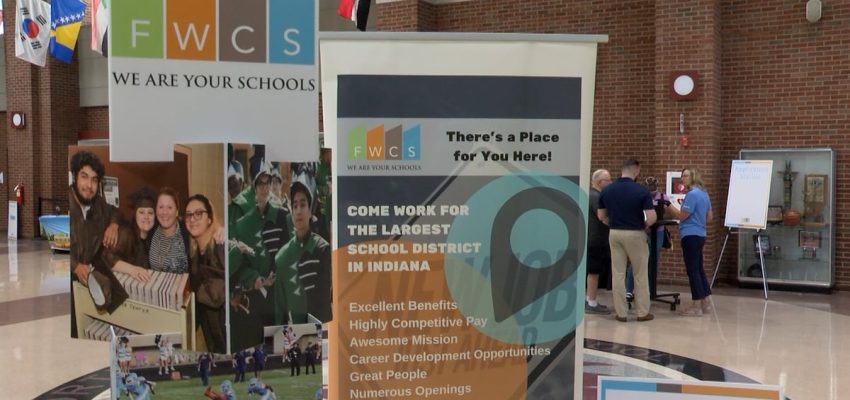

The scene was familiar, yet subtly profound: community members converging at North Side High School on a Wednesday afternoon, from 3 to 7 p.m., to explore available positions, engage with hiring teams, and complete on-site interviews. This traditional career fair, hosted by Fort Wayne Community Schools (FWCS) ahead of the 2026-27 academic year, represents a time-honored bridge between talent and opportunity. Yet, beneath the surface of handshakes and resumes, a powerful, unseen current is reshaping the very landscape these interactions take place in: Artificial Intelligence.
As an AI specialist and tech enthusiast, I find such events incredibly insightful. They serve as tangible touchpoints in a rapidly digitizing world, reminding us that while technology propels us forward, human connection and direct engagement remain invaluable. However, to truly understand the significance of a career fair in 2026 – and beyond – we must view it through the lens of AI’s burgeoning influence. The roles being discussed, the skills being sought, and the very methods of recruitment are all undergoing a radical transformation. This article delves into how AI is not just an ancillary tool but a fundamental architect of the new professional reality, influencing everything from individual job searches to systemic workforce planning. How do we prepare for a world where careers are fluid, skills are constantly updated, and our digital co-pilots are increasingly sophisticated? The answers lie at the intersection of human ingenuity and intelligent machines.
Future of Work: A Paradigm Shift for All Industries
The traditional career fair, where individuals present their qualifications directly to potential employers, has always been a cornerstone of professional development. But what happens when the qualifications themselves are shifting, and the roles being filled are either augmented or entirely new due to technological advancements? This is the core challenge and opportunity presented by the **Future of Work**, a future intrinsically linked to artificial intelligence.
AI is not merely automating repetitive tasks; it is fundamentally altering job functions, creating entirely new industries, and demanding a seismic shift in the skill sets considered valuable. Consider the impact: a report by the World Economic Forum suggests that while AI may displace some jobs, it is also expected to create millions more, shifting the demand towards roles requiring distinctly human attributes. For instance, mundane data entry tasks might be handled by sophisticated algorithms, freeing up human professionals for more strategic, creative, and interpersonal challenges. This re-allocation of labor means that even in sectors seemingly untouched by advanced tech, like education and administrative support – areas FWCS would undoubtedly be hiring for – AI is slowly but surely weaving its way into daily operations.
Take, for example, the role of a teacher. While AI will never replace the empathy, critical thinking, and pedagogical nuance of a human educator, AI-powered tools are revolutionizing lesson planning, personalized learning paths, and administrative tasks like grading and student progress tracking. This requires educators to not just be proficient in their subject matter but also to be digitally literate, capable of integrating AI tools effectively into their classrooms, and understand the ethical implications of their use. Similarly, administrative staff benefit from AI in optimizing scheduling, managing resources, and streamlining communication. Thus, understanding the profound impact of AI on the **Future of Work** is paramount for both job seekers and hiring organizations.
The emphasis is rapidly moving from purely technical skills to a blend of digital fluency and uniquely human capabilities. Creativity, critical thinking, complex problem-solving, emotional intelligence, and collaboration are becoming the ‘power skills’ of the AI era. These are the attributes that machines currently struggle to replicate, making them invaluable in a world increasingly powered by algorithms. This dynamic interaction reshapes the entire landscape of the **Future of Work**, prompting individuals to embrace continuous learning and organizations to redefine their talent acquisition strategies to identify and nurture these evolving competencies.
AI as Your Career Co-Pilot: Leveraging Technology in the Job Hunt
For anyone attending a career fair, whether at North Side High School or virtually, AI has already become an indispensable, albeit often invisible, co-pilot. From the moment a job seeker crafts their resume to the final interview, intelligent systems are at play, both assisting candidates and streamlining the hiring process for companies. Understanding how to leverage these tools can provide a significant competitive edge.
On the job seeker’s side, AI-powered platforms can be incredibly powerful. Resume optimization tools, for instance, analyze job descriptions and suggest keywords and formatting adjustments to help candidates bypass Applicant Tracking Systems (ATS) – algorithms that filter resumes before human eyes ever see them. Similarly, AI can help generate tailored cover letters, draft networking emails, and even provide personalized feedback on interview performance through mock interview simulations. These tools can analyze vocal tone, body language (via webcam), and verbal responses, offering actionable insights for improvement. Furthermore, AI can help identify skill gaps based on desired career paths and recommend online courses or certifications, guiding individuals toward the necessary upskilling or reskilling required for the evolving **Future of Work**.
From the employers’ perspective, AI is transforming recruitment efficiency and effectiveness. Beyond ATS, which now often includes natural language processing to better understand candidate submissions, companies are utilizing AI for predictive analytics. These systems can analyze vast datasets of past employee performance and candidate profiles to predict which applicants are most likely to succeed in a given role, reducing turnover and improving hiring quality. Virtual interview platforms are becoming more sophisticated, some even employing AI to analyze candidate responses for specific traits or skills, though ethical considerations regarding bias are a critical ongoing discussion. This technological integration means that while the personal interaction at a career fair remains vital, the journey leading up to that handshake, and the follow-up afterward, are increasingly influenced by AI.
Imagine a candidate walking into North Side High School having already used AI to research FWCS, understand the core competencies they seek, refine their personal pitch, and even anticipate potential interview questions based on the job descriptions available. This level of preparation, empowered by AI, allows for a more focused and impactful interaction during the limited time at a career fair booth. Conversely, the hiring teams from FWCS might be using AI-driven tools to manage the influx of applications, schedule interviews, and even conduct preliminary screenings, allowing them to focus their valuable face-to-face time on the most promising candidates. This symbiotic relationship between human interaction and AI-driven efficiency is defining the current and **Future of Work** landscape.
Education’s Pivotal Role in Shaping the AI-Ready Workforce
The fact that FWCS is hosting a career fair speaks volumes about the enduring importance of educational institutions in preparing individuals for the workforce. However, in the era of AI, this role has expanded dramatically. Schools and universities are no longer just imparting knowledge; they are tasked with cultivating critical thinking, digital literacy, and adaptive skills that will enable students to thrive in a world constantly reshaped by technological innovation.
To effectively navigate the **Future of Work**, educational curricula must evolve beyond traditional subjects to include foundational AI literacy. This doesn’t necessarily mean every student needs to become a machine learning engineer, but rather that every student should understand how AI works, its capabilities, its limitations, and its ethical implications. Concepts like computational thinking, data literacy, and algorithmic bias should become as fundamental as reading and arithmetic. Schools like those within FWCS have a unique opportunity to lead in this transformation, integrating AI tools not just into administrative functions but also directly into the learning experience itself.
For instance, teaching students how to effectively use generative AI for research, creative writing, or problem-solving – while emphasizing critical human oversight and ethical usage – prepares them for the tools they will undoubtedly encounter in their future careers. Furthermore, fostering soft skills such as communication, collaboration, and creativity through project-based learning and interdisciplinary studies becomes even more crucial. These are the skills that complement AI, rather than compete with it, enhancing human potential.
Beyond K-12 education, the emphasis on lifelong learning and continuous upskilling is paramount. As AI accelerates the obsolescence of certain skills, individuals will need to regularly acquire new ones. Educational institutions can become hubs for this continuous learning, offering micro-credentials, bootcamps, and executive education programs tailored to the demands of the AI-driven economy. Partnerships between education and industry are also vital, ensuring that what is taught in classrooms aligns with the real-world needs of employers. The roles FWCS is hiring for today, and the skills they are looking for, reflect not just current needs but also an anticipation of how AI will shape their operations and their students’ futures.
The Indispensable Human Element in an AI-Driven World
While AI continues to redefine the contours of the **Future of Work**, it is crucial to remember that its ultimate purpose is to augment, not diminish, human potential. The advancements in artificial intelligence are not about replacing people entirely, but about empowering us to achieve more, focus on higher-level tasks, and unlock new avenues of creativity and innovation. The human element – our capacity for empathy, complex ethical reasoning, original thought, and nuanced interpersonal communication – remains absolutely indispensable.
Career fairs, like the one hosted by FWCS, serve as a powerful reminder of this enduring human necessity. No algorithm can fully replicate the warmth of a genuine smile, the sincerity of a spoken ambition, or the subtle cues exchanged during a face-to-face conversation. These interactions build rapport, establish trust, and allow for a deeper understanding of personality and cultural fit – factors that are often critical to long-term success in any role. In an age where digital interactions can feel impersonal, the opportunity to connect directly, to ask questions that go beyond a FAQ page, and to gauge the energy of a potential team is more valuable than ever. It underscores that even as technology advances, the human core of work remains irreplaceable.
Ultimately, the most successful vision for the **Future of Work** will be a collaborative one, where human intelligence and artificial intelligence work in concert. It’s about designing systems and roles that leverage the strengths of both – the speed and analytical power of AI, combined with the creativity, emotional intelligence, and strategic foresight of humans. For individuals and institutions alike, the journey into this future demands adaptability, a commitment to continuous learning, and a proactive embrace of the tools that will shape our professional lives.
The career fair at North Side High School, therefore, was not just about filling positions for the 2026-27 school year; it was a microcosm of a larger societal transition. It was an opportunity for individuals to prepare for roles that will operate within an AI-enhanced ecosystem and for FWCS to identify talent ready to navigate this exciting, complex **Future of Work**. By understanding and strategically engaging with AI, we can ensure that our professional journeys are not just secure, but enriched, innovative, and deeply human.










