
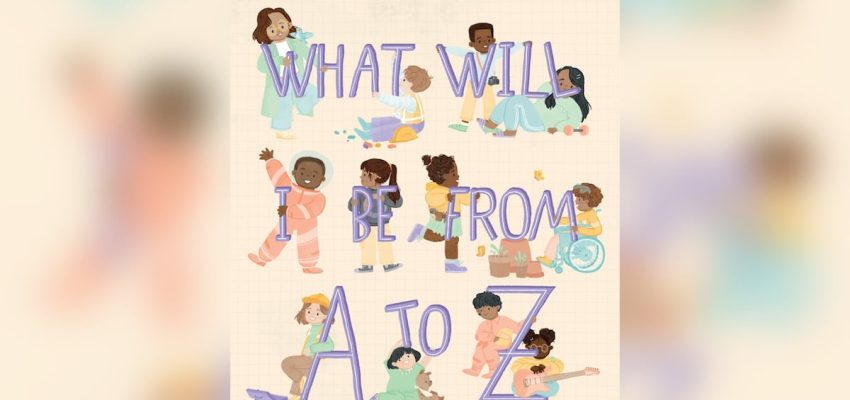

The relentless march of innovation, particularly in artificial intelligence, often overshadows a fundamental truth: the future of technology is built on the foundations laid in childhood. In a world increasingly shaped by algorithms, data, and groundbreaking scientific discoveries, the need to inspire the next generation of thinkers, creators, and problem-solvers has never been more urgent. It is a mission that resonates deeply with anyone passionate about the trajectory of human progress, and it is precisely this spirit that celebrated Huntsville author Laura W. Carter, alongside illustrator Anna Doherty, captures so brilliantly in her newly released book, “What Will I Be From A to Z.” This delightful and insightful work is more than just a children’s book; it is a meticulously crafted gateway designed to empower young minds to envision the limitless possibilities within Science, Technology, Engineering, Arts, and Mathematics – the vibrant world of STEAM.
At its core, STEAM represents the interdisciplinary approach crucial for navigating the complexities of the 21st century. Originally STEM, the inclusion of ‘A’ for Arts acknowledges the vital role of creativity, design thinking, and critical communication in innovation. Far from being a mere acronym, STEAM is a philosophy that integrates logical reasoning with imaginative expression, fostering a holistic understanding of how the world works and how it can be improved. Consider the development of a cutting-new AI interface; it requires not only advanced algorithms (Science, Technology, Engineering, Mathematics) but also intuitive user experience design and ethical considerations (Arts). The global economy is experiencing an ever-growing demand for professionals equipped with these skills. Reports consistently highlight a significant skills gap in technical fields, with projections indicating millions of new jobs in **STEAM careers** emerging over the next decade. From renewable energy engineers to data scientists, from bio-medical researchers to AI ethicists, these roles are pivotal to addressing humanity’s most pressing challenges, from climate change to public health. The foundational understanding and genuine interest in these areas, cultivated early, are thus indispensable.
Early exposure to these concepts is not merely beneficial; it is transformative. Childhood is a period of intense curiosity, where the world is an open book of wonders waiting to be discovered. This natural inclination to explore, question, and experiment provides fertile ground for nurturing future innovators. When children are introduced to complex ideas through accessible and engaging formats, they don’t just learn facts; they develop a mindset. They learn that challenges are opportunities, that failure is a step towards understanding, and that their own ideas have value. Books, in particular, play a powerful role in this developmental journey. They offer a safe, imaginative space for children to step into different roles, to visualize themselves as scientists conducting experiments, engineers building bridges, or artists designing digital worlds. This imaginative play is a critical precursor to real-world problem-solving, building neural pathways that support creative thinking and analytical skills. It’s an investment in their cognitive and emotional development, ensuring they not only grasp the technical aspects of STEAM but also understand the human impact of their work.
### STEAM Careers: Lighting the Path for Young Minds
Laura W. Carter’s “What Will I Be From A to Z” exemplifies how literature can be a powerful tool for this early inspiration. The book is structured ingeniously, guiding young readers through the alphabet, with each letter introducing a different profession within the vast landscape of STEAM. Imagine ‘A’ for Astronaut, ‘B’ for Biologist, ‘C’ for Coder, and so on. This A-to-Z format is not just a clever device; it’s an effective pedagogical approach that makes the diversity of **STEAM careers** tangible and memorable. Illustrator Anna Doherty’s vibrant and inviting artwork further enhances this experience, bringing complex roles to life with engaging visuals that captivate children’s imaginations. Her illustrations break down stereotypes, presenting a diverse array of characters pursuing these professions, thereby reinforcing the message that innovation is for everyone.
What makes Carter’s approach particularly impactful is its ability to demystify these often-abstract professions. Instead of overwhelming children with jargon, the book presents relatable scenarios and simple explanations that connect the dots between an abstract concept and a tangible outcome. For instance, explaining what an architect does might involve showing how they design a fun park, or how a botanist studies the plants that provide our food. By presenting a broad spectrum of roles, from the highly scientific to the deeply creative, the book ensures that every child can find something that sparks their interest. It’s about planting seeds of curiosity, showing them that the skills they learn in school – problem-solving, critical thinking, creativity – are the very tools used by adults in exciting and impactful **STEAM careers**.
### Beyond the Textbook: Why the ‘A’ in STEAM Matters
While the analytical and logical components of Science, Technology, Engineering, and Mathematics are undeniably crucial, the inclusion of ‘Arts’ is a game-changer for modern education and future innovation. The ‘A’ in STEAM encompasses much more than traditional art forms; it represents design thinking, creativity, communication, ethics, and critical inquiry – skills that are increasingly vital in a world driven by technology. Consider the field of artificial intelligence: without human-centered design principles, AI tools can be clunky, inaccessible, or even harmful. Artists, designers, and humanities scholars bring a perspective that ensures technology is not just functional, but also intuitive, equitable, and aligned with human values. This holistic approach fosters critical thinking, enabling individuals to not only build technologies but also to question their implications, ensuring that innovation serves humanity rather than just efficiency.
This intersection is where true breakthroughs occur. From the aesthetic design of a smart device to the ethical frameworks guiding autonomous systems, the arts provide the necessary bridge between purely technical execution and meaningful human experience. Encouraging children to think creatively, to express themselves, and to understand different perspectives through the arts from a young age equips them with a unique advantage. They learn to approach problems with an open mind, to iterate on ideas, and to communicate complex concepts effectively – skills that are invaluable in any advanced **STEAM career**. This balanced approach ensures that the future workforce is not just technically proficient but also socially conscious and innovative in the broadest sense.
### Cultivating Tomorrow’s Innovators: The Foundation for AI and Beyond
The long-term impact of books like “What Will I Be From A to Z” extends far into the future, laying the groundwork for the next generation of AI developers, researchers, and users. The foundational skills nurtured by a robust STEAM education – computational thinking, logical reasoning, data literacy, and a drive for continuous learning – are precisely what is needed to navigate and contribute to the rapidly evolving landscape of artificial intelligence. Children who are encouraged to explore, experiment, and question from an early age are better prepared to understand how AI systems work, to develop new algorithms, and to apply AI ethically across various domains, from medicine to environmental science.
Moreover, the diversity of perspectives fostered by broad exposure to **STEAM careers** is paramount for the responsible development of AI. As an AI specialist, I’ve seen firsthand how homogenous development teams can lead to biased or limited AI applications. By inspiring a wide array of children from diverse backgrounds to pursue these fields, we ensure that the AI of tomorrow reflects the multifaceted needs and values of global society. It’s about empowering every child to see themselves as a potential contributor to cutting-edge fields, fostering a sense of agency and purpose. This early spark of inspiration can lead to lifelong learning and a career dedicated to solving some of the world’s most intricate problems, shaping a future where AI serves as a powerful tool for good.
In conclusion, the journey from childhood curiosity to groundbreaking innovation in fields like AI is neither linear nor accidental. It is a carefully cultivated path, illuminated by the dedication of educators, the support of parents, and the inspiring works of authors like Laura W. Carter. Her book, “What Will I Be From A to Z,” is more than a charming read; it is a vital contribution to shaping the future, offering young minds a window into the exciting possibilities of **STEAM careers** and empowering them to dream big.
As we look ahead to a world increasingly intertwined with technology, the imperative to foster a generation that is not only proficient in science and technology but also deeply creative and ethically aware becomes undeniably clear. By investing in early STEAM education, by celebrating curiosity, and by providing accessible pathways to knowledge, we are not just preparing children for a future; we are enabling them to create it – a future where innovation is inclusive, purposeful, and profoundly human.










