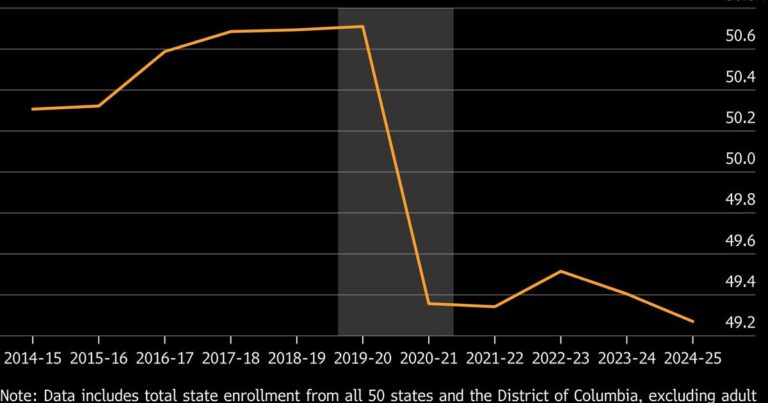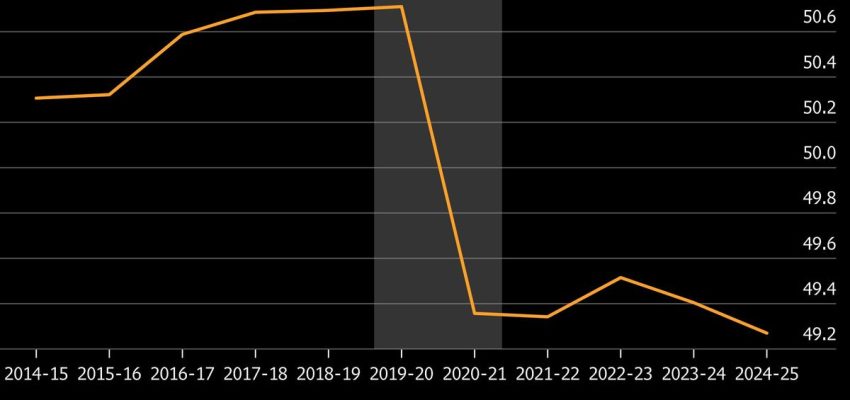

The headlines are stark, painting a challenging picture across the United States: thousands of public-school staff are facing layoff warnings. This isn’t just a localized issue; it’s a symptom of a broader trend where cities, grappling with significant budget woes, are seeing their public school systems buckle under financial pressure, leading to widespread layoffs. For many, this news evokes a sense of alarm, highlighting the vulnerability of essential public sectors to economic fluctuations. But beyond the immediate concern, it prompts a deeper question for those of us immersed in technology and innovation: In an age where Artificial Intelligence is rapidly transforming industries, how can these powerful tools contribute to building more resilient, efficient, and forward-looking public services and educational institutions?
As an AI specialist, writer, and tech enthusiast, I, André Lacerda, believe these economic challenges, while daunting, also present a critical inflection point. They compel us to re-evaluate traditional models and explore how advanced technologies, particularly AI, can be leveraged not just for cost-cutting, but for fundamental transformation. This isn’t about replacing the invaluable human element that defines our schools and public agencies, but about augmenting capabilities, optimizing resources, and ultimately, building systems that are better equipped to serve communities in an increasingly complex world. Let’s delve into how AI can move beyond the hype and deliver tangible value, helping public services navigate these turbulent economic waters and emerge stronger.
AI in Public Services: A Paradigm Shift for Economic Resilience
The financial struggles afflicting public schools are often a direct reflection of broader municipal budget deficits. Cities worldwide are contending with a confluence of factors: fluctuating tax revenues, rising operational costs, aging infrastructure, and increased demand for social services. The pandemic, while a unique event, exacerbated many of these underlying fragilities, leaving many municipalities in a precarious fiscal position. When a city’s finances falter, public education, often the largest expenditure, frequently bears the brunt.
This is precisely where the strategic integration of AI in public services can offer a transformative path forward. AI’s capabilities in data analysis, predictive modeling, and automation are not merely theoretical; they are being successfully deployed in various sectors to enhance efficiency and optimize resource allocation. Imagine a municipal finance department using AI to predict tax revenue fluctuations with greater accuracy, allowing for proactive budget adjustments rather than reactive cuts. Or consider AI-powered systems that analyze public utility consumption patterns, identifying inefficiencies in energy use or waste management, leading to substantial cost savings that can be redirected to critical areas like education.
For instance, smart city initiatives, often powered by AI, are demonstrating significant potential. Traffic management systems using AI can optimize flow, reducing fuel consumption and emissions, and improving urban mobility. Predictive maintenance for public infrastructure, from roads to water pipes, can prevent costly emergencies by identifying potential failures before they occur. Even in areas like administrative tasks within city halls, AI-driven automation can streamline processes, freeing up human resources for more complex, citizen-centric work. These aren’t just marginal improvements; they represent systemic shifts that can bolster a city’s financial health, thereby indirectly safeguarding essential services like public education.
Furthermore, AI in public services can enhance decision-making by providing actionable insights derived from vast datasets. For a city manager or school superintendent, having access to real-time analytics on resource utilization, demographic shifts, or program effectiveness can be invaluable. It allows for evidence-based policy formulation, ensuring that every dollar spent is maximized for impact. The goal is not just to cut costs, but to foster an environment where public services can operate with greater agility, foresight, and fiscal responsibility.
Rethinking Education: AI, Automation, and the Future Workforce
While layoffs in schools are primarily budget-driven, they also underscore a deeper challenge: the need for our educational systems to adapt to a rapidly evolving world, one increasingly shaped by AI and automation. The skills demanded by today’s job market are shifting dramatically. Rote memorization and routine tasks are increasingly being handled by algorithms, while critical thinking, creativity, problem-solving, and emotional intelligence are becoming paramount.
AI’s role in education (EdTech) is multifaceted and extends far beyond simply automating administrative functions. Personalized learning platforms, powered by AI, can tailor educational content and pace to individual student needs, identifying areas where a student struggles and providing targeted support. This can lead to more effective learning outcomes, reducing the need for costly one-on-one tutoring for all students. Intelligent tutoring systems can offer round-the-clock assistance, making learning more accessible and engaging. Moreover, AI can assist educators in grading, data analysis, and lesson planning, freeing up valuable teacher time to focus on direct student interaction, mentorship, and fostering critical skills.
The conversation must also shift from merely preventing layoffs to strategically preparing the existing workforce and future generations for an AI-driven economy. If certain administrative roles in schools become partially automated, what opportunities exist for reskilling and upskilling staff into roles that focus on AI literacy, data analysis, or the development of human-centric skills that AI cannot replicate? This proactive approach is crucial. Public education systems should not just react to technological shifts but lead the charge in preparing students for jobs that may not even exist yet.
Consider the broader implications for the curriculum. Integrating AI and computational thinking into K-12 education is no longer a luxury but a necessity. Equipping students with an understanding of how AI works, its ethical implications, and how to interact with AI tools will be as fundamental as literacy and numeracy. Furthermore, for current educators, professional development programs focused on leveraging AI tools in the classroom and understanding the future of work are vital. This ensures that school staff are empowered, not displaced, by technological advancement. The crisis of layoffs, then, can be seen as an urgent call to action to strategically invest in the future of education, making it more relevant, robust, and resilient through intelligent integration of AI.
Ethical Considerations and the Human Element in an AI-Enhanced Future
It is crucial to approach the integration of AI into public services and education with a clear understanding of its ethical dimensions and the non-negotiable value of the human element. The concern that AI might exacerbate job displacement is valid, and any discussions around efficiency gains must be balanced with a commitment to responsible implementation and a focus on human well-being. AI should be viewed as a powerful tool to augment human capabilities, not to diminish them. For instance, while AI can assist in school administration, the empathetic guidance of a counselor, the inspiring lesson of a passionate teacher, or the direct support of a paraprofessional remain irreplaceable.
The ethical deployment of AI in public services requires careful consideration of data privacy, algorithmic bias, and transparency. When AI systems are used to inform decisions about resource allocation, student assessment, or even hiring, it is imperative that these systems are fair, auditable, and free from biases that could perpetuate or amplify existing inequalities. Robust regulatory frameworks, coupled with ongoing public dialogue, are essential to ensure that AI serves the public good and upholds democratic values.
Moreover, the focus must remain on the unique attributes that define human contribution. Skills such as critical thinking, creativity, emotional intelligence, and complex problem-solving are becoming even more valuable in an AI-powered world. Education systems, therefore, have a renewed mandate to cultivate these uniquely human capabilities. AI can handle the repetitive, data-intensive tasks, freeing up human professionals—teachers, administrators, social workers—to engage in the nuanced, relational, and innovative work that truly makes a difference in people’s lives.
The challenge before us is not simply to implement AI, but to implement it thoughtfully. This means investing in comprehensive training for staff, fostering a culture of continuous learning, and creating clear pathways for reskilling those whose roles might evolve. It also means actively engaging communities and stakeholders in the conversation about how AI can best serve their needs and values. By prioritizing human dignity and ethical guidelines, we can ensure that AI becomes a force for positive transformation, rather than a source of further anxiety or inequity in our public institutions.
The news of school staff facing layoffs due to budget constraints is a stark reminder of the economic pressures confronting our public services. However, it also presents a pivotal moment to embrace innovation. The strategic integration of Artificial Intelligence, from optimizing city budgets to personalizing education and streamlining administrative tasks, offers a tangible pathway toward building more efficient, resilient, and forward-thinking public systems. This isn’t about replacing the dedicated individuals who form the backbone of our communities, but about empowering them with advanced tools to overcome challenges and deliver even greater value.
As we navigate these complex economic tides, the imperative is clear: we must look beyond traditional solutions and embrace the transformative potential of AI. By prioritizing ethical deployment, investing in human capital through reskilling and upskilling, and fostering a collaborative environment between technology and public policy, we can harness AI to not only mitigate current crises but also to lay the groundwork for a future where public services, especially education, are not just sustainable but thrive, preparing every citizen for the opportunities of an AI-powered world. The future is not just about technology; it’s about how we intelligently apply it to empower humanity.