
The landscape of technology is in constant flux, but few fields are evolving as rapidly and profoundly as Artificial Intelligence. What was cutting-edge yesterday often becomes foundational by tomorrow, and the skills deemed essential are continuously redefined. In such a dynamic environment, merely keeping pace isn’t enough; to truly thrive and lead, one must develop a proactive approach to professional growth. As an AI specialist, writer, and tech enthusiast, I’ve observed that the most successful professionals in this space aren’t just technically brilliant; they possess an acute understanding of vision, impact, and the critical art of asking the right questions.
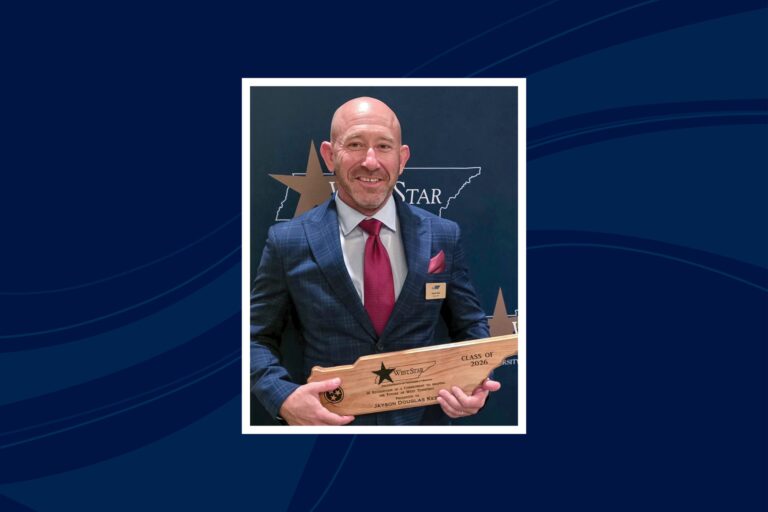
While the specific domain might seem far removed, the timeless principles of career advancement often transcend industries. Consider the story of Jay Hinson, a senior VP at The Cheesecake Factory, who shared his secrets to success: studying his bosses and staying curious. At first glance, this might seem like basic advice, but beneath its simplicity lies a profound truth applicable to anyone aspiring to excel in the complex world of AI. It’s not about merely performing tasks, but about understanding the broader context, anticipating needs, and actively shaping your trajectory. For us in AI, this translates into a heightened sense of inquiry, a relentless pursuit of understanding, and the courage to engage with leadership in a meaningful way. It’s about cultivating `strategic questioning` – a deliberate method of inquiry that not only illuminates paths for personal growth but also drives organizational innovation.
### Strategic Questioning: A Core Tenet for AI Professionals
The AI revolution is not just about algorithms and data; it’s about people, purpose, and profound societal change. Navigating this intricate web requires more than just technical prowess. It demands foresight, adaptability, and, crucially, a deeply inquisitive mind. In a field where paradigms shift almost overnight – from the rise of transformer models to the explosion of generative AI, and the continuous refinement of ethical AI frameworks – the ability to ask incisive questions becomes an invaluable asset. `Strategic questioning` involves going beyond the ‘what’ and delving into the ‘why’ and ‘how’ behind projects, decisions, and long-term objectives. It means actively seeking clarity on the vision that guides your team, your department, and your entire organization. This isn’t about challenging authority but about demonstrating a genuine desire to understand and contribute at a higher level.
For an AI professional, this approach means dissecting complex problems with an investigative mindset. It’s about not just optimizing a model, but understanding *why* that model is critical to the business, *what* impact it will have on users, and *how* it aligns with the company’s overarching mission. It’s about studying the technological environment, analyzing market trends, and internalizing the organizational culture, much like Hinson studied his superiors. This comprehensive understanding allows you to anticipate potential challenges, identify emerging opportunities, and position yourself not just as a developer or researcher, but as a strategic partner capable of driving meaningful change. According to a PwC report, AI could contribute an astonishing $15.7 trillion to the global economy by 2030, underscoring the immense strategic value placed on professionals who can effectively harness and direct this technology. Those who can translate complex technical capabilities into strategic business value through intelligent inquiry are the ones who will truly lead.
### Beyond Technical Skills: The Art of Understanding Vision and Impact
While deep technical expertise is the bedrock of any AI career, it is the ability to connect that expertise to broader strategic goals that propels individuals into leadership roles. This is where the concept of ‘studying your bosses’ comes into full play, reimagined for the tech world. It’s less about surveillance and more about empathy and strategic alignment. It means understanding your leaders’ priorities, their biggest pain points, and their long-term vision for how AI can serve the organization. When you grasp their perspective, you can frame your contributions and questions in a way that resonates directly with their strategic objectives. This is where `strategic questioning` truly shines, transforming passive listening into active engagement.
Let’s consider three powerful questions, inspired by this philosophy, that any AI professional can ask to demonstrate foresight, initiative, and a commitment to impact:
1. **“What are the biggest challenges our team/company faces that AI could potentially solve, or where could AI augment our capabilities most effectively?”** This question immediately shifts the conversation from a task-oriented focus to a problem-solving one. It demonstrates that you are looking beyond your immediate project scope to understand critical business needs. By asking this, you invite leadership to share their strategic priorities, allowing you to identify areas where your skills and projects can have the most significant impact. It can uncover opportunities for new projects, cross-functional collaboration, or even entirely new product lines that might not have been explicitly articulated yet. It shows you’re not just waiting for instructions, but actively seeking to add value where it matters most.
2. **“What skills or knowledge gaps do you see emerging in our field/team due to advancements in AI, and how can I best prepare to fill those?”** This question highlights your proactive approach to continuous learning and career development, a non-negotiable trait in the rapidly evolving AI landscape. It signals that you are invested in future-proofing your skills and aligning them with the organization’s evolving needs. Leaders are constantly thinking about talent development and future capabilities. By asking this, you gain insights into the skills that will be most valuable down the line—be it expertise in multimodal models, ethical AI governance, MLOps, or quantum machine learning—and demonstrate your commitment to becoming a more valuable asset. This also positions you as someone who embraces a growth mindset, essential for navigating technological shifts.
3. **“How can my current projects/role contribute more directly to the company’s long-term AI strategy or innovation goals?”** This question is about impact and alignment. It demonstrates a desire to connect your daily work to the bigger picture, to ensure your efforts are not just successful in isolation but are propelling the company forward strategically. It can lead to discussions about how to optimize your current work for greater strategic relevance, how to collaborate with other teams on key initiatives, or even how your insights from current projects could inform future strategic directions. It helps you understand the ‘why’ behind your ‘what’ and ensures your individual efforts are synchronized with the organizational compass. This kind of thoughtful inquiry fosters a sense of ownership and allows you to proactively steer your career towards areas of high strategic importance.
These questions are more than just conversational starters; they are tools for uncovering strategic insights, building stronger relationships with leadership, and carving out a path for greater influence and advancement within the AI domain. They transform you from a reactive participant into a proactive contributor, someone who not only executes but also helps shape the vision.
### Cultivating Persistent Curiosity in the Age of AI
The second pillar of Jay Hinson’s success—staying curious—is perhaps even more critical for AI professionals. The field of artificial intelligence is not static; it’s a living, breathing entity that reinvents itself with breathtaking speed. From the theoretical breakthroughs in neural networks decades ago to the practical applications of large language models (LLMs) and diffusion models today, sustained curiosity has been the driving force. Without it, even the most skilled practitioners risk becoming obsolete as new tools, techniques, and ethical considerations emerge. Cultivating persistent curiosity means embracing a lifelong learning journey, questioning assumptions, and actively exploring the frontiers of what’s possible.
This isn’t just about reading academic papers or attending conferences; it’s about adopting an experimental mindset. It means asking “what if?” and “why not?” with every new model, every new dataset, and every new ethical dilemma. It’s about being open to interdisciplinary approaches, understanding how AI intersects with psychology, sociology, economics, and even philosophy. For instance, grappling with questions of AI bias, fairness, and accountability demands a curious mind willing to delve into complex ethical frameworks alongside technical solutions. Professionals who actively seek out diverse perspectives and continuously challenge their own understanding are better equipped to innovate responsibly and navigate the unforeseen consequences of powerful AI systems.
Moreover, curiosity fuels resilience. AI development is often fraught with challenges, from intractable data problems to unexpected model failures. A curious mindset views these setbacks not as roadblocks but as puzzles to be solved, prompting deeper investigation and learning. This adaptability is paramount in an industry where tools like TensorFlow, PyTorch, and various cloud AI platforms are constantly evolving, and where low-code/no-code AI solutions are democratizing access to powerful capabilities. Staying curious ensures you remain agile, capable of learning new paradigms, and always ready to explore the next wave of innovation, rather than being anchored to yesterday’s methodologies. It transforms the daunting prospect of constant change into an exciting opportunity for growth and discovery.
The journey to professional excellence in the AI domain is multifaceted, demanding a blend of technical mastery, strategic acumen, and an insatiable thirst for knowledge. The wisdom gleaned from seemingly disparate fields, like restaurant operations, underscores a universal truth: success often hinges on our proactive engagement with our environment and our leaders. By embracing `strategic questioning` as a fundamental practice, and by nurturing an enduring sense of curiosity, AI professionals can not only navigate the complexities of this transformative era but also actively shape its future.
As the capabilities of AI continue to expand at an exponential rate, our roles as human intelligence become increasingly defined by our ability to ask the right questions, to seek deeper understanding, and to connect our individual efforts to a collective vision. It is through this thoughtful engagement that we transcend mere task execution, becoming true architects of innovation and drivers of meaningful progress. Embrace these principles, and you will not only advance your career but also contribute profoundly to the ethical and impactful deployment of artificial intelligence for a better tomorrow.