
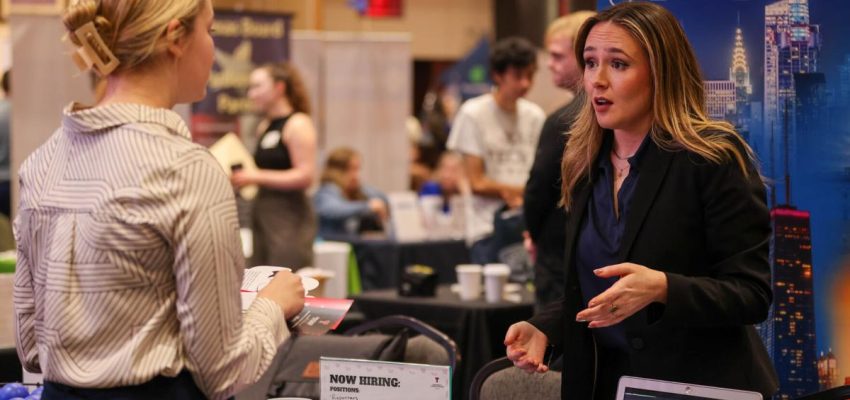

In an era defined by unprecedented technological advancement, the traditional pathways to professional success are undergoing a profound transformation. What was once a predictable trajectory has become a dynamic landscape, particularly within the realm of technology and artificial intelligence. Events like the ‘Hire Red Raiders Job Fair,’ recently hosted by Texas Tech University’s Career Center, serve as crucial touchpoints in this evolving journey, connecting aspiring innovators with the companies shaping our future. Yet, their significance extends far beyond mere recruitment; these gatherings represent vital arenas for understanding the shifting demands of the industry, particularly concerning **AI career development**.
As an AI specialist, writer, and tech enthusiast, I’ve observed firsthand how rapidly the skills required for success are changing. The rise of artificial intelligence isn’t just creating new jobs; it’s fundamentally redefining existing ones and demanding a continuous commitment to learning and adaptation. Students today aren’t just looking for a job; they’re seeking a role where they can contribute meaningfully to a world increasingly powered by intelligent systems. The challenge, and indeed the opportunity, lies in preparing for a future that is being invented even as we speak.
The global AI market, projected to reach over a trillion dollars by the end of the decade, underscores the immense potential and the urgent need for a skilled workforce. This isn’t just about coding algorithms; it’s about understanding the ethical implications, designing human-centric AI systems, managing vast datasets, and communicating complex technical concepts to diverse audiences. The students walking through the doors of a job fair like the one at Texas Tech are not just potential employees; they are the architects of this AI-driven future, and their **AI career development** will dictate the pace and direction of innovation for generations to come.
### AI Career Development: Navigating the New Frontier of Opportunity
The advent of artificial intelligence has ushered in an entirely new paradigm for professional growth. Gone are the days when a singular, static skillset could guarantee a lifelong career in tech. Today, the landscape demands agility, a thirst for continuous learning, and a deep understanding of how AI is not just a tool, but a transformative force across all sectors. For students, especially those graduating from forward-thinking institutions like Texas Tech, understanding this new frontier is paramount for effective **AI career development**.
The impact of AI extends far beyond specialized roles like Machine Learning Engineer or Data Scientist. AI is now embedded in everything from marketing automation to supply chain logistics, healthcare diagnostics, and creative content generation. This ubiquity means that even roles traditionally considered outside the core tech domain, such as finance analysts, product managers, or even legal professionals, now require a level of AI literacy. They need to understand how AI can augment their work, automate mundane tasks, and provide deeper insights. This interdisciplinary integration is a hallmark of modern professional life.
Consider the explosion of roles in areas like Prompt Engineering, AI Ethics, or AI Governance – positions that barely existed a few years ago. These aren’t just niche specializations; they represent entirely new fields emerging from the need to manage and direct intelligent systems responsibly and effectively. A robust **AI career development** strategy today means not just acquiring technical skills in Python or TensorFlow, but also cultivating critical thinking, ethical reasoning, and the ability to collaborate across diverse teams.
University career centers, by bringing together a diverse array of employers, play a pivotal role in demystifying this complex environment. They provide a direct conduit for students to ask questions, understand industry trends, and see the tangible applications of their academic learning. For companies, these fairs are an opportunity to scout talent that possesses not only foundational knowledge but also the adaptability and curiosity to thrive in an AI-powered world. It’s a two-way street, fostering mutual understanding and shaping the trajectory of countless professional journeys.
### The Evolving Skillset: Beyond Traditional Tech Roles
The foundation of a successful career in the age of AI rests on a blend of technical proficiency and equally vital soft skills. While mastering programming languages, data structures, and machine learning algorithms remains crucial, the most sought-after professionals are those who can integrate these hard skills with qualities that AI itself cannot replicate – at least not yet. This holistic approach is fundamental to effective **AI career development**.
Employers are increasingly seeking candidates who demonstrate strong problem-solving abilities, not just in coding, but in conceptualizing how AI can address real-world challenges. Creativity is another invaluable asset, particularly in designing innovative AI applications and user experiences. The ability to think critically about data, to discern biases, and to ensure fairness and transparency in AI systems is no longer a niche concern but a core competency.
Communication skills are also more important than ever. The best AI models are useless if their results cannot be effectively communicated to non-technical stakeholders. This includes everything from explaining complex algorithms in simple terms to crafting compelling narratives around AI solutions. Furthermore, collaboration is key; most significant AI projects are interdisciplinary, requiring seamless teamwork between engineers, designers, ethicists, and domain experts. The individual who can bridge these different perspectives is incredibly valuable.
Then there’s the meta-skill: continuous learning. The field of AI is characterized by its rapid pace of innovation. New models, frameworks, and techniques emerge constantly. Professionals, whether students or seasoned veterans, must cultivate a mindset of lifelong learning to stay relevant. This involves actively seeking out new knowledge, experimenting with emerging technologies, and being open to unlearning old methods when better ones emerge. This commitment to ongoing growth is arguably the single most important component of sustainable **AI career development**.
Events like the ‘Hire Red Raiders Job Fair’ are excellent laboratories for students to test their understanding of these evolving skill requirements. By engaging directly with recruiters and industry professionals, they can gain invaluable insights into what companies are truly looking for beyond a resume – an opportunity to demonstrate their enthusiasm, their ability to articulate their value, and their readiness to contribute to an AI-driven future.
### From Campus to Career: Internships and Networking in the Age of AI
The transition from academic life to a professional career is a critical phase, and in the AI era, internships and networking have become indispensable tools for successful **AI career development**. These practical experiences offer far more than just resume bullet points; they provide a vital bridge between theoretical knowledge and real-world application, allowing students to test their skills, learn from experienced mentors, and build a professional network before graduation.
Internships, especially those focused on AI, machine learning, or data science, provide invaluable exposure to industry-standard tools, methodologies, and project workflows. Students get to work on real problems, contribute to ongoing projects, and understand the nuances of working within a professional team. This hands-on experience is often what sets a candidate apart in a competitive job market. Many companies view their internship programs as a primary talent pipeline, offering full-time positions to high-performing interns. The practical skills gained – from debugging complex code to deploying models or collaborating on data governance – are directly transferable and accelerate professional growth.
Networking, too, has taken on increased importance. While online platforms like LinkedIn are essential, direct interaction at events like the ‘Hire Red Raiders Job Fair’ offers a unique opportunity for face-to-face engagement. These interactions allow students to learn about company culture, discuss specific projects, and make personal connections that can lead to mentorships, referrals, and even job offers. It’s about building relationships, demonstrating genuine interest, and leaving a memorable impression. In the fast-paced world of AI, where innovation often stems from collaborative communities, a strong network can open doors to opportunities that might otherwise remain hidden.
Furthermore, universities like Texas Tech, by hosting such events, are providing an invaluable service. They are not just educating students; they are actively facilitating their entry into the professional world. By bringing industry to campus, they empower students to explore diverse career paths, understand employer expectations, and effectively position themselves for success in an AI-powered economy. The interaction between academia and industry is crucial for ensuring that educational curricula remain relevant and that graduates are well-equipped for the challenges and opportunities of the future.
The journey of **AI career development** is one of continuous learning, strategic positioning, and proactive engagement. Students who leverage every opportunity – from rigorous academic studies to practical internships and robust networking – will be best prepared to thrive in the dynamic world of artificial intelligence. The future is bright for those who are willing to embrace its complexities and contribute to its intelligent evolution.
In conclusion, the landscape of professional development, particularly within the vast and rapidly expanding domain of technology, is being fundamentally reshaped by artificial intelligence. Events like the ‘Hire Red Raiders Job Fair’ at Texas Tech University are more than just recruitment drives; they are critical interfaces where the future workforce meets the innovators defining tomorrow. For students, the imperative is clear: embrace continuous learning, cultivate a diverse skillset blending technical prowess with human-centric abilities, and actively engage with the industry through internships and networking. This proactive approach to **AI career development** will not only secure individual success but also collectively advance the responsible and effective application of AI across the globe.
As we look ahead, the promise of AI is immense, offering solutions to some of humanity’s most pressing challenges. The individuals who choose to dedicate their careers to this field will be at the forefront of this transformation. By understanding the evolving demands, seizing every opportunity for growth, and fostering a spirit of collaboration, the next generation of tech professionals will be well-equipped to navigate the complexities and harness the power of artificial intelligence, shaping a future that is both intelligent and profoundly human. The journey has just begun, and the opportunities for those prepared to embark upon it are boundless.










