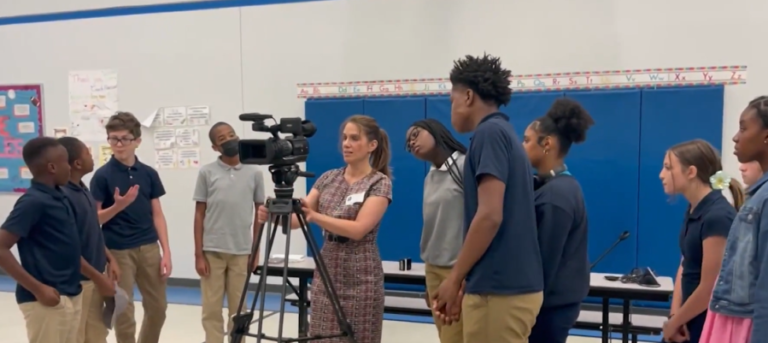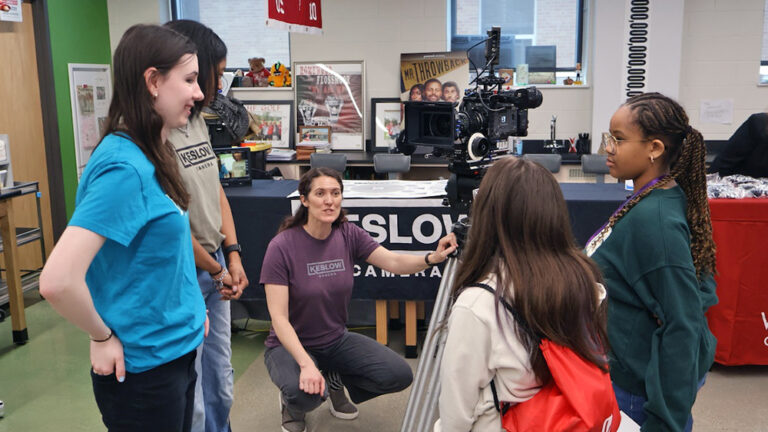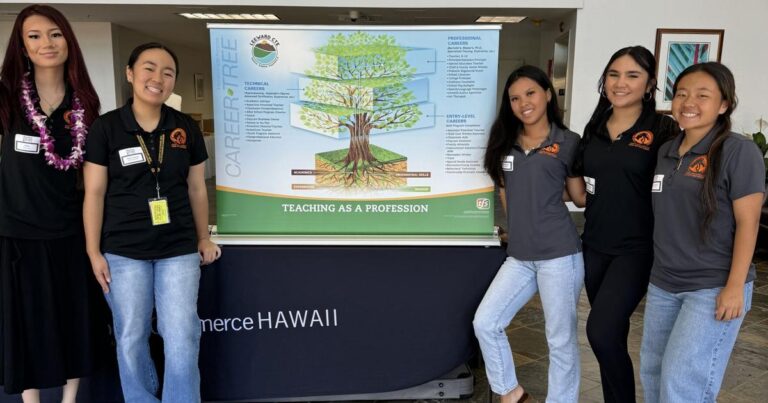

It’s always inspiring to see young minds engaging with the world of work. The recent career day at Winterville Charter Academy, where students had the invaluable opportunity to meet 30 diverse professionals – from firefighters to artists – exemplifies the timeless importance of early exposure to different vocational paths. Such events are foundational, offering glimpses into potential passions and illuminating the vast spectrum of human endeavor. Yet, as an AI specialist and enthusiast, my mind immediately jumps to a critical question: how do these traditional pathways intersect with, and are being fundamentally reshaped by, the relentless march of artificial intelligence?
In an era where technology is not just an adjunct but a central driver of change, understanding the current professional landscape is only half the battle. The other, arguably more crucial half, involves foresight – anticipating how innovation, particularly in AI, will redefine roles, create entirely new industries, and demand a fresh set of skills. This isn’t just about preparing students for *a* job, but for a dynamic journey through an ever-evolving digital economy. The simple act of a student learning about a firefighter’s daily routine now comes with an implicit layer of complexity: how will AI-powered tools assist in emergency response? How will artists leverage generative AI to push creative boundaries? The answers to these questions are not only fascinating but essential for preparing the next generation.
Future Careers in AI: Bridging Today’s Exploration with Tomorrow’s Innovation
The concept of a static career path is rapidly becoming a relic of the past. Today’s students will likely navigate multiple career changes throughout their working lives, a trend significantly accelerated by technological advancements. Artificial intelligence stands at the forefront of this transformation, acting as both a disruptor and an immense enabler. While some fear AI’s potential to automate existing jobs, a more optimistic and, I believe, accurate perspective highlights its capacity to augment human capabilities and catalyze the creation of entirely new categories of employment. The World Economic Forum’s Future of Jobs Report frequently underscores this dual impact, projecting significant job displacement alongside substantial job creation in AI-related fields.
Consider the roles that are emerging right now, many of which didn’t exist a decade ago. We now have ‘Prompt Engineers,’ individuals adept at crafting effective instructions for large language models to yield precise and useful outputs. ‘AI Ethicists’ are critical for ensuring that algorithms are fair, unbiased, and aligned with societal values – a role demanding a profound understanding of both technology and philosophy. ‘Data Scientists’ and ‘Machine Learning Engineers’ are already foundational, building and refining the intelligent systems that power our world. Beyond these direct AI roles, nearly every profession is experiencing a subtle, yet profound, shift. Doctors are using AI for diagnostic assistance, lawyers for legal research, and educators for personalized learning experiences. Understanding these shifts is key to grasping the essence of Future Careers in AI.
The traditional career day, as seen at Winterville, provides an excellent foundation. It exposes students to the realities of different professions. However, educators and parents now bear the additional responsibility of contextualizing these roles within the broader technological landscape. It’s no longer enough to know what an architect does; one must also ponder how AI-powered design tools, generative architecture, and smart building materials will redefine the profession. This layered understanding helps students see beyond the immediate and encourages them to think critically about adaptability and continuous learning – skills far more valuable than any single vocational snapshot.
Reshaping the Professional Landscape: How AI Transforms Every Sector
The pervasive nature of AI means its influence extends far beyond the tech industry. From healthcare to agriculture, entertainment to logistics, every sector is undergoing a quiet revolution. In healthcare, AI is not just assisting in diagnostics; it’s accelerating drug discovery, personalizing treatment plans, and streamlining administrative tasks, freeing up medical professionals to focus on patient care. The demand for ‘Bioinformatics Specialists’ and ‘Medical AI Consultants’ is skyrocketing, blending deep medical knowledge with AI proficiency to drive innovation in patient outcomes.
In the creative arts, where one might assume human intuition is irreplaceable, AI is emerging as a powerful co-creator. Generative AI tools can produce stunning visual art, compose music, and even draft narrative frameworks. This doesn’t diminish the role of human artists but rather amplifies it, providing new palettes, instruments, and forms of expression. The artist of tomorrow might not only wield a brush or a guitar but also master AI algorithms to manifest their creative vision, requiring skills in ‘AI Art Direction’ or ‘Algorithmic Composition.’ The career day’s artist volunteer, for example, could inspire a future student not just to paint, but to paint *with* AI, exploring new frontiers of aesthetic possibility and defining the next generation of creative Future Careers in AI.
Even in physically demanding roles like firefighting, AI is set to play a transformative role. Drones equipped with thermal imaging and AI analytics can provide real-time situational awareness, identifying hotspots and trapped individuals in hazardous environments. Predictive AI models can forecast fire risks based on weather patterns and historical data, enabling proactive prevention strategies. This evolution means that the firefighter of the future might also be a ‘Drone Operator,’ an ‘AI System Monitor,’ or a ‘Predictive Analytics Specialist,’ integrating advanced technology into their brave work. This interdisciplinary integration is a hallmark of the evolving job market.
The logistical sector, a backbone of modern commerce, is already heavily reliant on AI for optimizing supply chains, managing autonomous fleets, and predicting consumer demand. This has led to an explosion in roles such as ‘Logistics AI Developers,’ ‘Robotics Engineers’ for warehouse automation, and ‘Supply Chain Optimization Analysts’ who leverage complex algorithms to ensure seamless global trade. These examples vividly illustrate that AI isn’t just creating niche tech roles; it’s fundamentally enhancing, diversifying, and elevating careers across the entire economic spectrum.
Cultivating the Skills for an AI-Powered World
Given this seismic shift, what skills should we be emphasizing today to prepare students for the Future Careers in AI? While technical proficiency in areas like coding, data literacy, and understanding AI principles is undoubtedly valuable, the truly indispensable skills often lie in uniquely human domains. Critical thinking, problem-solving, creativity, adaptability, and emotional intelligence will be paramount. AI can process vast amounts of data and execute complex calculations, but it still struggles with nuanced judgment, empathetic communication, and truly novel conceptualization. Therefore, fostering these ‘human-centric’ skills becomes even more vital.
Collaboration is another skill that cannot be overstated. The problems of the future will be complex, requiring interdisciplinary teams to tackle them effectively. Learning to work with diverse perspectives, leveraging individual strengths, and communicating effectively are essential. Moreover, a commitment to lifelong learning is no longer a mere recommendation but a necessity. The pace of technological change dictates that professionals must continuously update their knowledge and acquire new competencies. Educational institutions, from primary schools to universities, must adapt their curricula to reflect this reality, emphasizing project-based learning, interdisciplinary studies, and real-world problem-solving.
Digital literacy, extending beyond mere computer use, is also crucial. It encompasses the ability to understand how digital tools work, evaluate information critically, navigate online environments safely, and ethically apply technology to solve problems. This includes understanding the ethical implications of AI, the importance of data privacy, and the potential for algorithmic bias. Equipping students with a robust ethical framework is just as important as teaching them how to code. It ensures they will be responsible innovators and stewards of technology, not just users.
Furthermore, early exposure to computational thinking – breaking down complex problems into smaller, manageable steps, recognizing patterns, and designing algorithmic solutions – can equip students with a powerful mental toolkit applicable across all disciplines, not just computer science. This foundational approach can be introduced through engaging games and activities, making the abstract concepts of AI more accessible and fostering a curious, analytical mindset. When students engage in career exploration, they should be encouraged to ask: “How will this job be done differently with AI in 10 or 20 years?” This forward-looking perspective is crucial for understanding the true nature of Future Careers in AI.
The Human Element: Creativity, Ethics, and Collaboration
As we delve deeper into an AI-powered future, it becomes increasingly clear that the ‘human touch’ will not be diminished but rather re-prioritized. Creativity, often seen as an intangible human trait, will be a defining factor in distinguishing human work from automated tasks. While AI can generate novel combinations, true innovation and artistic expression that resonates deeply with human experience still largely belong to us. Encouraging students to explore their creative faculties, whether through traditional arts or emergent digital mediums, will be key to their success.
Ethics, too, will rise in prominence. As AI systems become more autonomous and influential, the need for human oversight, ethical guidelines, and philosophical debate will only intensify. Roles focused on ‘AI Governance,’ ‘Digital Ethics Consulting,’ and ‘Algorithmic Auditing’ will become indispensable. These positions require not just technical acumen but also a deep understanding of societal values, legal frameworks, and human psychology. They embody the critical intersection where technology meets humanity, ensuring that AI serves our best interests.
Collaboration, in this context, extends beyond working with other humans. It increasingly involves collaborating with intelligent machines. Learning how to effectively partner with AI tools – understanding their strengths and limitations, delegating tasks appropriately, and interpreting their outputs – will be a fundamental skill across nearly all professional domains. This human-AI collaboration will define productivity and innovation in countless industries. The career day at Winterville Charter Academy, by showcasing a diverse array of human professions, provides an excellent launchpad for students to envision how these roles will evolve, becoming more integrated with and empowered by AI. It’s about inspiring the next generation not just to participate in the workforce, but to shape its future.
In conclusion, the simple, yet profound, act of a career day event, where students engage directly with professionals, remains an invaluable component of education. It demystifies the working world and sparks inspiration. However, as we look towards the horizon, this foundational experience must be enriched with a forward-thinking perspective on artificial intelligence. The next generation of professionals will not merely inherit existing jobs; they will be tasked with reimagining, redefining, and creating entirely new roles within an increasingly intelligent ecosystem. The path to Future Careers in AI demands a blend of traditional virtues like diligence and curiosity, augmented by new competencies in critical thinking, digital literacy, and an unwavering commitment to lifelong learning.
As educators, parents, and mentors, our responsibility is to equip young minds with the adaptability, ethical framework, and creative courage necessary to thrive in this exciting new chapter. By fostering an environment that encourages exploration, critical questioning, and a deep understanding of how technology shapes society, we can empower students not just to find a place in the future, but to actively build it. The future workforce will be a dynamic tapestry woven with human ingenuity and artificial intelligence, and it is our collective duty to prepare them for its vibrant, complex, and promising design.