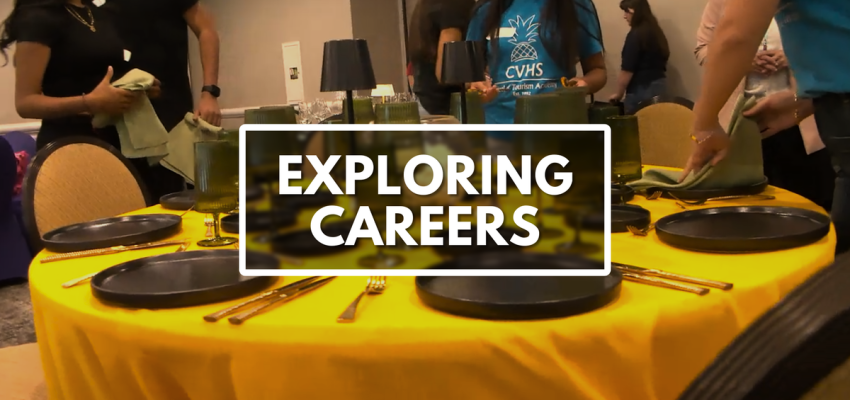

In the vibrant heart of the Coachella Valley, a unique educational initiative recently unfolded, offering a glimpse into the future of local industries. One hundred twenty high school students from across three school districts converged at the elegant Tommy Bahama Miramonte Resort & Spa in Indian Wells, California, for “Student Hospitality Day.” The event, as reported by KESQ, provided these aspiring professionals with an invaluable head start, exploring potential career paths in the region’s thriving hospitality and tourism sectors. They learned about the intricacies of hotel management, event planning, and guest services—roles traditionally foundational to the industry.
However, as we stand at the precipice of a new technological era, it’s imperative to broaden our perspective beyond these conventional pathways. While events like Student Hospitality Day are crucial for nurturing local talent, they also serve as a poignant reminder that the industries these students are eyeing are undergoing a profound transformation. Artificial intelligence (AI) is not just a distant concept; it is an active, rapidly evolving force that is reshaping every facet of commerce and human interaction, including the seemingly timeless world of hospitality. As an AI specialist, I believe it’s vital to explore how this revolution impacts the very fabric of these careers, forging new opportunities and demanding new skill sets from the next generation. The question is no longer *if* AI will influence hospitality, but *how deeply*, and what that means for those eager to embark on fulfilling journeys within it.
AI in Hospitality Careers: Redefining Roles and Opportunities
The romanticized image of hospitality often conjures visions of gracious concierges, bustling kitchens, and immaculate rooms – a human-centric ballet of service. And while the essence of human connection will always remain paramount, AI is increasingly becoming an integral part of the choreography. Far from replacing people en masse, AI is augmenting human capabilities, automating repetitive tasks, and providing unprecedented insights, thereby creating new dimensions for AI in hospitality careers.
Consider the guest journey, for instance. From the moment a traveler begins dreaming of a getaway to their post-stay feedback, AI is at play. Initial search and booking platforms now leverage sophisticated algorithms to analyze preferences, predict booking patterns, and offer personalized packages. Chatbots and virtual assistants powered by natural language processing (NLP) handle inquiries, process reservations, and even offer local recommendations 24/7, freeing up human staff to focus on more complex problem-solving and personalized interactions. Marriott, for example, has experimented with AI-powered chatbots for guest services, allowing staff to attend to higher-value guest needs. According to a report by Accenture, AI could boost hotel revenues by 10% through personalized offers and optimized pricing, highlighting the tangible impact on business and, by extension, the career landscape.
Beyond customer-facing roles, AI is revolutionizing back-of-house operations. Predictive maintenance systems, analyzing data from sensors on HVAC units or kitchen equipment, can foresee potential failures before they occur, reducing downtime and costly repairs. This proactive approach not only saves money but also ensures a seamless guest experience. Revenue management, a notoriously complex field, is being transformed by AI-driven dynamic pricing models that adjust room rates in real-time based on demand, competitor pricing, local events, and even weather forecasts. This means roles in revenue management now require a deep understanding of AI tools and data analytics, shifting from purely financial acumen to a blend of business strategy and technological proficiency.
The scope of AI in hospitality careers also extends to energy management and sustainability. AI-powered systems can optimize energy consumption by intelligently managing lighting, heating, and air conditioning based on occupancy patterns and external conditions, contributing to significant operational savings and a reduced environmental footprint—a growing concern for environmentally-conscious travelers and businesses alike. This opens doors for specialists in “green AI” or “sustainable hospitality technology.”
Beyond Automation: The Human-AI Collaboration in Tourism
While discussions about AI often trigger anxieties about job displacement, a more nuanced understanding reveals a future built on human-AI collaboration. In hospitality, where genuine human connection is a core value, AI’s role is to enhance, not erase, that connection. It takes over the mundane, data-heavy, or repetitive tasks, allowing human employees to dedicate their energy to empathy, creativity, and complex problem-solving – the uniquely human attributes that AI struggles to replicate.
Imagine a hotel front desk clerk whose day is no longer dominated by checking guests in and out, but by anticipating their needs based on AI-analyzed past preferences, proactively addressing potential issues flagged by predictive analytics, and crafting truly memorable experiences. The role shifts from transactional to relational, emphasizing emotional intelligence and bespoke service. This paradigm shift requires professionals adept at working *with* AI, understanding its outputs, and leveraging its capabilities to elevate the guest experience. This is where the future of AI in hospitality careers truly shines.
For instance, a resort might use AI to analyze social media sentiment about their location, identify emerging trends in travel preferences, or even design hyper-personalized marketing campaigns based on individual guest profiles. The human marketing team then uses these AI-generated insights to craft compelling narratives and experiences that resonate deeply. This collaborative model transforms traditional marketing roles into strategic, insight-driven positions. Similarly, in food and beverage, AI can assist with inventory management, predict popular menu items, and even aid in personalized dietary recommendations, allowing chefs and service staff to focus on culinary artistry and attentive service.
The World Travel & Tourism Council (WTTC) consistently emphasizes the sector’s resilience and its capacity for innovation. As AI continues to mature, its integration into tourism will create specialized roles for data scientists focused on travel patterns, AI ethics officers ensuring fair and unbiased algorithms in pricing and recommendation systems, and experience designers who blend physical spaces with digital interactions. The demand for individuals who can bridge the gap between technology and human experience will only intensify. This necessitates a proactive approach to skill development, moving beyond just understanding how to use existing tools to learning how to design, implement, and manage AI solutions within hospitality contexts.
Preparing for the Future: Skills for the Next-Gen Hospitality Professional
For students like those at “Student Hospitality Day” in Indian Wells, understanding the traditional roles is a foundational step. However, an equally critical task is to prepare for a landscape profoundly shaped by AI. The careers they choose, whether in resort management, event planning, or tourism marketing, will require a new blend of traditional hospitality acumen and digital literacy.
What skills will be paramount for success in AI in hospitality careers?
- Digital Fluency and Data Literacy: Professionals must be comfortable with digital tools, platforms, and, crucially, understanding data. This doesn’t mean everyone needs to be a coder, but they must be able to interpret data insights provided by AI, ask the right questions, and make data-driven decisions.
- Critical Thinking and Problem-Solving: AI excels at processing information, but humans are unparalleled at critical thinking, especially when facing novel or ambiguous situations. The ability to analyze complex scenarios, identify root causes, and devise creative solutions—often using AI as a tool—will be indispensable.
- Emotional Intelligence (EQ) and Empathy: As AI handles more routine interactions, the value of genuine human connection and understanding will escalate. Hospitality professionals will need heightened EQ to anticipate guest needs, resolve conflicts with grace, and create truly personalized and empathetic experiences.
- Adaptability and Lifelong Learning: Technology evolves at an astonishing pace. The tools and platforms used today might be obsolete tomorrow. A mindset of continuous learning, willingness to adapt to new technologies, and embrace change will be vital for career longevity.
- Creativity and Innovation: AI can generate ideas, but true innovation often stems from human creativity, imagination, and the ability to think outside the box. Designing unique guest experiences, developing novel service offerings, or finding innovative uses for AI will differentiate successful professionals.
- Ethical Awareness: As AI becomes more integrated, understanding its ethical implications—data privacy, algorithmic bias, job impact—will be crucial. Professionals will need to advocate for responsible AI deployment within their organizations.
Educational institutions and industry leaders have a shared responsibility to cultivate these skills. Workshops like “Student Hospitality Day” could evolve to include modules on “AI in Hospitality: Tools and Trends,” “Data Analytics for Guest Experience,” or “Designing Smart Hotel Services.” The curriculum should emphasize not just *what* to do, but *how* to innovate and *how* to collaborate with technology.
Consider the role of “Experience Designer” in a future hotel. This professional might use AI to map guest journeys, identify pain points, and then design both physical and digital interventions to create seamless, delightful stays. Or a “Guest Relations Manager” who, instead of just reacting to complaints, uses AI to proactively identify dissatisfied guests and intervene with personalized solutions before issues escalate. These are not merely enhancements of old roles; they are entirely new dimensions of work, driven by the capabilities of AI.
The global market for AI in the hospitality industry is projected to grow significantly, reaching billions of dollars in the coming years. This growth isn’t just about software sales; it represents a burgeoning ecosystem of job opportunities for those equipped with the right blend of skills and forward-thinking perspective. The students exploring careers in the Coachella Valley today are standing on the cusp of this exciting, transformative era.
The Path Forward: Human Ingenuity Meets Artificial Intelligence
The gathering of students at the Tommy Bahama Miramonte Resort & Spa was a powerful affirmation of the enduring allure and importance of the hospitality industry. It highlighted the dedication of educators and industry leaders to prepare the next generation for fulfilling careers. Yet, for André Lacerda, the AI specialist and tech enthusiast, it also underscored a critical opportunity: to ensure that this preparation extends beyond traditional paradigms and fully embraces the monumental shifts brought about by artificial intelligence. The future of hospitality is not just about human touch; it’s about intelligent touch – where human empathy is amplified by technological prowess.
Embracing AI in hospitality careers means understanding that the jobs of tomorrow will be a dynamic blend of high-tech and high-touch. It means fostering creativity, critical thinking, and emotional intelligence alongside digital literacy. For students, educators, and industry professionals alike, the path forward involves continuous learning, strategic adaptation, and a willingness to explore the uncharted territories where human ingenuity and artificial intelligence converge to create unparalleled guest experiences and efficient operations. The future is not just arriving; it’s being built, and with the right approach, the next generation of hospitality professionals will be at its forefront, shaping an industry that continues to welcome, delight, and inspire.