
In an era defined by rapid technological advancement, the imperative to inspire and cultivate the next generation of engineers and scientists has never been more critical. From artificial intelligence to advanced materials, the pace of innovation demands a continuous influx of bright, curious minds ready to tackle complex challenges. It is precisely this vision that events like the 11th annual Introduce a Teen to Engineering Day champion, serving as crucial gateways for young aspiring innovators. This particular event, held on a memorable Thursday, February 26th, at the venerable Picatinny Arsenal in New Jersey, brought together 92 high school students from across the region and beyond, offering them an unparalleled glimpse into the world of technical careers.
For me, André Lacerda, as an AI specialist and tech enthusiast, witnessing such initiatives firsthand underscores the profound importance of early exposure to STEM fields. It’s not merely about showcasing fascinating technologies; it’s about igniting a passion, demystifying complex disciplines, and demonstrating the tangible impact engineers and scientists have on our world—from enhancing national security to pioneering breakthroughs that reshape daily life. These immersive experiences are vital for fostering the critical thinking, problem-solving skills, and innovative spirit that will drive future progress.
Introduce a Teen to Engineering Day: Cultivating Tomorrow’s Innovators
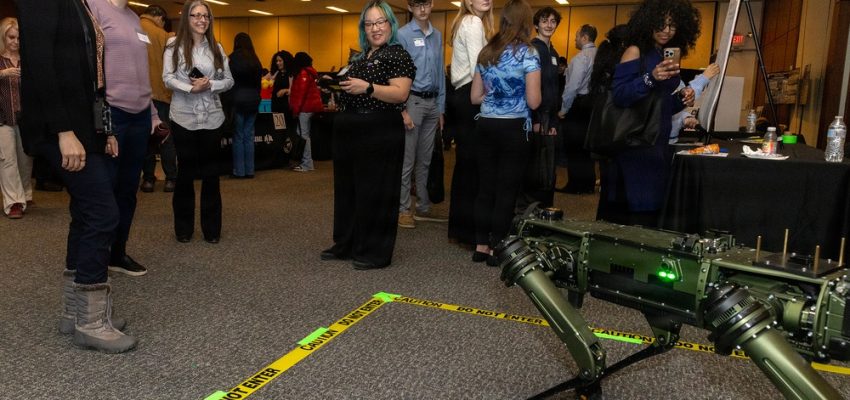
The core philosophy behind an event like Introduce a Teen to Engineering Day is beautifully simple yet incredibly powerful: to provide high school students with direct, hands-on exposure to engineering disciplines and the professionals who lead them. At Picatinny Arsenal, a hub of defense research and development, this exposure took on a particularly impactful dimension. Students didn’t just hear about engineering; they experienced it. Imagine walking into a bustling exhibition hall, surrounded by cutting-edge prototypes and intricate designs, with experts eager to share their knowledge. This is precisely what the 92 attending teens encountered, transforming abstract concepts into tangible realities.
The event structure was designed to maximize engagement. Various tables showcased different facets of engineering, each staffed by some of the nation’s foremost engineers and scientists. This direct interaction allowed students to ask questions, explore potential career paths, and gain insights that no textbook could provide. The opportunity to discuss STEM topics with seasoned professionals is invaluable, bridging the gap between theoretical knowledge and practical application. It’s in these conversations that seeds of interest are planted, often growing into lifelong vocations. For many of these teens, this day was likely their first real encounter with the sheer breadth and depth of engineering careers, moving beyond stereotypical images to reveal a world of diverse and challenging opportunities.
The strategic location of the event at Picatinny Arsenal also played a significant role. For over a century, Picatinny has been at the forefront of armament research, development, and engineering for the U.S. Army. It’s a place where innovation isn’t just encouraged; it’s a mission-critical imperative. Introducing teens to this environment allows them to see engineering not just as an academic pursuit but as a vital component of national defense and technological leadership. They learned what goes into preparing the next generation of U.S. Army armament systems, understanding the rigorous processes, the collaborative spirit, and the dedication required to ensure military superiority and soldier safety through advanced engineering.
Diving Deep into Technical Frontiers: From Robotics to Energetics
The specific areas of engineering highlighted at the Introduce a Teen to Engineering Day were carefully chosen to represent critical and evolving fields, offering a comprehensive look at the diverse applications of STEM. Each station provided a unique window into complex challenges and innovative solutions:
Robotics: The Future of Autonomous Systems
One of the most captivating areas for young minds is undoubtedly robotics. The exhibit on Robotics likely showcased the incredible advancements in autonomous systems, from sophisticated drones performing reconnaissance to ground-based robots designed for hazardous environments. In the context of defense, robotics is revolutionizing logistics, surveillance, de-mining operations, and even combat support. The teens would have seen how engineers design, build, and program these intricate machines. My interest in AI naturally gravitates to this field, as modern robotics is increasingly powered by artificial intelligence. Machine learning algorithms enable robots to perceive their environment, make decisions, and adapt to unforeseen circumstances, transforming them from mere automatons into intelligent partners. Discussing concepts like computer vision, natural language processing for human-robot interaction, and swarm intelligence (where multiple robots cooperate to achieve a goal) would have undoubtedly sparked immense curiosity among the students, highlighting robotics as a vibrant field at the intersection of mechanical engineering, computer science, and AI.
Fire Control for Air and Ground: Precision and Predictive Power
Fire control systems are the brains behind modern weaponry, ensuring accuracy, speed, and safety. This involves far more than simple aiming; it encompasses complex calculations involving ballistics, atmospheric conditions, target motion, and weapon dynamics. Students would have learned about the intricate sensor arrays, data processing units, and user interfaces that allow soldiers to engage targets with unprecedented precision. The integration of AI in fire control systems is a game-changer. Predictive analytics, machine learning for target identification, and real-time environmental modeling significantly enhance effectiveness and reduce human error. Engineers in this field are constantly pushing the boundaries of sensor fusion, developing algorithms that can process vast amounts of data from various sources—radar, lidar, thermal imaging—to create a comprehensive operational picture. For the teens, understanding this blend of physics, electronics, and software engineering would have revealed a crucial and highly sophisticated aspect of defense technology.
Energetics and Warheads: Science of Controlled Power
Often misunderstood, the field of energetics goes far beyond just explosives. It’s a highly specialized branch of chemical and materials engineering focused on the safe, efficient, and controlled release of energy. The exhibit on Energetics and Warheads would have explored the science behind propellants, explosives, pyrotechnics, and other energetic materials used in everything from rocket propulsion to protective systems. Engineers in this area are concerned with material stability, manufacturing processes, safety protocols, and performance optimization. It’s a field where precision and safety are paramount, given the inherent risks. Here, AI can play a role in simulating chemical reactions, predicting material behavior under extreme conditions, and optimizing the design of energetic compounds for specific applications, enhancing both performance and safety profiles. Students would have gained an appreciation for the meticulous research and development required to harness powerful forces responsibly.
Engineering Under Pressure: Resilience and Durability
This category encompasses a broad range of challenges related to structural integrity, material science, and design for extreme conditions. Whether it’s designing pressure vessels, high-strength alloys for armor, or systems that must withstand intense environmental stresses (e.g., high temperatures, shockwaves, corrosive agents), engineers in this domain are focused on creating robust and reliable solutions. They work with advanced materials, conduct rigorous testing, and employ sophisticated simulation tools. For the attending teens, this might have involved demonstrations of material stress tests, discussions on fatigue analysis, or insights into how resilient designs prevent catastrophic failures. The role of AI here is increasingly vital for predictive maintenance, analyzing sensor data from structures to anticipate potential failures, optimizing material compositions for enhanced durability, and conducting rapid virtual prototyping for stress analysis. This field highlights the essential role of engineering in ensuring the longevity and safety of critical infrastructure and equipment.
Beyond these specific areas, the general atmosphere of open discussion with engineers and scientists was perhaps the most valuable takeaway. These interactions provided personal narratives, career advice, and a real-world context for theoretical knowledge. It’s one thing to read about STEM; it’s another to converse with someone actively shaping its future.
The Broader Impact: Building a Resilient Technical Workforce
Events like Introduce a Teen to Engineering Day are more than just isolated educational initiatives; they are critical components of a larger strategy to cultivate a robust and diverse technical workforce. The global economy is increasingly reliant on innovation, and nations that can consistently produce skilled engineers and scientists will lead the way. In the United States, there’s a recognized need to strengthen the STEM pipeline to maintain technological superiority, economic competitiveness, and national security.
By targeting high school students, these programs intervene at a crucial developmental stage, before career paths are firmly set. They aim to demystify engineering, making it accessible and exciting for a broader demographic, including groups traditionally underrepresented in STEM fields. Fostering diversity in engineering is not just about equity; it’s about bringing varied perspectives and experiences to problem-solving, which invariably leads to more innovative and effective solutions. When students from diverse backgrounds see themselves reflected in the engineering community, they are more likely to pursue these challenging but rewarding careers.
The collaboration between educational institutions and government entities like Picatinny Arsenal in organizing events such as Introduce a Teen to Engineering Day exemplifies a powerful public-private partnership model. Government research facilities possess unique resources, expertise, and real-world applications that can’t be replicated in a typical classroom. By opening their doors, they provide an invaluable service, inspiring future generations and demonstrating the tangible impact of STEM careers on national defense and societal well-being. This investment in human capital is an investment in the nation’s future, ensuring a steady stream of talent capable of tackling complex challenges, from cybersecurity to climate change, and from advanced manufacturing to the ethical deployment of AI.
Looking ahead, the synergy between traditional engineering disciplines and emerging technologies like AI will only deepen. Future engineers will not only need strong foundational knowledge but also adaptability, interdisciplinary skills, and a deep understanding of how AI can augment human capabilities. Events that expose teens to this evolving landscape, showing them how robotics is intertwined with machine learning or how material science benefits from AI-driven simulations, are therefore more relevant than ever. They prepare students not just for current jobs but for careers that are yet to be fully imagined, ensuring they possess the versatility and foresight to thrive in a dynamically changing technological world.
The 11th annual Introduce a Teen to Engineering Day at Picatinny Arsenal stands as a shining example of proactive engagement in STEM education. By offering high school students a captivating, hands-on, and expert-led exploration of vital engineering fields, it has undoubtedly planted countless seeds of interest that will blossom into the innovative minds and technical leaders of tomorrow. The 92 teens who walked through those doors on February 26th likely left not just with information, but with inspiration—a clearer vision of their potential futures and the profound impact they could have.
As we navigate an increasingly complex and technologically driven world, the continued investment in such educational outreach programs is paramount. These initiatives are not merely supplementary; they are foundational to building a resilient, innovative, and technologically proficient society. By fostering a deep curiosity and providing tangible pathways into engineering and scientific careers, we empower the next generation to tackle humanity’s greatest challenges and to shape a future that is not only technologically advanced but also secure and prosperous for all. The legacy of events like this will be seen in the breakthroughs and innovations yet to come, driven by the very minds they helped inspire.