
The relentless pursuit of a cure for cancer defines one of humanity’s most significant scientific battles. Every year, countless brilliant minds dedicate their lives to unraveling its complexities, seeking breakthroughs that can transform lives. Among these, the European Association for Cancer Research (EACR) stands as a beacon, fostering collaboration and showcasing cutting-edge advancements. Its upcoming EACR 2026 conference promises to be particularly pivotal, not just for the established giants in oncology, but especially for the burgeoning talent poised to lead the next wave of discoveries through its dedicated Early Career Showcase.
As an AI specialist and a fervent tech enthusiast, I’ve observed with immense excitement how artificial intelligence is rapidly becoming an indispensable ally in this fight. The sheer volume of data generated in medical research, from genomic sequences to clinical trial results and high-resolution imaging, is simply too vast for human minds alone to process efficiently. This is where AI steps in, offering powerful tools that can accelerate discovery, refine diagnoses, and personalize treatments in ways unimaginable just a decade ago. This article delves into the synergistic relationship between emerging cancer researchers and the transformative power of AI, exploring how EACR 2026 will serve as a critical platform for these young innovators to showcase their **AI in cancer research** endeavors and shape the future of oncology.
AI in Cancer Research: Empowering the Next Generation of Discoverers
For decades, cancer research has been characterized by meticulous lab work, extensive clinical trials, and often, incremental progress. While these foundational methods remain crucial, the advent of artificial intelligence, machine learning, and deep learning has introduced a paradigm shift, enabling researchers to tackle previously insurmountable challenges. The complexities of cancer, with its myriad mutations, diverse cellular behaviors, and intricate interactions with the human body, demand a sophisticated analytical approach that AI is uniquely positioned to provide.
One of the most immediate and impactful applications of **AI in cancer research** lies in precision diagnostics. AI-powered image recognition algorithms are already revolutionizing pathology and radiology. For instance, deep learning models can analyze medical images such as MRI, CT, and histopathology slides with astonishing speed and accuracy, often surpassing human capabilities in detecting subtle anomalies indicative of early-stage cancer. This means earlier diagnosis, which is frequently correlated with better patient outcomes. Young researchers are leveraging these tools to develop sophisticated screening methods for various cancer types, from breast and lung cancer to intricate neurological tumors. Beyond just detection, AI can also aid in prognosis, predicting how a tumor might behave or respond to certain treatments, thereby guiding clinicians toward optimal therapeutic strategies.
Another frontier being rapidly expanded by AI is drug discovery and development. The traditional process of identifying new drug compounds is notoriously time-consuming and expensive, often taking over a decade and billions of dollars for a single drug to reach the market. AI significantly shortens this timeline by analyzing vast chemical libraries, predicting potential drug targets, and even designing novel molecular structures. Machine learning models can assess the efficacy and toxicity of thousands of compounds virtually, flagging the most promising candidates for laboratory synthesis and testing. Furthermore, AI is invaluable in drug repurposing – identifying existing drugs approved for other conditions that might also be effective against certain cancers. This accelerates the development pipeline, bringing life-saving treatments to patients faster and more cost-effectively. Early career scientists, unburdened by legacy methodologies, are at the forefront of employing these computational techniques, pushing the boundaries of what’s possible in pharmaceutical innovation.
Personalized medicine, a long-held dream in oncology, is now becoming a tangible reality thanks to **AI in cancer research**. Every patient’s cancer is unique, driven by specific genetic mutations, epigenetic modifications, and environmental factors. AI algorithms can analyze a patient’s comprehensive ‘omics data – genomics, proteomics, metabolomics, and transcriptomics – alongside their clinical history to create a highly individualized profile of their tumor. This allows oncologists to select the most effective treatment strategy tailored specifically to that patient, minimizing adverse effects and maximizing therapeutic success. For young researchers, this presents an unparalleled opportunity to develop predictive models that not only guide treatment but also anticipate resistance mechanisms, ensuring that therapy remains effective over time.
Beyond these core applications, AI is also transforming how researchers manage and extract insights from the ever-growing deluge of biomedical data. From clinical trial data analysis to parsing scientific literature for novel connections, AI and natural language processing (NLP) tools can synthesize information, identify patterns, and generate hypotheses that might otherwise remain hidden. This computational prowess is critical for handling the ‘big data’ challenge in oncology, transforming raw information into actionable knowledge and driving forward the pace of discovery.
The EACR 2026 Early Career Showcase: A Crucible for Innovation
The European Association for Cancer Research (EACR) is a prestigious organization dedicated to advancing cancer research through international collaboration and the dissemination of scientific knowledge. Since its inception, EACR has been at the forefront of fostering an environment where cancer researchers can connect, share, and inspire each other. Its biennial conferences are cornerstone events in the global oncology calendar, bringing together thousands of scientists, clinicians, and industry professionals.
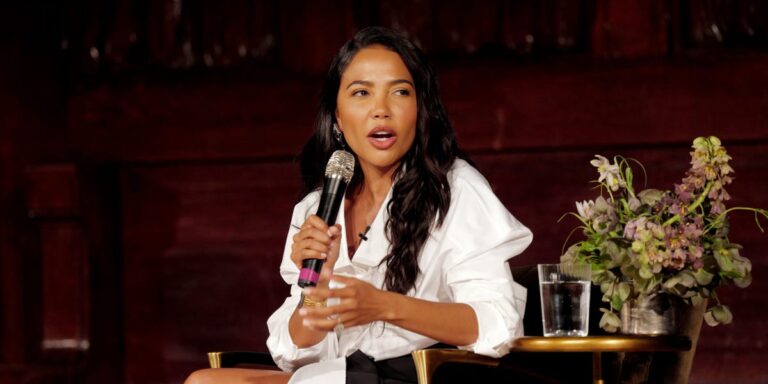
EACR 2026, building on this rich legacy, will undoubtedly be a nexus of groundbreaking science. A critical component of this conference, and one particularly close to my heart as an advocate for emerging talent, is the Early Career Showcase. This dedicated platform is designed specifically to empower PhD students, post-doctoral fellows, and junior group leaders to present their cutting-edge research to a global audience. It’s more than just a presentation opportunity; it’s a vital springboard for young scientists at a crucial juncture in their careers.
The showcase offers a unique set of opportunities. For many, it’s their first chance to present their work on such a prominent stage, gaining invaluable experience in communicating complex scientific ideas. This exposure is critical for attracting funding, establishing collaborations, and securing future career prospects. Networking at events like EACR 2026 is unparalleled; early career researchers can interact directly with established leaders in the field, learn from their experiences, and forge mentorship relationships that can profoundly impact their professional trajectories. Moreover, the feedback received from peers and senior researchers is instrumental in refining methodologies and sharpening research questions.
Crucially, the EACR Early Career Showcase serves as a melting pot for interdisciplinary approaches. In today’s scientific landscape, the most profound breakthroughs often occur at the intersection of different fields. The inclusion of AI-driven projects, computational biology, and bioinformatics within the traditional cancer research framework is now not just encouraged but expected. This platform gives young researchers working on **AI in cancer research** the visibility and validation they need, demonstrating how technological innovation is intrinsically linked to biological discovery. It showcases how these burgeoning scientists are not just adapting to new technologies but actively shaping them to solve some of the most pressing questions in oncology.
Beyond the Bench: The Interdisciplinary Future of Oncology Driven by AI
From my perspective as someone deeply immersed in the world of artificial intelligence, the convergence of AI, data science, and oncology is not just a trend but the definitive future of cancer research. The complexity of cancer demands not only deep biological understanding but also sophisticated computational power to decode its secrets. The challenges are immense, but so are the opportunities for truly revolutionary advances.
However, this powerful integration also brings forth important considerations, particularly around ethics. Issues such as data privacy and security, the potential for algorithmic bias, and the need for explainable AI (XAI) are paramount. Researchers must grapple with how to ensure that AI models are fair, transparent, and interpretable, particularly when making decisions that impact patient lives. Early career researchers are uniquely positioned to embed these ethical considerations into their AI development from the ground up, fostering responsible innovation.
The future of oncology, therefore, is inherently collaborative. It necessitates ecosystems where oncologists, data scientists, computer engineers, ethicists, and even sociologists work hand-in-hand. This interdisciplinary approach ensures that AI tools are not developed in isolation but are deeply integrated into clinical workflows and research methodologies, reflecting real-world needs and challenges. Education plays a vital role here; training the next generation of cancer researchers to be AI-literate, understanding both the capabilities and limitations of these technologies, is crucial. Similarly, AI specialists must gain a nuanced understanding of biological and medical contexts to develop truly impactful solutions.
Looking ahead, the potential for **AI in cancer research** extends even further. Imagine AI-powered predictive models that can anticipate cancer recurrence years in advance, or digital twins of patients that allow researchers to test various treatments virtually before administering them. AI could also streamline clinical trials, identifying suitable patients more efficiently and analyzing results with unprecedented speed, ultimately accelerating the approval of new therapies. The landscape of oncology is being redrawn, not just by new drugs or therapies, but by intelligent systems that augment human intellect and accelerate discovery.
As EACR 2026 draws closer, the excitement among the scientific community, particularly among early career researchers, is palpable. This conference, with its dedicated showcase, represents a critical juncture for the next generation of oncologists and scientists to present their groundbreaking work, much of which will undoubtedly feature the transformative power of AI. It’s a moment to celebrate ingenuity, foster collaboration, and collectively envision a future where cancer is no longer a death sentence but a manageable, and perhaps even preventable, disease.
The journey ahead is challenging, yet filled with immense promise. The fusion of human intellect and artificial intelligence offers an unprecedented opportunity to make significant strides in the fight against cancer. It is the young, vibrant minds, armed with both biological insights and computational prowess, who will lead this charge, leveraging **AI in cancer research** to unlock new pathways to health and hope for millions worldwide. Their innovations, showcased and debated on platforms like EACR 2026, will pave the way for a healthier, brighter future.