

It’s an undeniable truth: the world of work is in constant flux. While technological advancements have always reshaped industries, the current pace, largely driven by artificial intelligence, is unprecedented. In this dynamic landscape, the question isn’t if jobs will change, but how quickly we can adapt our workforce to meet these new demands. It’s a challenge that governments, educational institutions, and industries globally are grappling with, and Texas is no exception. Recently, the Texas Workforce Commission (TWC) made a significant move to address this very challenge, demonstrating a proactive approach to equipping its citizens for the future.
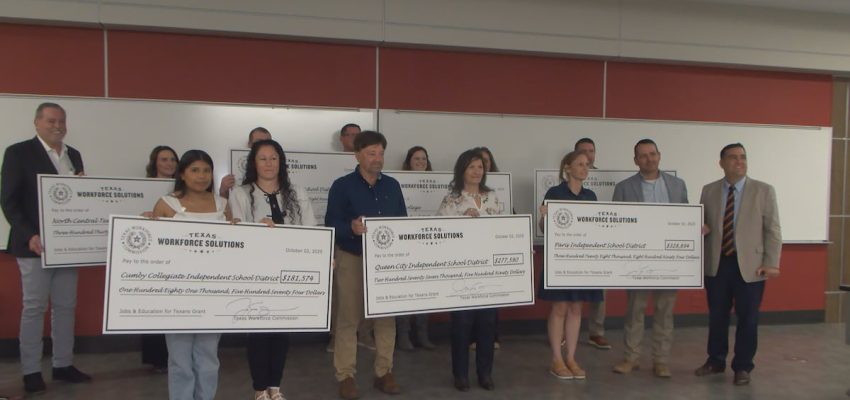
Texas Workforce Commission Chairman Joe Esparza visited Gainesville to announce the allocation of nearly $2 million in “Jobs and Education for Texans,” or JET, grants. These crucial funds are earmarked to bolster career training programs at seven educational institutions across the Texoma region. This investment isn’t merely about funding; it’s a strategic declaration of intent – a commitment to fostering a resilient and skilled workforce capable of navigating the complexities of an increasingly automated and data-driven economy. For André Lacerda, an AI specialist and tech enthusiast, this initiative underscores a vital intersection: the urgent need for targeted skill development in an era defined by rapid AI integration.
Career Training: Paving the Way for Tomorrow’s Workforce in Texas
The JET grant program, an initiative by the Texas Workforce Commission, stands as a testament to the state’s dedication to robust workforce development. By injecting nearly $2 million into seven key educational institutions in the Texoma area – institutions that often serve as the bedrock of local economic vitality – the TWC is directly empowering the next generation of skilled professionals. These grants are not arbitrary; they are meticulously designed to support programs that align with high-demand occupations, addressing critical skill gaps identified within the local and regional economies. Whether it’s advanced manufacturing, healthcare, information technology, or skilled trades, the focus is squarely on providing tangible, employable skills. The goal is to ensure that Texans have access to the education and practical experience necessary to secure good jobs and contribute meaningfully to the state’s prosperity. This targeted approach to career training is a smart move, recognizing that a generic education often falls short in preparing individuals for specific industry needs.
Historically, the JET grant program has been a cornerstone of the TWC’s strategy to bridge the divide between education and employment. Since its inception, the program has allocated tens of millions of dollars to public junior colleges, public technical institutes, public state colleges, and independent school districts. These funds are typically used to purchase and install equipment necessary for developing specific skills, or to provide training for faculty and staff, ensuring that the instruction received by students is cutting-edge and industry-relevant. The grants emphasize a demand-driven model, meaning that the programs funded are those that industry partners have identified as essential for their growth and success. This feedback loop is crucial; it ensures that the investment translates directly into job opportunities and a skilled talent pipeline for businesses struggling to find qualified candidates. Without such focused investment in professional development, regions can quickly fall behind in a competitive global market, unable to attract or retain the industries that drive economic growth. The Texoma region, encompassing a diverse range of industries, stands to benefit immensely from this localized boost in vocational education and skill enhancement, creating pathways for individuals to gain valuable qualifications and embark on rewarding career trajectories.
This kind of state-level investment is more than just financial aid; it’s an economic multiplier. When individuals receive quality professional development, their earning potential increases, leading to greater consumer spending, a stronger tax base, and overall community upliftment. Furthermore, businesses benefit from a readily available pool of qualified workers, reducing recruitment costs and boosting productivity. Data from various economic studies consistently shows a direct correlation between investment in skills acquisition and regional economic growth. For instance, the National Skills Coalition reports that middle-skill jobs – those requiring more than a high school diploma but less than a four-year degree – account for the largest share of the labor market in most states, including Texas. Yet, there’s often a significant gap between the supply of workers with these skills and the demand from employers. Initiatives like the JET grants are explicitly designed to close this gap, making them a crucial component of any robust state economic development strategy. They transform educational institutions into dynamic centers for workforce preparation, directly connecting academic programs with the practical needs of the labor market, ensuring that students are not just learning, but learning skills that are in demand right now, and for the foreseeable future.
The AI Revolution and the Evolving Skillset Landscape
While the TWC’s investment in career training is a localized effort, its implications resonate deeply with the broader, global phenomenon of the AI revolution. Artificial intelligence is not just a technological advancement; it’s a fundamental shift in how we work, create, and interact. From automating repetitive tasks to augmenting complex decision-making processes, AI is reshaping nearly every industry imaginable. In manufacturing, robots powered by AI are enhancing precision and efficiency; in healthcare, AI assists in diagnostics and personalized treatment plans; in finance, algorithms detect fraud and optimize investments. This pervasive influence means that the skills valued in the workforce are rapidly evolving.
The immediate impact of AI is often perceived through the lens of job displacement, but a more nuanced view reveals a significant transformation rather than wholesale replacement. While some routine, predictable tasks are indeed being automated, AI simultaneously creates new jobs and augments existing ones, requiring a fresh set of competencies. For instance, the rise of AI necessitates roles such as AI ethicists, prompt engineers, machine learning operations (MLOps) specialists, and data governance experts. Even traditional roles are changing: a mechanic might need to diagnose AI-driven systems in modern vehicles, or a healthcare professional might interpret AI-generated insights. The key takeaway is that future success hinges not on competing with AI, but on collaborating with it.
This collaboration demands a shift in the educational paradigm. While foundational technical skills remain important, the emphasis is increasingly on uniquely human capabilities that AI cannot replicate. Critical thinking, creativity, complex problem-solving, emotional intelligence, communication, and adaptability are becoming paramount. These ‘soft skills’ – often referred to as power skills – enable individuals to leverage AI tools effectively, innovate, and navigate ambiguous situations. Furthermore, a basic understanding of AI concepts, data literacy, and digital fluency are becoming prerequisites for almost any professional role. The career training programs funded by TWC, while perhaps not explicitly AI-focused in all cases, are laying the groundwork by enhancing foundational technical and professional capabilities that are essential for future adaptation. By strengthening the core skills of the Texoma workforce, the state is indirectly bolstering its resilience against the disruptions and opportunities presented by AI.
Leading organizations like the World Economic Forum consistently highlight the urgency of reskilling and upskilling initiatives. Their reports indicate that a significant percentage of the global workforce will require new skills in the coming years due to automation and AI. For example, recent analyses suggest that by 2030, between 75 million and 375 million workers globally may need to switch occupational categories and learn new skills. This isn’t just a challenge for individual workers; it’s a strategic imperative for nations and regions to remain competitive. Investing in career training today, therefore, isn’t just about current job market demands; it’s a forward-looking strategy to prepare for the inevitable future, ensuring that economic growth remains inclusive and sustainable even as technology accelerates.
Bridging the Gap: Education, Industry, and Government Collaboration
The success of initiatives like the JET grants hinges on a powerful, often symbiotic relationship between government, educational institutions, and industry. The Texas Workforce Commission, as a governmental body, provides the strategic vision and funding. Educational institutions, such as the seven beneficiaries in the Texoma region, are the engines of skill development, translating these funds into actionable training programs. But the crucial third leg of this stool is industry. Without strong input from businesses – understanding their current needs, anticipating future demands, and even offering practical training environments – the best-intentioned educational programs can miss their mark.
This three-way partnership ensures that career training remains relevant and responsive. For example, local employers might partner with a community college to co-design curricula, offer apprenticeships, or provide guest lecturers who bring real-world insights into the classroom. This direct engagement ensures that graduates emerge not just with theoretical knowledge, but with the practical, hands-on skills that businesses are actively seeking. Apprenticeships, in particular, are gaining renewed recognition as an effective model, combining on-the-job learning with structured classroom instruction, often leading directly to employment. This collaborative model transforms passive learning environments into dynamic talent incubators.
Moreover, the speed of technological change, especially with AI, means that static curricula quickly become obsolete. Educational institutions need to be agile, constantly updating their offerings based on industry feedback. This requires an open dialogue, regular skill gap analyses, and a willingness to embrace innovative pedagogical approaches, including micro-credentials and modular learning pathways that allow individuals to acquire specific skills quickly without committing to lengthy degree programs. Government initiatives like the JET grants act as catalysts, providing the resources and impetus for institutions to undertake these vital updates and ensure their career training programs remain at the forefront of innovation. They encourage a mindset of continuous improvement, recognizing that learning is a lifelong journey, not a destination.
Across the globe, regions that excel in workforce development demonstrate robust collaborations. Germany’s dual education system, combining vocational school with apprenticeships, is a prime example of industry-education integration. In the U.S., states like North Carolina have fostered strong partnerships between community colleges and local industries, leading to highly effective specialized training programs. The Texas Workforce Commission’s investment in the Texoma region reflects a similar understanding: that sustainable economic growth and a competitive workforce are not achieved in isolation but through concerted, cooperative efforts. It’s about building an ecosystem where learning is directly linked to earning, and where every investment in education is an investment in the future prosperity of the community and the state.
Conclusion
The Texas Workforce Commission’s nearly $2 million investment in career training for Texoma educational institutions is far more than a local news item; it’s a powerful statement about foresight and preparedness. In an era where artificial intelligence is rapidly redefining the contours of our professional lives, cultivating a skilled, adaptable workforce is no longer a luxury but an absolute necessity. By strategically funding programs that target high-demand occupations and foster essential competencies, Texas is taking concrete steps to ensure its citizens are not merely spectators but active participants and beneficiaries of the ongoing technological revolution. This initiative embodies a proactive approach to workforce development, recognizing that investing in human capital is the most robust strategy for sustainable economic growth and societal well-being.
As André Lacerda, I see this as a shining example of how traditional government functions can thoughtfully intersect with the demands of a high-tech future. The synergy between government funding, educational innovation, and industry collaboration is the blueprint for navigating the challenges and seizing the opportunities that AI presents. The path forward for states, nations, and individuals alike will undoubtedly involve continuous learning, strategic upskilling, and a commitment to adapting to new technological paradigms. The Texoma region’s commitment to enhancing career training is a crucial step on this journey, building a foundation for a prosperous and resilient future for all its inhabitants.










