

In an era defined by rapid technological advancement, the landscape of nearly every industry is undergoing a profound transformation. Manufacturing, often perceived through the lens of a bygone industrial age, stands at the forefront of this revolution. Far from the dusty, repetitive assembly lines of yesteryear, today’s factories are vibrant hubs of innovation, where artificial intelligence, robotics, and cutting-edge data science converge to create products and solutions that shape our world. As an AI specialist and tech enthusiast, I’ve long been fascinated by the incredible potential of this sector, and it’s particularly inspiring to see how young minds are being introduced to its dynamic future.
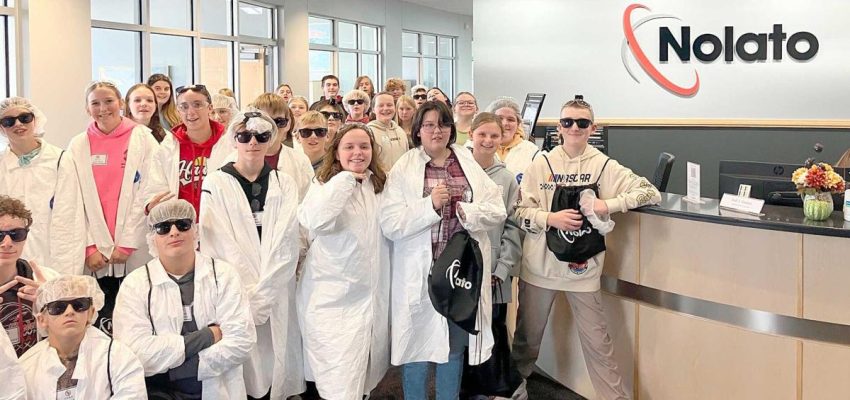
Recently, an event at Nolato Contour brought this transformation to life for nearly 170 students from Baldwin-Woodville, offering them a tangible glimpse into what modern industry truly entails. This annual Manufacturing Day celebration, part of a broader Manufacturing Month initiative, served as a crucial bridge, connecting classroom theory with real-world application and, critically, showcasing the incredible opportunities that lie within advanced manufacturing careers. It’s an invitation to a future that is not just about making things, but about intelligently designing, optimizing, and innovating in ways previously unimaginable.
Advanced Manufacturing Careers: Redefining an Industry
For decades, the perception of manufacturing suffered from outdated stereotypes. Visions of laborious, monotonous tasks in dimly lit facilities often deterred bright young talent from considering a path in this vital sector. However, the reality today couldn’t be more different. We are in the midst of Industry 4.0, a fourth industrial revolution characterized by the integration of cyber-physical systems, the Internet of Things (IoT), cloud computing, and cognitive computing. This paradigm shift has fundamentally reshaped what it means to work in manufacturing, creating a demand for a new breed of professionals.
Manufacturing Day events, such as the one hosted by Nolato Contour, play a pivotal role in dispelling these old myths. They provide a direct, immersive experience, allowing students to witness firsthand the sophisticated technology and complex processes that define contemporary production. Nolato Contour, a leading custom plastic injection molder, exemplifies the precision, innovation, and high-tech capabilities that are standard in modern manufacturing. Students walking through their facilities would have seen advanced robotics meticulously handling components, sophisticated machinery operating with incredible accuracy, and skilled technicians monitoring intricate digital interfaces. This exposure is critical because it reveals that advanced manufacturing careers are not just about manual labor; they are about applying intellect, problem-solving, and technological prowess to create tangible impact.
The global manufacturing sector is a colossus, valued at trillions of dollars annually, and its continuous evolution is driving economic growth and technological innovation worldwide. According to Deloitte, smart factory initiatives could add $500 billion to $1.5 trillion in value to the global economy over the next five years. This projected growth underscores the increasing demand for a skilled workforce capable of navigating and innovating within these complex environments. From designing intricate components using CAD software to programming automated systems, and from analyzing production data to developing sustainable manufacturing practices, the scope of roles within this industry has expanded dramatically. It’s a field hungry for fresh perspectives and digital fluency, offering diverse pathways for those eager to contribute to the next wave of industrial progress.
The Fusion of AI and Automation: Shaping Tomorrow’s Factories
At the heart of modern manufacturing’s transformation lies the pervasive integration of artificial intelligence and automation. These technologies are not merely supplementary tools; they are foundational to the efficiency, precision, and innovation that define today’s production processes. Robotics, for instance, has moved beyond simple repetitive tasks. Collaborative robots, or ‘cobots,’ work alongside human operators, enhancing safety and productivity, taking on ergonomically challenging or hazardous duties while humans focus on more complex, value-added activities. This synergy between human and machine is a hallmark of the new industrial age, creating smarter, more resilient workplaces.
AI’s influence extends far beyond robotics. In quality control, machine vision systems powered by AI can detect microscopic defects with unparalleled speed and accuracy, far surpassing human capabilities. This ensures higher product quality, reduces waste, and enhances customer satisfaction. Predictive maintenance, another game-changer, leverages machine learning algorithms to analyze data from sensors embedded in machinery. By identifying patterns and anomalies, AI can predict equipment failures before they occur, allowing for proactive maintenance that minimizes downtime and extends the lifespan of expensive assets. This optimizes operational efficiency and drastically cuts costs, making production more reliable and sustainable.
Furthermore, AI is revolutionizing supply chain management. Advanced algorithms analyze vast datasets, from market demand and geopolitical events to logistics and inventory levels, to optimize routes, manage stock, and even anticipate disruptions. This creates a more agile and responsive supply chain, crucial in an interconnected global economy. For students considering advanced manufacturing careers, understanding these technological underpinnings is paramount. These aren’t just technical skills; they’re foundational competencies for problem-solving, innovation, and leadership in an increasingly data-driven world. The ability to interact with, program, and manage intelligent systems will be a cornerstone of success.
Beyond the Assembly Line: Diverse Paths in Modern Manufacturing
The beauty of the contemporary manufacturing landscape is its incredible diversity of roles, appealing to a wide array of talents and interests. Gone are the days when a manufacturing career meant only a few specialized pathways. Today, the sector boasts an ecosystem of interdisciplinary professions that blend engineering, computer science, data analytics, and even creative design.
Consider the role of a Robotics Engineer: these professionals design, build, test, and maintain robotic systems, often integrating AI for enhanced autonomy and decision-making. Then there are Data Scientists and AI/ML Specialists, who are indispensable for developing the algorithms that drive predictive maintenance, quality control, and process optimization. Their work transforms raw production data into actionable insights, pushing the boundaries of efficiency and innovation.
Materials Scientists are at the forefront of developing new composites and alloys, often leveraging additive manufacturing (3D printing) to create complex geometries and customized components. These advancements are crucial for sectors like aerospace, automotive, and medical devices. Automation Technicians are on the ground, installing, troubleshooting, and repairing the complex automated systems that populate smart factories, ensuring seamless operation. Supply Chain Analysts utilize advanced analytics to optimize logistics, procurement, and distribution networks, vital for global competitiveness.
Even product design is undergoing an AI-powered evolution, with generative design tools assisting engineers in exploring thousands of design iterations to find the most optimal, material-efficient, and performance-driven solutions. These roles require a blend of technical expertise, critical thinking, and often, a strong creative flair. For the students from Baldwin-Woodville, seeing these roles in action at Nolato Contour provided a powerful revelation: a career in modern manufacturing is a gateway to innovation, problem-solving, and significant contribution to technological progress. It highlights that the future of advanced manufacturing careers is truly interdisciplinary, requiring individuals who are curious, adaptable, and eager to learn.
Cultivating the Next Generation: The Role of Education and Industry Partnerships
The success of this new industrial era hinges on a well-prepared workforce, and this is precisely where initiatives like Manufacturing Day and strong partnerships between industry and education become indispensable. The experience of nearly 170 Baldwin-Woodville students stepping into Nolato Contour is a testament to the power of direct engagement. It offers students a tangible connection to the abstract concepts they learn in STEM classes, demonstrating the practical application and exciting potential of science, technology, engineering, and mathematics.
These hands-on opportunities are crucial for inspiring students to pursue higher education and vocational training in relevant fields. Community colleges and technical schools, for instance, are rapidly adapting their curricula to meet the demands of Industry 4.0, offering programs in robotics, automation, cybersecurity for industrial control systems, and data analytics. Four-year universities are likewise integrating AI and machine learning into engineering and computer science degrees, preparing graduates for leadership roles in smart factories. Apprenticeships and internships, often facilitated by industry leaders, provide invaluable on-the-job training, allowing students to develop specialized skills and gain practical experience while still learning.
The skills gap in manufacturing is a significant challenge globally, with millions of jobs projected to go unfilled due to a lack of skilled talent. By proactively reaching out to high school students, companies like Nolato Contour are not just showcasing their operations; they are actively investing in the future talent pipeline. They are demonstrating that advanced manufacturing careers offer stable, well-paying, and intellectually stimulating opportunities. This collaborative effort between industry, educators, and local communities is vital for fostering a workforce that is not only ready for the challenges of tomorrow but also eager to drive innovation in the years to come.
The journey of modern manufacturing is one of continuous evolution, driven by innovation, intelligence, and human ingenuity. The outdated image of dirty, dangerous, and dull factories has been decisively replaced by smart, interconnected, and dynamic environments where technology empowers human potential. Events like the annual Manufacturing Day at Nolato Contour for Baldwin-Woodville students are not merely field trips; they are pivotal moments of revelation, opening young eyes to a world of possibilities they might never have considered.
As we look to the future, the integration of AI, robotics, and advanced data systems will only deepen, making advanced manufacturing careers even more critical and exciting. For the next generation, these roles offer not just jobs, but opportunities to be at the forefront of innovation, to solve complex challenges, and to shape the very products and technologies that define our modern existence. It’s a call to action for curious minds, problem-solvers, and tech enthusiasts to consider a path that promises significant impact and a truly rewarding future.










