

In an era defined by rapid technological advancement, the skills we acquire today are the foundations of tomorrow’s innovations. While many young people enjoy the traditional carefree days of summer, a growing number are opting for a different kind of break: one that immerses them in the cutting-edge fields shaping our future. This proactive approach to learning is not just about filling time; it’s about strategically equipping the next generation with the tools and insights needed to navigate and lead in an increasingly complex and AI-infused world. From artificial intelligence to advanced robotics, the pace of change demands an educational paradigm that anticipates the future rather than merely reacting to it.
André Lacerda here, and as someone deeply passionate about artificial intelligence and its transformative potential, I’ve long advocated for initiatives that bridge the gap between burgeoning technologies and enthusiastic young minds. It’s imperative that we provide accessible pathways for students to explore, experiment, and ultimately excel in areas that will define the coming decades. Programs that offer hands-on experience in fields like AI, drone technology, and digital fabrication are not just extracurricular activities; they are critical incubators for future innovators, engineers, and problem-solvers. They are the seeds from which the next wave of technological breakthroughs will blossom, driven by the ingenuity of those who were given the chance to dream and build early on.
### Youth Tech Education: Nurturing Tomorrow’s Innovators Today
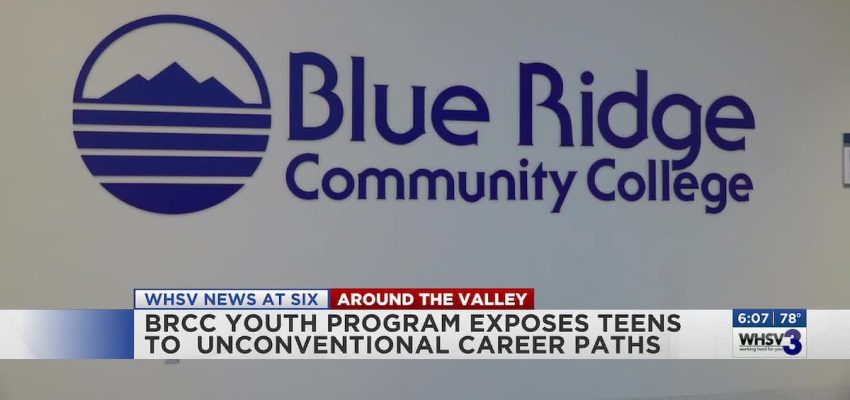
The scene unfolding at institutions like Blue Ridge Community College (BRCC) in Weyers Cave, Virginia, offers a glimpse into this vital future. BRCC’s summer youth program, looking ahead to 2026, exemplifies a forward-thinking approach to **youth tech education**, inviting teens to dive into diverse fields such as ceramics, animal sciences, and – most pertinently for our discussion – drone technology. This initiative is more than just a summer camp; it’s a strategic effort to expose young individuals to potential career paths long before they step foot into higher education or the professional world. Early exposure, particularly to rapidly evolving domains like artificial intelligence and robotics, is not merely beneficial; it’s becoming an absolute necessity.
Consider the global landscape: the World Economic Forum consistently highlights the growing skills gap in STEM fields, particularly in emerging technologies. Reports suggest that by 2025, an estimated 97 million new jobs may emerge that are adapted to the new division of labor between humans, machines, and algorithms. Many of these roles will require proficiency in data analysis, machine learning, and AI. By introducing concepts related to drone technology, which is intrinsically linked with AI, these programs are not just teaching a skill but are planting the seeds of understanding for a broader technological ecosystem. This form of **youth tech education** helps demystify complex subjects, making them approachable and exciting rather than intimidating.
Beyond the technical skills, these programs foster critical thinking, problem-solving abilities, and collaboration. Imagine a group of teenagers learning to program a drone for an autonomous flight path or troubleshoot a technical issue – they are engaging in real-world challenges that develop resilience and ingenuity. These are transferable skills that will serve them regardless of their ultimate career choice. The interdisciplinary nature of some programs, like BRCC’s, which also includes ceramics and animal studies, subtly illustrates how technology permeates even traditionally non-tech fields. For instance, advanced materials in ceramics can involve computational design, and animal studies increasingly utilize AI for monitoring wildlife, behavioral analysis, and conservation efforts.
This kind of comprehensive **youth tech education** ensures that students develop a holistic view of technology’s reach. It’s about showing them that innovation isn’t confined to a single laboratory but is a pervasive force transforming every aspect of life. Furthermore, by making these programs accessible within community college settings, barriers to entry are lowered, allowing a broader demographic of students to benefit from high-quality STEM instruction. This democratizes access to future-critical skills, promoting equity and diversity in the tech talent pipeline.
### The Rise of Drones and the AI Revolution
Among the various exciting avenues, drone technology stands out as a particularly compelling gateway into the world of AI. Unmanned Aerial Vehicles (UAVs), or drones, have transitioned from niche military applications to a ubiquitous presence in civilian life, transforming industries from logistics and agriculture to entertainment and public safety. The global drone market, valued at over $20 billion in 2022, is projected to exceed $100 billion by the end of the decade, illustrating a massive growth trajectory and, consequently, a burgeoning demand for skilled professionals.
What makes modern drones so powerful and versatile? The answer lies largely in artificial intelligence. AI is the invisible engine powering the intelligence, autonomy, and efficacy of these flying robots. When teens learn about drone technology in programs like BRCC’s, they are indirectly (and often directly) engaging with core AI concepts:
* **Computer Vision:** Drones use cameras and AI algorithms to ‘see’ and interpret their surroundings. This involves object recognition (identifying people, vehicles, obstacles), mapping environments, and even detecting anomalies in infrastructure inspections. Students might program a drone to identify specific targets, teaching them rudimentary principles of machine learning and image processing.
* **Autonomous Navigation:** While remote control is common, the true power of drones comes from their ability to navigate autonomously. AI algorithms enable path planning, obstacle avoidance, and precise positioning using GPS, inertial measurement units, and complex sensor fusion. Learning to set up a flight path or program specific maneuvers exposes students to robotics, control systems, and computational geometry.
* **Data Analysis:** Drones collect vast amounts of data – high-resolution images, video, thermal data, LiDAR scans. AI-powered analytics can process this data rapidly to extract actionable insights, whether it’s monitoring crop health in precision agriculture, assessing damage after a disaster, or creating detailed 3D models of construction sites. This introduces students to the concepts of big data, data science, and the practical applications of AI in diverse sectors.
* **Swarm Intelligence:** Advanced drone applications involve multiple drones operating collaboratively. This ‘swarm intelligence’ is a fascinating area of AI research, where individual agents (drones) coordinate to achieve complex goals, such as surveying a large area more efficiently or creating dynamic light shows. While perhaps beyond introductory programs, exposure to the capabilities of advanced drone systems sparks imagination and highlights the potential of networked AI systems.
By engaging with these technologies, students aren’t just flying toys; they are operating sophisticated platforms that embody advanced engineering and cutting-edge AI. This hands-on experience demystifies concepts that might otherwise seem abstract or too complex, making the learning process tangible and exciting. It encourages them to ask ‘how’ and ‘why,’ fostering a deeper understanding of the underlying principles that drive innovation.
### Preparing the Next Generation for an AI-Driven Future
The importance of early engagement with technologies like AI and drones cannot be overstated. We are moving into an era where AI literacy will be as fundamental as digital literacy is today. Preparing the next generation means more than just teaching them to code; it means fostering a mindset of continuous learning, adaptability, and ethical consideration in technology development.
Community colleges, with their direct ties to local industries and their focus on workforce development, are uniquely positioned to deliver this kind of crucial **youth tech education**. They can act as vital hubs, offering specialized curricula that respond quickly to industry demands. BRCC’s initiative, for example, is not just about teaching skills but about building a talent pipeline that will feed into the regional and national economy. As the demand for AI specialists, robotics engineers, and drone operators continues to surge, these foundational programs become indispensable.
Furthermore, these programs are critical for promoting diversity and inclusion in STEM fields. By engaging students at a younger age, before traditional stereotypes or preconceived notions about technology careers might take hold, we can inspire a broader range of individuals to pursue these paths. A diverse workforce brings varied perspectives, which is essential for creating AI systems that are robust, equitable, and beneficial for all members of society. Initiatives that bring coding, robotics, and AI directly to high school students empower them to see themselves as creators and innovators, not just consumers, of technology.
Beyond drones, the principles learned – computational thinking, algorithmic logic, data interpretation – are universally applicable across the vast spectrum of AI applications, from natural language processing to predictive analytics and autonomous systems. Whether a student goes on to develop AI for healthcare diagnostics, financial forecasting, or climate modeling, the analytical foundations established in programs focused on **youth tech education** will be invaluable.
In essence, what BRCC and similar institutions are doing is more than just offering summer classes; they are performing an essential service for our collective future. They are helping to cultivate a generation that is not only technologically proficient but also critically aware of the societal implications of AI and other advanced technologies. This holistic approach ensures that future leaders will be equipped not just with technical prowess, but also with the wisdom to wield these powerful tools responsibly.
As we look ahead to 2026 and beyond, the imperative to invest in robust **youth tech education** becomes increasingly clear. Programs that introduce teens to the intricacies of drone technology, powered by artificial intelligence, are not just teaching them to operate advanced gadgets; they are initiating them into a world where intelligence is augmented, possibilities are limitless, and human ingenuity remains at the core of progress. It’s about empowering them to be the architects of tomorrow, shaping a future where technology serves humanity in profound and beneficial ways.
The future of innovation rests squarely on the shoulders of these young learners. By providing engaging, hands-on experiences in fields like AI and drone technology, we are not just preparing them for careers; we are inspiring them to dream bigger, think smarter, and build a world that is more connected, efficient, and intelligent. The commitment to early tech exposure is a commitment to a brighter, more technologically advanced future for everyone. Let’s continue to champion these vital educational initiatives, ensuring every young mind has the opportunity to explore the boundless potential of an AI-driven world.










