

In an era defined by rapid technological advancement, artificial intelligence, and unprecedented digital transformation, the very fabric of our economy and society is undergoing a profound shift. The jobs of tomorrow are not merely an evolution of today’s roles; many are entirely new categories, demanding a different lexicon of competencies. As an AI specialist and tech enthusiast, I’ve observed firsthand the escalating demand for individuals who possess not just technical prowess but also the adaptability and critical thinking necessary to navigate this complex landscape. It’s a landscape where innovation is constant, and the ability to learn and unlearn is paramount. This makes the proactive approach to education, particularly in the foundational years, not just commendable but absolutely vital.
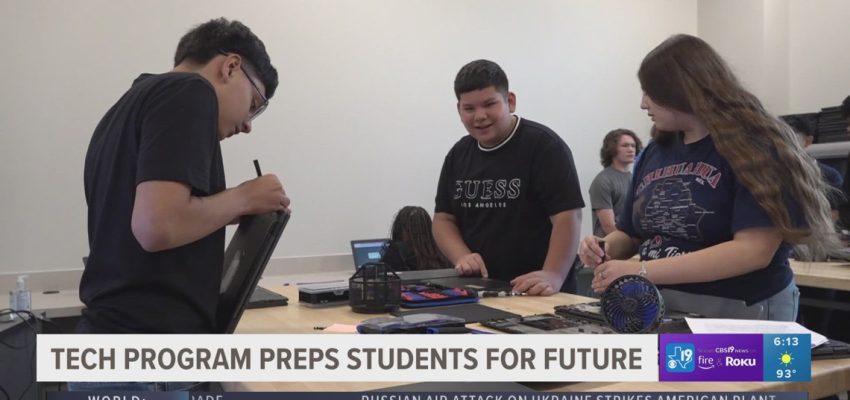
Consider the forward-thinking initiative at Chapel Hill Junior High, where eighth-graders are diving headfirst into a curriculum designed to arm them with exactly these essential capabilities. Far from being an elective afterthought, technology education is becoming a cornerstone of preparing young minds for a world increasingly shaped by algorithms, data, and interconnected systems. These students aren’t just learning about technology; they’re actively engaging with it, building, experimenting, and problem-solving, laying down the neural pathways for innovative thought and practical application. This early exposure is more than just an academic advantage; it’s an investment in the human capital that will drive the next wave of technological progress, including the ethical and responsible development of AI.
Future-Ready Skills: Nurturing Tomorrow’s Innovators Today
The concept of Future-Ready Skills is not merely a buzzword; it represents a fundamental shift in educational philosophy. No longer is it sufficient to impart rote knowledge; instead, educators must cultivate a set of competencies that enable students to thrive in unpredictable environments. At Chapel Hill Junior High, the “Introduction to Computer Science” course exemplifies this paradigm. Eighth-graders are not just passively absorbing information; they are actively engaging in project-based learning that encompasses a wide array of high-demand fields. Imagine students as young as 13 grappling with Python programming – a language that powers everything from web applications to the most sophisticated machine learning algorithms. This isn’t just about syntax; it’s about computational thinking, breaking down complex problems into manageable steps, and understanding logical flow – skills directly transferable to almost any discipline, especially those involving data science and AI.
Beyond coding, the curriculum delves into critical areas such as web design, digital forensics, and cybersecurity. In an age where digital identity is paramount and cyber threats are a constant concern, equipping students with an understanding of digital security principles from an early age is invaluable. Digital forensics, for instance, introduces them to the intricacies of data recovery and analysis, fostering a meticulous attention to detail and an understanding of digital footprints. These subjects are taught not in isolation but through hands-on experiences. Students are utilizing Lego robotics (EV3 kits), Tello drones, and Sphero robots. These tools transform abstract concepts into tangible, interactive challenges. Building and programming a robot to navigate a maze or a drone to execute a specific sequence of movements demands not only technical understanding but also teamwork, spatial reasoning, and iterative problem-solving – all cornerstones of engineering and, by extension, AI development.
The pedagogical approach taken by educators like Mrs. Tameka Hayes is central to the success of such programs. She is not just teaching code; she is fostering a mindset of curiosity and resilience. The student testimonials from Chapel Hill speak volumes, with many expressing enthusiasm for the creative problem-solving inherent in coding and building. This intrinsic motivation is key, transforming learning from a chore into an exciting exploration of possibilities. By providing an environment where experimentation is encouraged and ‘failure’ is seen as a stepping stone to learning, these students are developing the tenacity and adaptive intelligence that will serve them throughout their lives and careers, particularly as they encounter the dynamic challenges posed by emerging technologies.
Bridging the Gap: Education and the Evolving Tech Landscape
The global demand for tech professionals is staggering, and it’s a trend that shows no signs of abating. Reports consistently highlight a significant skills gap, with millions of tech jobs projected to remain unfilled due to a lack of qualified candidates. This gap is not confined to Silicon Valley; it’s a worldwide phenomenon, impacting every industry from healthcare to agriculture. In regions like East Texas, where Chapel Hill Junior High is located, proactive measures like this program are crucial for fostering local talent and ensuring regional economic competitiveness. By providing students with foundational Future-Ready Skills in junior high, schools are effectively creating a pipeline of talent that can meet future workforce demands. This early intervention is vital because it demystifies technology, making it accessible and appealing before students specialize in high school or college.
Moreover, these programs are not just about training future coders or cybersecurity analysts. They are about cultivating computational literacy – the ability to understand and interact with the digital world, regardless of one’s chosen profession. In an AI-driven future, even non-tech roles will require a basic understanding of how algorithms function, how data is processed, and the ethical implications of automated decision-making. Whether these students go on to become engineers, doctors, artists, or entrepreneurs, the analytical and problem-solving skills honed through coding and robotics will be invaluable. They will be better equipped to critically assess information, understand complex systems, and even leverage AI tools to enhance their own work, rather than being replaced by them.
The integration of concepts like digital forensics and cybersecurity, for example, gives students an early appreciation for the societal implications of technology. They learn about data privacy, digital ethics, and the responsibility that comes with technological power. These are not merely technical topics; they are civic responsibilities in the digital age. As AI becomes more pervasive, understanding its ethical dimensions – fairness, transparency, accountability – will be paramount. Early exposure to these themes in a practical, engaging manner helps shape responsible digital citizens and, potentially, ethical AI developers and policy-makers.
Beyond the Classroom: The Societal Impact of Early Tech Immersion
The impact of initiatives like the one at Chapel Hill Junior High extends far beyond individual academic achievement. They contribute to building a more technologically literate society, one that is better prepared to innovate, adapt, and critically engage with the complex issues presented by advancements in AI and other emerging technologies. By making tech education accessible at an early age, these programs help democratize opportunities, potentially bridging socio-economic gaps and fostering a more diverse and inclusive future workforce. It ensures that students from all backgrounds have the chance to explore high-demand fields and discover their aptitudes for roles that might otherwise seem out of reach. This exposure can be the spark that ignites a lifelong passion for STEM fields, guiding students towards fulfilling careers that contribute meaningfully to society.
Furthermore, these educational models serve as a powerful blueprint for other school districts looking to enhance their curriculum. The emphasis on hands-on learning, practical application, and problem-solving through tools like robotics and programming languages proves that a dynamic and engaging approach to technology education is not only possible but highly effective. It moves beyond theoretical instruction to experiential learning, where students construct knowledge by doing. This approach is inherently more effective for developing Future-Ready Skills because it mimics the real-world demands of scientific research, engineering design, and technological innovation. It encourages collaboration, communication, and creativity – skills that are often cited as equally, if not more, important than purely technical knowledge in the modern workplace.
As we look to the future, the foundational skills these eighth-graders are acquiring will be instrumental in navigating the complex ethical and practical challenges posed by advanced AI. Understanding the basics of programming helps demystify AI algorithms. Engaging with robotics provides an intuitive grasp of how physical systems can be automated and controlled. Exploring cybersecurity fosters an awareness of data integrity and protection, critical for any AI system that relies on vast datasets. These are not just isolated skills; they are interconnected pieces of a larger puzzle, building a comprehensive understanding of the digital ecosystem in which AI thrives. By fostering these competencies early, we are not just preparing students for jobs; we are empowering them to be active participants and ethical architects of our technological future.
The journey these eighth-graders are embarking on at Chapel Hill Junior High is a microcosm of a larger, global imperative: to equip the next generation with the tools and mindset needed to thrive in an increasingly automated and interconnected world. The dedication of educators and institutions to providing practical, engaging tech education is not merely about staying current; it’s about shaping the future. By fostering essential Future-Ready Skills such as coding, computational thinking, and digital literacy, we are investing in a generation that will not only adapt to technological change but actively drive it.
As an AI specialist, I firmly believe that the foundational understanding cultivated in programs like this is crucial for the responsible and innovative development of artificial intelligence. These young minds are not just learning to operate technology; they are learning to question it, to build it, and to wield its power ethically. Their journey underscores a vital truth: that the future of technology, and indeed humanity, rests on our collective ability to educate and empower the innovators of tomorrow, today. May this initiative inspire many more across the globe.










