

The sky, once an insurmountable barrier, has become a canvas for human ingenuity. From the earliest gliders to today’s supersonic jets, the journey of aviation is a testament to our relentless pursuit of innovation and precision. Yet, behind every safe flight and every marvel of engineering lies a dedicated ecosystem of highly skilled individuals. These are the unsung heroes who meticulously craft the metal, integrate complex systems, and ensure the structural integrity of the machines that lift us into the clouds. In an industry where the margin for error is virtually nonexistent, fostering this specialized talent is not just an advantage—it’s an absolute necessity.
At the heart of this crucial endeavor in the United States, an impressive initiative is taking flight. In Mobile, Alabama, Airbus, a global titan in aerospace, operates its sole U.S. commercial aircraft manufacturing facility. For over a decade, this site has not only been a beacon of industrial success but also a testament to the power of investing in local talent. A significant pillar of its sustained excellence is the FlightPath9 apprenticeship program, a visionary pathway designed to train the next generation of aircraft manufacturing careers professionals. This program is more than just a training scheme; it’s a strategic investment in human capital, directly linking skilled labor to the paramount goal of making air travel safe and efficient. As an AI specialist and tech enthusiast, I find such initiatives particularly compelling, for they represent the symbiotic relationship between cutting-edge technology and indispensable human expertise.
This article delves into the transformative impact of FlightPath9, exploring how it addresses critical skill gaps, empowers individuals, and reinforces Airbus’s position as a leader in global aerospace. We will examine the broader significance of robust training programs in an evolving manufacturing landscape and consider the indelible mark they leave on both local economies and the future of aviation.
Aircraft Manufacturing Careers: The Bedrock of Aerospace Innovation
The aerospace industry stands as one of the most technologically advanced and meticulously regulated sectors globally. Its products, commercial aircraft, are complex machines designed to operate safely under extreme conditions, carrying hundreds of lives across continents. The creation of such marvels demands a workforce possessing an unparalleled blend of technical acumen, problem-solving capabilities, and unwavering attention to detail. These are the attributes that define successful aircraft manufacturing careers, from the engineers designing the blueprints to the technicians on the assembly line.
Consider the sheer complexity involved: an airliner like the Airbus A320, a staple produced at the Mobile facility, comprises millions of individual parts, each requiring precise fabrication, assembly, and testing. Wing spars, fuselage sections, landing gear, avionics systems, and cabin interiors must all integrate seamlessly. Any deviation, however minor, can have catastrophic consequences. This reality underscores why the demand for skilled aircraft manufacturers is perpetual and critical. They are the guardians of quality, the architects of safety, and the executors of innovation, ensuring that every rivet, weld, and wire harness meets the highest possible standards.
Beyond the immediate tasks, individuals in aerospace technician roles also play a vital role in the continuous improvement cycle. They provide invaluable feedback from the factory floor, contributing to more efficient designs and advanced manufacturing processes. With the advent of new materials like carbon fiber composites, sophisticated robotics, and additive manufacturing (3D printing), the skill sets required are constantly evolving. Apprenticeship programs like FlightPath9 are crucial for bridging these evolving knowledge gaps, preparing individuals not just for current industry demands but for the innovations of tomorrow. These programs cultivate a deep understanding of lean manufacturing principles, quality assurance protocols, and the use of advanced tooling, making their graduates indispensable assets to any aerospace firm.
Airbus Mobile: A Decade of American Aerospace Excellence
The decision by Airbus to establish its first U.S. commercial aircraft production facility in Mobile, Alabama, in 2012, marked a pivotal moment for both the company and American aerospace. Inaugurating production in 2015, the Mobile plant quickly became a cornerstone of Airbus’s global industrial footprint. It’s not merely an assembly line; it’s a strategic hub that serves North American customers, reduces logistical complexities, and strengthens Airbus’s commitment to the U.S. market. The success of this facility, now celebrating over ten years of operation, underscores the potential for high-tech manufacturing growth in regions historically known for other industries.
At the Mobile Aeroplex at Brookley, Airbus initially began assembling the A320 family aircraft (A319, A320, and A321). In 2019, the facility expanded its operations to include the assembly of the A220 aircraft, further diversifying its production capabilities. This expansion reflects not only the increasing demand for these highly efficient single-aisle aircraft but also Airbus’s confidence in the Mobile workforce and the operational efficiency of the site. The plant represents a significant investment, creating thousands of direct jobs and many more indirect jobs across a vast supply chain network stretching across the Gulf Coast and beyond.
The economic ripple effect of Airbus Mobile is profound. It has stimulated local economic growth, attracted other aerospace suppliers to the region, and established a vibrant aerospace cluster. This success is not accidental; it is built on a foundation of strategic planning, local government support, and, critically, a committed and highly trained workforce. The presence of a major global manufacturer like Airbus acts as a magnet for talent and investment, transforming the regional labor market and creating sustainable, high-wage aircraft manufacturing careers. The facility also serves as a point of pride, demonstrating American manufacturing prowess in a globalized industry and showcasing what can be achieved when international collaboration meets local dedication.
FlightPath9: Crafting the Future of Skilled Labor
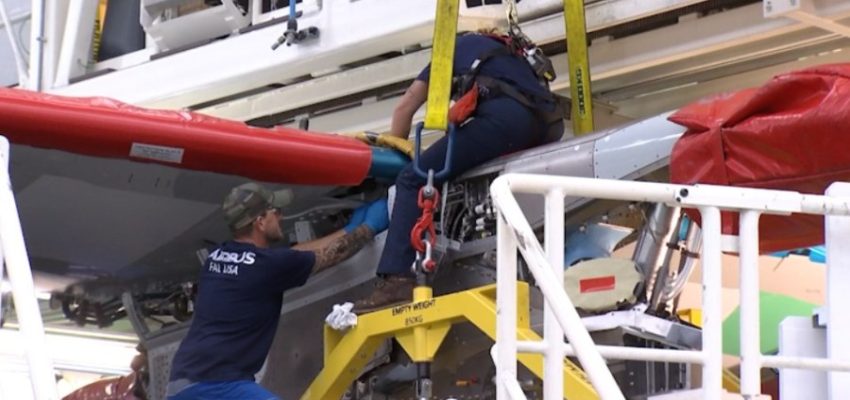
The longevity and success of a high-tech manufacturing operation like Airbus Mobile hinge directly on its ability to cultivate and retain a skilled workforce. This is precisely where FlightPath9 steps in. Conceived as a direct response to the specific needs of Airbus’s U.S. operations, FlightPath9 is an apprenticeship program meticulously designed to transform enthusiastic individuals into certified aircraft manufacturers. It’s a comprehensive, hands-on training initiative that bridges the gap between foundational knowledge and the highly specialized skills demanded by modern aerospace production.
Apprenticeship programs like FlightPath9 embody a ‘learn-while-you-earn’ model, providing participants with both theoretical knowledge in a classroom setting and invaluable practical experience on the factory floor. This dual approach ensures that graduates are not only familiar with the technical specifications and safety protocols but are also proficient in applying that knowledge in a real-world manufacturing environment. The curriculum typically covers a wide range of essential skills, including structural assembly, systems installation, quality control, precision drilling, riveting techniques, and advanced material handling. Participants learn to work with cutting-edge tools and technologies, adhering to the stringent aerospace industry standards set by regulatory bodies like the FAA.
For the individuals enrolled, FlightPath9 offers an extraordinary pathway to secure, well-paying aircraft manufacturing careers. It removes many of the financial barriers often associated with higher education or specialized technical training, providing paid on-the-job experience from day one. Upon successful completion, apprentices emerge with recognized industry certifications and a direct pipeline to full-time employment at Airbus, guaranteeing career stability and opportunities for professional growth. This model fosters loyalty and creates a workforce deeply invested in the company’s success, resulting in lower turnover rates and a more experienced, cohesive team.
From Airbus’s perspective, the benefits are equally significant. FlightPath9 allows the company to develop a highly customized talent pool, trained precisely to its operational standards and corporate culture. This internal talent pipeline reduces reliance on external recruitment, which can be costly and time-consuming, and ensures that institutional knowledge is effectively transferred from experienced employees to new recruits. Furthermore, by actively shaping its future workforce, Airbus can proactively address skill gaps, adapt to technological advancements, and maintain its competitive edge in a global market where precision and efficiency are paramount. The program’s success is a clear indicator that investing in robust, tailored training initiatives is not just a cost, but a critical strategic asset.
The Human Touch in a High-Tech Sky: Navigating Automation and Expertise
As an AI enthusiast, I often engage with discussions about the increasing role of automation, robotics, and artificial intelligence in manufacturing. Indeed, the aerospace industry is no stranger to these advancements, employing sophisticated robots for tasks like painting, drilling, and composite fabrication. AI-powered analytics optimize production schedules, predict maintenance needs, and enhance quality control. Yet, even as technology evolves, the human element remains profoundly irreplaceable, particularly in complex fields like aircraft manufacturing careers.
The human touch provides the crucial layers of adaptability, critical thinking, and nuanced problem-solving that machines, for all their capabilities, still cannot fully replicate. While robots can perform repetitive tasks with exceptional precision, human aircraft manufacturers are essential for intricate assembly, where parts might have slight variations, or unexpected challenges arise. They possess the cognitive flexibility to diagnose complex issues, interpret ambiguous data, and make on-the-spot adjustments that ensure safety and quality. Precision tasks such as intricate wiring, advanced composite repairs, and final system checks require skilled hands and keen eyes—skills honed through programs like FlightPath9.
Moreover, the role of human workers in advanced manufacturing is shifting from purely manual labor to one of oversight, collaboration, and innovation. They become orchestrators of technology, managing automated systems, programming robots, and developing new processes. This means that future aircraft manufacturing careers demand not just traditional mechanical skills, but also an understanding of data science, robotics, and digital tools. Apprenticeship programs are therefore tasked with evolving their curricula to prepare individuals for this hybrid future, ensuring that workers are equipped to leverage AI and automation, rather than be replaced by them.
Ultimately, safety in air travel is a human responsibility, upheld by human expertise. While technology assists and enhances, it is the dedication, training, and ethical judgment of the skilled aircraft manufacturer that forms the ultimate safeguard. Programs like FlightPath9 are not just training workers for today’s factories; they are cultivating the human intelligence, ingenuity, and resilience required to push the boundaries of aviation into a future where humans and advanced technology collaborate to achieve ever greater feats.
The FlightPath9 program at Airbus Mobile stands as a powerful testament to the enduring value of investing in skilled labor. In an era increasingly defined by rapid technological advancement and global competition, the program demonstrates a clear understanding that human expertise remains the cornerstone of innovation and safety in the aerospace industry. By providing rigorous training and a clear pathway to fulfilling aircraft manufacturing careers, FlightPath9 is not just building aircraft; it is building futures—for its apprentices, for the local economy in Mobile, and for the broader U.S. aerospace sector.
The success of Airbus Mobile over the past decade, significantly bolstered by programs like FlightPath9, underscores a vital lesson: the fusion of cutting-edge technology with an exceptionally trained human workforce is the blueprint for sustained excellence. As we look towards a future of more connected, efficient, and sustainable air travel, the demand for highly skilled aircraft manufacturers will only intensify. Initiatives like FlightPath9 are crucial for ensuring that the skies remain safe, the innovations continue to soar, and the human spirit of discovery remains at the controls, guiding the evolution of aviation for generations to come.










