

The skies have always captivated humanity, a boundless canvas for our dreams of innovation and exploration. From the earliest gliders to today’s supersonic jets and burgeoning urban air mobility concepts, the aerospace industry stands as a testament to human ingenuity. Yet, the path to participating in this incredible sector often seems opaque, particularly for young people who may lack direct exposure. This is where initiatives of profound importance step in, bridging the gap between aspiration and access. In Cleveland, a remarkable program is doing just that, opening up the thrilling world of aviation to local students and demonstrating that a future in flight is not just a dream, but an achievable reality.
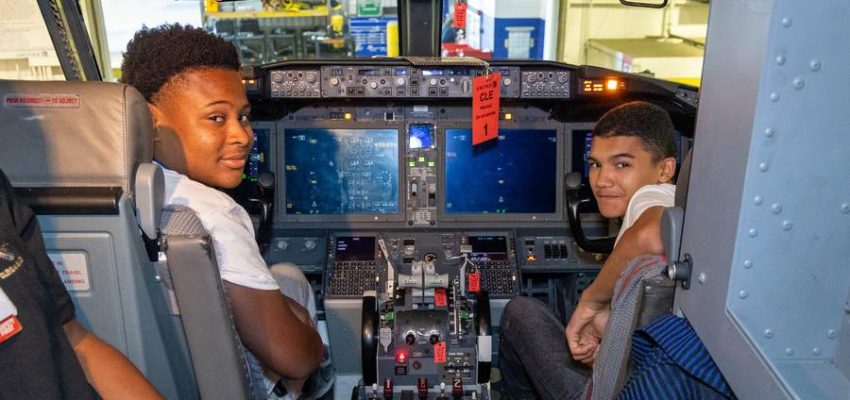
The ACE Academy, powered by the Organization of Black Aerospace Professionals (OBAP), is a beacon of opportunity. It transforms abstract notions of airplanes and airports into tangible, immersive experiences. For a full week, students from Northeast Ohio embark on an extraordinary journey: airport tours, direct flight instruction, and an array of hands-on learning modules. This isn’t just a summer camp; it’s a meticulously crafted immersion designed to provide a visceral ‘taste’ of what aviation careers truly entail, igniting passions and equipping participants with foundational insights that could shape their entire professional trajectories. As we look to an increasingly interconnected and technologically advanced future, cultivating diverse talent in critical sectors like aviation is more crucial than ever.
Aviation Careers: Charting a Course for Future Innovators
When most people think of aviation careers, the image of a pilot often comes to mind first. While pilots are undeniably central to the industry, the reality is that the aerospace sector is a vast, intricate ecosystem demanding a breathtaking array of skills and professions. Beyond the cockpit, there’s a universe of opportunities waiting to be explored. Consider the aerospace engineers who design the next generation of aircraft, pushing the boundaries of aerodynamics and propulsion. Think of air traffic controllers, the unsung heroes orchestrating the seamless flow of thousands of flights daily across crowded skies, ensuring safety and efficiency with split-second decisions.
Then there are the dedicated aircraft maintenance technicians, whose meticulous work keeps planes airworthy and safe, a profession requiring deep technical knowledge and unwavering attention to detail. Logisticians and ground crew manage the complex dance of cargo and passenger services, while cybersecurity specialists safeguard the increasingly digital infrastructure of air travel. With the advent of drones and urban air mobility, entirely new categories of aviation careers are emerging, from drone operators and data analysts to infrastructure developers for vertical take-off and landing (VTOL) vehicles. The industry is also witnessing a growing need for professionals in sustainable aviation, exploring biofuels, electric propulsion, and hydrogen-powered flight.
The demand for talent in these fields is not merely speculative; it is a significant global imperative. According to Boeing’s Pilot & Technician Outlook 2023-2042, the commercial aviation industry will require 690,000 new pilots, 695,000 new maintenance technicians, and 935,000 new cabin crew members over the next two decades globally. This massive projected demand underscores the urgency of inspiring and preparing the next generation. Programs like the ACE Academy are vital pipelines, identifying and nurturing young talent who might otherwise never consider the rich and rewarding pathways available within the aerospace industry. By providing early exposure and hands-on experience, these initiatives demystify complex roles and illuminate the diverse spectrum of aviation careers, from the highly technical to the managerial and operational.
The ACE Academy Experience: Elevating Aspirations with Hands-On Learning
What exactly does a week at the ACE Academy entail that makes it so transformative? It’s far more than just classroom lectures. The program is carefully crafted to be experiential, translating theoretical knowledge into tangible understanding. One of the highlights is undoubtedly the comprehensive airport tours. Students aren’t just looking at planes from a distance; they’re granted privileged access to the inner workings of an airport. Imagine standing in an air traffic control tower, observing controllers guide aircraft with precision, or walking through massive hangars where highly skilled technicians perform intricate repairs and maintenance on commercial jets. They visit airline operations centers, understanding the logistical choreography required to get a plane from gate to gate, on time and safely. This direct exposure allows students to see a multitude of aviation careers in action, from flight operations managers to baggage handlers, fueling technicians, and safety inspectors, all contributing to the complex symphony of air travel.
Then there’s the thrill of flight instruction. For many participants, this is their first encounter with the sensation of controlling an aircraft, even if initially in a simulator. Modern flight simulators are incredibly realistic, replicating the cockpit environment and the physics of flight with remarkable accuracy. Under the guidance of experienced instructors, students learn basic flight maneuvers, understand cockpit instrumentation, and even practice emergency procedures. For some, this experience extends to introductory flights in actual aircraft, providing an unparalleled sense of accomplishment and a profound understanding of aerodynamics and control. This hands-on experience is crucial; it converts abstract concepts of lift, drag, thrust, and weight into personal, memorable lessons. It builds confidence, sharpens problem-solving skills, and instills a sense of responsibility vital for any future role in aviation.
Beyond tours and flight time, the academy emphasizes broad ‘hands-on learning.’ This can include anything from building remote-controlled aircraft models to programming drones, participating in aerodynamic experiments, or engaging in team-based challenges that simulate real-world aviation scenarios. Students might learn about different types of aircraft engines, delve into navigation principles, or even explore the burgeoning field of space exploration and its connections to traditional aviation. Crucially, the program brings in guest speakers – pilots, engineers, air traffic controllers, and other aviation professionals – who share their personal journeys and insights. These interactions provide invaluable mentorship, offering students role models who look like them and come from similar backgrounds, demonstrating that a career in aerospace is truly within reach for anyone with passion and dedication. The ACE Academy thus becomes a powerful catalyst, demystifying the industry and providing a concrete pathway for young people to envision themselves within the vibrant landscape of aviation careers.
OBAP: Pioneering Diversity and Mentorship in Aerospace
The success of initiatives like the ACE Academy is intrinsically linked to the vision and dedication of organizations like the Organization of Black Aerospace Professionals (OBAP). Founded in 1976, OBAP emerged from a critical need to address the underrepresentation of Black individuals in all aspects of aviation and aerospace. Historically, the barriers to entry were formidable, and access to mentorship and opportunities was severely limited. OBAP’s mission is clear: to foster an environment of success by promoting diversity, providing support, and creating pathways for aspiring aerospace professionals, particularly within Black communities. They achieve this through scholarship programs, career expositions, and, crucially, through their nationwide ACE Academy program.
OBAP understands that inspiration alone is not enough; it must be coupled with tangible support and a robust network. Their members, who span every facet of the aerospace industry, volunteer their time and expertise, serving as mentors, instructors, and role models for the academy students. For many young participants, meeting a Black pilot, engineer, or air traffic controller for the first time is a profound experience. It shatters preconceived notions and stereotypes, demonstrating that these high-skill, high-demand aviation careers are accessible regardless of background. This direct mentorship is arguably one of the most impactful aspects of the ACE Academy, offering not just career guidance but also personal encouragement and a sense of belonging within a professional community.
The broader impact of OBAP’s work extends beyond individual academies. By actively promoting diversity and inclusion, they are helping to build a more equitable and ultimately more innovative aerospace industry. Research consistently shows that diverse teams lead to better problem-solving, greater creativity, and improved overall performance. As aviation navigates complex challenges, from sustainability to technological disruption, a workforce that reflects the global community it serves will be essential for continued progress. OBAP’s commitment ensures that the future of aviation is not only technologically advanced but also socially representative, ensuring that all aspiring professionals have an equal chance to contribute to the next chapter of flight.
The Ripple Effect: Impacting Cleveland and Beyond
The ACE Academy’s work in Cleveland is more than just a localized initiative; it represents a powerful model for community development and talent cultivation that has a ripple effect extending far beyond the week-long program itself. By investing in its youth, Cleveland is not only inspiring individual students but also cultivating a vital pipeline for future economic growth. The aerospace industry contributes significantly to local and national economies, supporting high-paying jobs and fostering innovation. By introducing students to these opportunities early, the academy helps ensure that Cleveland’s future workforce is equipped with the skills and passion needed to contribute to this sector.
Moreover, for students from underserved communities, programs like the ACE Academy offer a gateway to social mobility and economic empowerment. It provides an alternative narrative, demonstrating that pathways to high-tech, rewarding careers exist, even if traditional routes seem inaccessible. The confidence gained from mastering a flight simulator, understanding complex aviation concepts, or interacting with industry professionals is invaluable. It fuels ambition and provides a tangible goal, moving students from simply dreaming about flight to actively planning their trajectory into aviation careers. This impact is profound, potentially altering life courses and empowering individuals to become leaders and innovators in their own right.
As the world of aviation continues to evolve at a rapid pace—with advancements in AI-powered air traffic control, electric aircraft, and the promise of commercial space travel—the need for a new generation of skilled, diverse professionals will only intensify. Programs like the ACE Academy are laying the groundwork for this future, one inspired student at a time. They are cultivating critical thinkers, problem-solvers, and innovators who will not only fill the demand for existing aviation careers but also help define the entirely new roles that are yet to emerge. It’s an investment in human potential, ensuring that the wonder of flight continues to inspire and elevate us all, long into the future.
The ACE Academy in Cleveland stands as a shining example of how targeted, immersive educational experiences can profoundly impact young lives and contribute to the health of vital industries. By demystifying the world of aviation and providing direct, hands-on opportunities, it ignites passions and illuminates clear pathways to diverse and rewarding aviation careers. The collaboration between local communities and dedicated organizations like OBAP is crucial in fostering an inclusive environment where every aspiring student, regardless of background, can envision themselves as a future pilot, engineer, technician, or innovator shaping the next era of flight.
As we look to the horizon, the skies remain full of promise. The future of aviation will be defined not just by technological advancements, but by the talent, dedication, and diversity of the people who propel it forward. Initiatives like the ACE Academy are not merely educational programs; they are investments in our collective future, ensuring that the next generation is prepared to soar to new heights, taking humanity with them. Their success is a powerful reminder that with access, mentorship, and a bit of inspiration, the sky is truly the limit for those bold enough to reach for it.










