

In an era defined by rapid technological advancement and the pervasive influence of artificial intelligence, the landscape of education is undergoing a profound transformation. As an AI specialist and a keen observer of emerging trends, I find myself constantly reflecting on how best to prepare the next generation for a world that is not only evolving at an unprecedented pace but is also increasingly shaped by intelligent machines. It’s in this context that the concept of integrated learning, specifically **STREAM education**, shines as a beacon for future-ready minds.
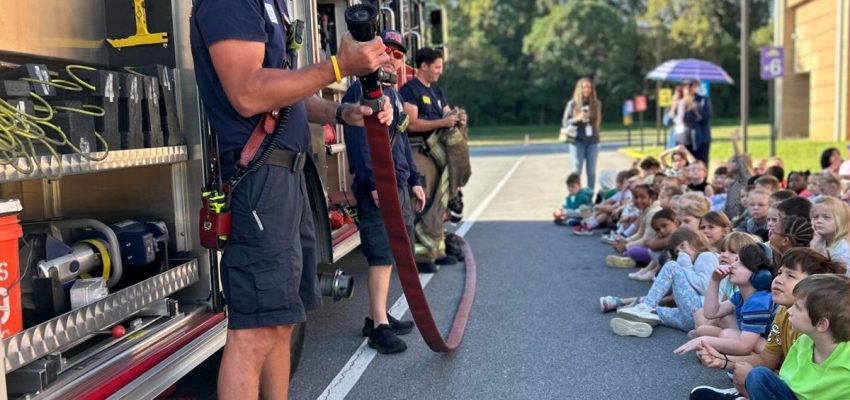
Recently, events like the annual STREAM Day at Woodland Elementary School have highlighted a crucial shift: moving beyond theoretical classroom lessons to connecting them directly with real-world careers. This initiative, designed to expose young students to the practical applications of science, technology, reading, engineering, art, and math, is not merely an extracurricular activity; it is a foundational step towards cultivating the skills, curiosity, and adaptability that will be indispensable in an AI-powered future. As we delve deeper, we’ll explore why this holistic approach is not just beneficial, but absolutely essential for thriving in the 21st century.
STREAM Education: A Holistic Approach to Learning and Innovation
The acronym STREAM, standing for Science, Technology, Reading/Research, Engineering, Art, and Mathematics, represents an evolution of the more commonly known STEM (Science, Technology, Engineering, Math) framework. The inclusion of ‘Reading’ (often encompassing ‘Research’ or ‘Rhetoric’) and ‘Art’ is not merely an add-on; it’s a critical enhancement that recognizes the multifaceted nature of innovation and problem-solving in the modern world. While STEM traditionally focuses on analytical and logical thinking, **STREAM education** embraces creativity, critical inquiry, communication, and human-centered design as equally vital components.
Let’s break down why each element is crucial. Science provides the foundational understanding of the natural world and the scientific method, essential for empirical inquiry. Technology equips students with the tools and techniques for creation and manipulation, from coding to digital design. Reading and Research hone critical literacy, data interpretation, and the ability to synthesize information – skills paramount in an age of information overload and deepfake concerns. Engineering fosters problem-solving through design, prototyping, and iterative development. Art cultivates creativity, aesthetic appreciation, innovative thinking, and empathetic design, recognizing that many of the most impactful technological advancements also possess an artistic or user-centric dimension. Finally, Mathematics underpins all of these, providing the language and logic for quantitative reasoning, data analysis, and algorithmic thinking.
This interdisciplinary approach moves beyond siloed subjects, encouraging students to see the connections between different fields. Imagine a project where students design a sustainable city (Engineering), research its environmental impact (Science, Reading), model its energy consumption (Math), create 3D digital renderings (Technology, Art), and present their findings persuasively (Reading/Rhetoric). This kind of integrated learning fosters deep understanding, stimulates curiosity, and develops highly transferable skills such as collaboration, critical thinking, and communication – skills consistently highlighted by organizations like the World Economic Forum as vital for future workforces.
Bridging the Gap: From Classroom Concepts to AI-Driven Realities
The connection between this integrated educational framework and the rapidly expanding field of artificial intelligence is profound. AI is not a standalone discipline; it is an amalgamation of insights from computer science, mathematics, cognitive science, and even philosophy. Therefore, preparing students for careers impacted by AI – whether as developers, ethicists, users, or innovators – demands a comprehensive skill set that goes beyond mere coding.
Consider the role of each STREAM component in an AI-driven reality:
- Science: Understanding the principles of data, probability, and cognitive science is fundamental to comprehending how machine learning algorithms learn and make decisions. A solid scientific grounding helps decode the ‘black box’ of AI.
- Technology: Proficiency in programming languages (like Python), understanding data structures, and familiarity with AI frameworks are direct technological skills. But beyond coding, it’s about understanding the ethical implications of technological design and deployment.
- Reading/Research: The ability to critically evaluate information, understand complex research papers, identify biases in datasets, and articulate ethical considerations around AI is paramount. An AI ethicist, for instance, relies heavily on these skills to navigate societal impacts.
- Engineering: Designing, building, and optimizing AI systems – whether it’s autonomous vehicles, intelligent robots, or predictive analytics platforms – requires robust engineering principles, from system architecture to performance optimization.
- Art: This might seem counterintuitive, but art is crucial. User interface (UI) and user experience (UX) design for AI applications require an artistic eye and empathy to ensure AI is intuitive and accessible. Generative AI models are also transforming creative industries, demanding that future artists understand and collaborate with AI tools. Art also cultivates the ‘outside-the-box’ thinking vital for novel AI applications.
- Mathematics: The backbone of AI. Linear algebra, calculus, statistics, and probability theory are indispensable for understanding machine learning algorithms, optimizing models, and interpreting data with precision.
An individual proficient in these interconnected areas is not just a technician; they are a problem-solver capable of addressing the complex, multidisciplinary challenges that AI presents. They can design an intelligent system, understand its mathematical underpinnings, critically assess its societal impact, ethically deploy it, and present its value proposition creatively. This is the caliber of talent the future demands.
Cultivating the Skills of Tomorrow: Why Early Exposure Matters
The job market of tomorrow is being radically reshaped by AI. Reports from institutions like the World Economic Forum consistently predict that a significant portion of current jobs will be automated, while new roles requiring advanced technological and human-centric skills will emerge. Many of these future jobs don’t even exist today. This uncertainty underscores the urgency of preparing students not just for specific roles, but for continuous learning, adaptability, and innovation. This is where early, hands-on exposure through initiatives like **STREAM education** days becomes critical.
When elementary students engage in activities that demonstrate the real-world connection of their lessons, they develop a sense of purpose and relevance. It sparks curiosity and demystifies complex fields. Imagine a child learning about the basic principles of robotics by building a simple machine, or exploring data visualization by creating a graphical representation of local weather patterns. These experiences transform abstract concepts into tangible realities, fostering an innate desire to explore, experiment, and create.
Beyond technical competencies, STREAM learning cultivates vital 21st-century skills: critical thinking, complex problem-solving, creativity, communication, and collaboration. These are precisely the ‘human skills’ that AI is less capable of replicating. While AI excels at processing data and executing defined tasks, it struggles with nuanced ethical reasoning, genuine empathy, abstract creative ideation, and complex social interaction. By emphasizing these human attributes alongside technical literacy, **STREAM education** ensures that students are not just AI users, but thoughtful innovators who can guide AI’s development and application responsibly.
Moreover, early exposure helps to dismantle traditional gender and socioeconomic barriers in STEM and AI fields. By presenting these areas as accessible, engaging, and relevant to diverse career paths, schools can inspire a broader range of students to pursue fields that might otherwise seem intimidating or exclusive. A diverse workforce in AI is crucial for developing unbiased and inclusive technologies that serve all of humanity.
AI as a Catalyst for Educational Transformation
Interestingly, AI itself can play a transformative role within STREAM education. AI-powered tools can offer personalized learning experiences, adapting to individual student paces and styles, and providing immediate feedback. Intelligent tutoring systems can free up educators to focus on mentorship, project facilitation, and complex discussions, rather than rote instruction.
Furthermore, AI tools can open new avenues for scientific inquiry and artistic creation within the classroom. Students can use AI to analyze vast datasets for science projects, generate design iterations for engineering challenges, or even create AI-generated art and music as part of their ‘Art’ component. Teaching students not just to use AI, but to understand its underlying mechanisms, its ethical implications, and its limitations, becomes a crucial part of developing ‘AI literacy.’ This literacy is not about programming every student to be an AI engineer, but empowering them to be informed citizens and responsible participants in an AI-infused society.
As we navigate this new frontier, it’s clear that the responsibility extends beyond schools to parents, policymakers, and the tech industry. Investing in robust **STREAM education** programs, supporting educators with professional development, and creating accessible learning resources are all critical steps. The goal is to create an ecosystem where every child has the opportunity to develop the skills and mindset necessary to not just adapt to the future, but to actively shape it.
The integration of science, technology, reading, engineering, art, and mathematics is more than just an educational trend; it’s a strategic imperative for preparing our children for an AI-driven world. Events like Woodland Elementary’s STREAM Day are shining examples of how early exposure to interdisciplinary learning can ignite passions, demystify complex fields, and lay the groundwork for future innovation. By fostering creativity, critical thinking, and a deep understanding of how various disciplines connect, we empower students to become not just consumers of technology, but its thoughtful creators and ethical stewards.
As an AI specialist, I believe that the true potential of artificial intelligence will only be realized when it is wielded by generations who understand its power, its pitfalls, and its profound capacity to transform society for the better. This future-ready generation will emerge from classrooms that embrace holistic, experiential, and interconnected learning – a future shaped by the principles of **STREAM education**.










