
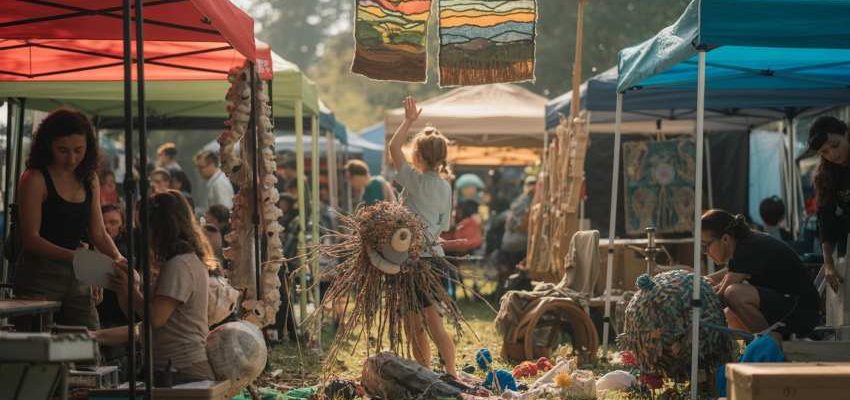

The intersection of art, environmental consciousness, and economic opportunity is rarely as vivid as it is in a dynamic urban landscape. In 2025, New York City will once again host its globally significant Climate Week, a period dedicated to driving climate action and fostering sustainable solutions. Amidst this crucial global dialogue, a groundbreaking initiative is set to return to the vibrant borough of Queens: Street Works Earth. This isn’t just another exhibition; it’s a testament to the power of creative expression in addressing our planet’s most pressing challenges, while simultaneously opening doors to the future of work and responsible tourism. As an AI specialist and tech enthusiast, I’m particularly fascinated by how such initiatives bridge the gap between human creativity and systemic change, creating tangible impact in the real world.
Queens, a borough known for its unparalleled diversity and vibrant cultural tapestry, offers the perfect backdrop for such an ambitious undertaking. It’s a place where global conversations unfold daily, making it an ideal stage for an event that seeks to blend local engagement with planetary concerns. The return of Street Works Earth promises to be a powerful convergence, inviting residents and visitors alike to engage with environmental themes through innovative public art, sparking discussions, fostering community bonds, and highlighting pathways towards a more sustainable future. It’s an affirmation that the solutions to climate change aren’t solely found in scientific labs or policy debates, but also in the realm of human creativity and collective action.
Street Works Earth: A New Paradigm for Urban Engagement
At its core, Street Works Earth is more than an art festival; it’s a living laboratory for civic engagement and environmental education. Originating from a vision to bring art out of traditional galleries and into the public sphere, this initiative transforms urban spaces into thought-provoking canvases. Its return in 2025, strategically timed with New York’s Climate Week, amplifies its mission. Climate Week, which typically draws leaders, innovators, and activists from around the globe, provides an unparalleled platform for Street Works Earth to showcase how local, community-driven efforts can contribute to a worldwide movement. New York City itself, a global nexus of culture, commerce, and innovation, understands the intricate dance between urban development and environmental responsibility. Its commitment to addressing climate change, from ambitious carbon reduction targets to investments in green infrastructure, makes it a fitting host for such an event.
Imagine strolling through the bustling streets of Queens, only to encounter a breathtaking installation crafted from recycled materials, illustrating the impact of plastic pollution on marine life. Or perhaps a performative piece that dramatizes the consequences of rising sea levels, urging passersby to reflect on their own ecological footprint. These are the kinds of experiences Street Works Earth cultivates—moments of unexpected beauty and profound revelation that cut through the noise of daily life. By democratizing art and placing it directly into the public’s path, the event ensures that conversations about climate change are not confined to academic circles or expert panels but become part of the everyday urban narrative. This accessible approach is crucial for fostering broad public awareness and mobilizing diverse communities, transcending linguistic and cultural barriers through the universal language of art.
The initiative’s strength lies in its ability to fuse aesthetic appeal with urgent environmental messaging. It’s about making complex scientific realities relatable and emotional, transforming abstract data into tangible, impactful experiences. For instance, an installation might use light and shadow to represent energy consumption, or soundscapes to evoke the changing patterns of local ecosystems. This multi-sensory engagement makes the climate crisis less an abstract concept and more a direct, personal experience, fostering empathy and a deeper understanding. Such innovative approaches are vital in an age where information overload can desensitize us; art offers a fresh lens through which to perceive and respond to these critical issues, making them not just understood intellectually, but felt emotionally.
Furthermore, Street Works Earth serves as a powerful magnet for local and international tourism. Travelers seeking meaningful experiences, beyond conventional sightseeing, are increasingly drawn to events that align with their values. Eco-tourism and responsible travel have surged in popularity, reflecting a global shift towards conscious consumption and engagement. Visitors to Queens during Climate Week 2025 will have a unique opportunity to immerse themselves in an artistic landscape that is both culturally enriching and environmentally significant. This fusion enriches the travel experience, turning a mere visit into an educational journey, and positioning Queens not just as a destination of diverse cultures, but also as a beacon of sustainability and forward-thinking urbanism.
The Canvas of Climate Action: Art as a Catalyst for Change
The role of art in social change is well-documented, from political satire to protest movements. In the context of climate action, art offers a unique and powerful medium for communication that often bypasses the cognitive defenses triggered by scientific reports or policy debates. It speaks to the heart, inspiring empathy, concern, and a desire for change. Street Works Earth leverages this power, transforming public spaces into a dynamic canvas where artists can interpret the complexities of climate change through their unique lenses.
Consider the various forms this artistic expression might take: ephemeral sculptures that highlight the transient nature of our environment, murals depicting resilient communities, or interactive digital installations that visualize climate data in compelling ways. These artistic interventions serve multiple purposes. Firstly, they act as powerful conversation starters, prompting discussions among strangers about topics that might otherwise feel too daunting or abstract. Secondly, they can offer new perspectives on familiar surroundings, making residents more attuned to their local environment and its vulnerabilities. A park bench crafted from upcycled ocean plastic, for example, makes the global issue of marine pollution intimately local.
Moreover, art can celebrate solutions and envision positive futures, moving beyond doom-and-gloom narratives to inspire hope and action. Instead of solely depicting environmental degradation, artists can showcase the beauty of renewable energy, the resilience of natural ecosystems, or the ingenuity of sustainable practices. This positive framing is crucial for engaging wider audiences and preventing climate fatigue. By presenting a vision of a better, greener future, Street Works Earth empowers individuals to see themselves as part of the solution, fostering a sense of agency and collective responsibility.
The global art community has increasingly embraced environmental themes, with initiatives worldwide recognizing art’s capacity to galvanize action. From massive outdoor installations in Arctic regions highlighting glacial melt to community-led mural projects addressing urban heat islands, artists are proving to be invaluable communicators in the climate crisis. Street Works Earth stands firmly within this tradition, providing a platform for artists to not only express their concerns but also to offer innovative interpretations and provoke thought, encouraging an active, rather than passive, response from the public. This fusion of artistic endeavor and environmental activism, often termed ‘artivism,’ transforms passive observation into active participation, paving the way for tangible behavioral and policy changes.
Beyond the Exhibit: Cultivating Careers in a Green Economy
One of the most compelling aspects of Street Works Earth for 2025 extends beyond its artistic and environmental messaging to its profound impact on career development and economic opportunities. The transition to a green economy is not merely an environmental imperative; it’s an economic revolution, generating new industries, services, and job roles at an unprecedented pace. Events like Street Works Earth serve as vital incubators and showcases for these emerging pathways.
Directly, the planning, execution, and curation of such a large-scale public art event require a diverse array of skills, from project management and urban planning to digital marketing and community outreach. Artists, designers, engineers, educators, and logistical specialists all play crucial roles, gaining invaluable experience in interdisciplinary collaboration. This hands-on involvement provides practical skills and networking opportunities, especially for young professionals and students looking to enter the burgeoning fields of sustainable development, environmental communication, and public art administration. It’s a real-world classroom where theory meets practice.
Indirectly, and perhaps more significantly, Street Works Earth shines a spotlight on the broader spectrum of green careers. The very themes explored by the art—renewable energy, sustainable agriculture, waste management, ecological restoration, smart city technologies—are direct pipelines to future job growth. The global green economy is projected to create millions of new jobs in sectors ranging from renewable energy engineering and climate data analysis to eco-tourism management and urban permaculture. For example, the U.S. Bureau of Labor Statistics projects significant growth in occupations related to renewable energy, with wind turbine technicians and solar panel installers expected to see some of the fastest growth rates over the next decade.
Beyond technical roles, there’s a growing demand for professionals who can bridge the gap between scientific understanding and public engagement—the exact kind of communication fostered by Street Works Earth. This includes environmental educators, sustainability consultants, policy analysts, and communicators who can translate complex climate science into actionable insights for businesses and communities. For an AI specialist like myself, the intersection is particularly exciting: how can AI and data science optimize urban planning for resilience, predict climate patterns with greater accuracy, or even enhance the interactive elements of public art to deepen engagement? These are the questions that drive innovation and define the future of sustainable careers.
Furthermore, the event fosters the growth of a local green economy within Queens itself. By drawing eco-conscious tourists, it boosts demand for local businesses that prioritize sustainability, from farm-to-table restaurants to eco-friendly accommodations and sustainable transportation services. This creates a virtuous cycle, where environmental awareness directly translates into economic vitality, providing further impetus for green innovation and job creation within the community. It also inspires local entrepreneurs to develop new sustainable products and services, reinforcing Queens’ position as a hub for progressive urban development and green solutions.
In conclusion, Street Works Earth in Queens in 2025 is far more than an art event; it’s a dynamic confluence of culture, environmental advocacy, and economic foresight. It demonstrates that addressing climate change isn’t a solitary endeavor but a multifaceted challenge that requires collaboration across disciplines—art, science, technology, and policy. By transforming public spaces into vibrant dialogues on sustainability, it makes the abstract concrete, the distant immediate, and the complex accessible. It underscores New York City’s role as a leader in global climate action and Queens’ unique position as a cultural melting pot ready to embrace a greener future.
The initiative serves as a powerful reminder that human ingenuity, when channeled towards collective well-being, can indeed pave the way for a sustainable world. For those interested in the future of our planet, the power of art, and the burgeoning opportunities within the green economy, Street Works Earth offers an unmissable experience. It’s a compelling vision of what urban engagement can achieve when creativity meets a commitment to our planet, inspiring both local communities and global travelers to think, act, and invest in a future where art, innovation, and sustainability thrive hand in hand. The stage is set for a transformative experience in Queens, where every street corner tells a story of hope and action for 2025 and beyond.










