
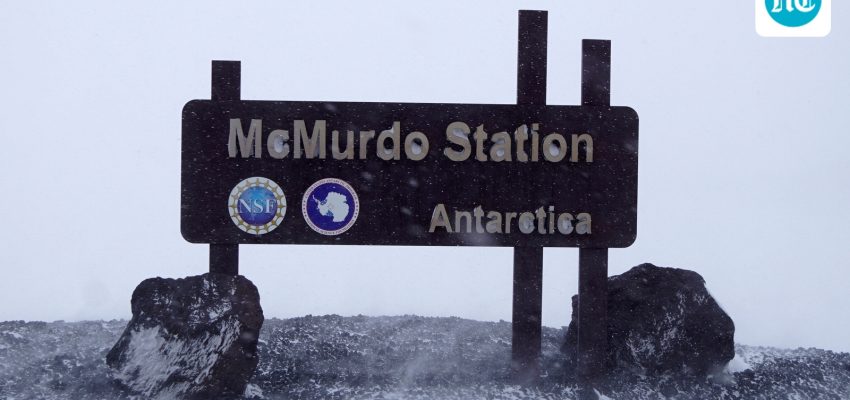

The icy vastness of Antarctica, a continent of unparalleled scientific marvel and extreme isolation, rarely conjures images of career dilemmas. Yet, a recent opening at McMurdo Station — a prestigious, high-impact role with a substantial six-figure salary (equivalent to approximately $150,000 to $160,000 USD for six months, based on the original ₹1.3 crore figure) — has cast a sharp spotlight on a universally human struggle. For one researcher, this extraordinary opportunity represents a zenith of professional achievement, a chance to contribute to groundbreaking science in one of the world’s most unique environments. But it also comes with a significant personal cost: six months away from loved ones, a challenge that has left them profoundly torn. This isn’t merely an isolated anecdote; it’s a powerful illustration of the enduring tension between professional aspiration and personal fulfillment, a balancing act that becomes increasingly complex in our rapidly evolving, technology-driven world. As an AI specialist, writer, and tech enthusiast, I often ponder how the advancements we champion – particularly in artificial intelligence – are not only redefining industries but also reshaping the very fabric of our personal and professional choices. Can AI, often seen as a driver of efficiency and automation, also offer clarity and support in navigating such deeply human quandaries? Can it illuminate new paths in the quest for a harmonious **future of work**?
Future of Work and the New Frontiers of Opportunity
The dilemma faced by the researcher considering the McMurdo Station post is a potent microcosm of the modern professional landscape. This isn’t just any job; it’s a highly specialized role demanding unique expertise, resilience, and a willingness to embrace an environment where temperatures routinely plummet far below freezing and daylight cycles defy conventional norms. The compensation reflects the scarcity of talent willing and able to undertake such a mission, alongside the inherent risks and sacrifices. It represents a ‘frontier’ opportunity, much like the early days of space exploration or deep-sea ventures – domains where the pursuit of knowledge often outweighs immediate personal comfort.
Such roles, while extreme, are not entirely dissimilar from those emerging in cutting-edge technological fields, including AI itself. The world’s leading AI labs, quantum computing facilities, or advanced robotics companies often seek individuals with highly specialized skills, offering lucrative packages in exchange for intense dedication and, at times, geographical relocation or significant time commitments. The underlying question for many talented professionals is the same: how much of one’s personal life is justifiable to invest in a career opportunity that promises extraordinary impact and reward? The McMurdo station job offers a unique blend of scientific contribution and significant financial gain, making the trade-off particularly stark. A researcher’s work in Antarctica could contribute to vital climate science, understanding glaciology, or studying unique ecosystems, impacting global policy and scientific understanding for decades. This intrinsic value, coupled with the substantial salary, makes the decision agonizingly complex.
In this evolving landscape, the **future of work** is increasingly defined by these high-stakes opportunities. AI and automation are rapidly transforming traditional job markets, eliminating some roles while simultaneously creating entirely new categories of employment that demand advanced cognitive skills, adaptability, and a global perspective. From AI ethics specialists working on complex societal implications to machine learning engineers building the next generation of intelligent systems, these emerging roles frequently demand a level of commitment and intellectual rigor that can push the boundaries of work-life balance. As AI continues its inexorable march forward, it not only creates these new professional frontiers but also equips us with unprecedented data and analytical power, potentially offering new ways to approach these profound career and life decisions. The integration of advanced analytics and intelligent systems into career planning and personal well-being is subtly, yet profoundly, reshaping how we perceive and pursue our professional journeys.
AI as a Catalyst for Career Evolution and Personal Balance
One might wonder how artificial intelligence, a field often associated with cold logic and algorithms, could possibly assist in resolving such an intensely personal dilemma. Yet, the capabilities of AI extend far beyond mere automation. We are already seeing AI emerge as a powerful catalyst for career evolution and a potential aid in achieving better personal balance. Consider AI-powered platforms that go beyond simple job matching. These sophisticated tools can analyze an individual’s skills, interests, values, and even personality traits, then cross-reference them with global job market trends, company cultures, and even projected career trajectories. For someone contemplating a role like the Antarctic researcher, AI could provide data-driven insights into the long-term career benefits, the potential for skill development, and even simulations of the psychological impact of isolation, based on anonymized data from similar extreme assignments. Such tools could illuminate the full spectrum of an opportunity, helping individuals make more informed, holistic decisions about their **future of work**.
Furthermore, AI is instrumental in facilitating remote and distributed work models, which, for many, represent a pathway to greater flexibility and an improved quality of life. The global pandemic dramatically accelerated the adoption of remote work, a trend underpinned by advanced AI-driven collaboration platforms, virtual reality meeting spaces, and intelligent project management tools. While the McMurdo job necessitates physical presence, the broader principle applies: AI can mitigate the geographical barriers that often force individuals to choose between career advancement and proximity to loved ones. For roles that *can* be performed remotely, AI empowers professionals to access global opportunities without uprooting their lives, potentially allowing them to pursue challenging careers while maintaining a strong personal foundation. Statistics show a sustained interest in remote and hybrid work models, with a significant percentage of the global workforce now engaging in some form of flexible work arrangement, a shift heavily reliant on technological infrastructure.
Beyond external career management, AI also plays a growing role in personal well-being. AI-powered apps offer personalized insights into stress management, sleep patterns, and mental health, providing tools to help individuals cope with demanding work environments. For someone embarking on an isolated assignment, AI-driven digital companions or virtual support networks could offer a sense of connection and personalized well-being strategies. While these tools cannot replace human interaction, they can supplement it, providing data-informed insights and support systems that help sustain mental and emotional resilience. The promise of AI here lies not in replacing human decision-making or emotional connections, but in augmenting our capacity to navigate complex choices and maintain well-being in an increasingly demanding professional world. It’s about leveraging technology to build a more sustainable and human-centric **future of work**.
Redefining Value: Purpose, Passion, and AI in Human-Centric Careers
The allure of the Antarctic job extends beyond its impressive salary; it speaks to a deep human desire for purpose and significant contribution. This brings us to another crucial aspect of the **future of work**: redefining value beyond mere financial gain. In an AI-enhanced world, where machines handle increasingly complex computations and repetitive tasks, the unique human capacities for creativity, critical thinking, emotional intelligence, and empathy become paramount. These are the skills that not only AI cannot replicate but also those that allow us to find profound meaning and satisfaction in our careers.
AI’s ability to automate mundane and process-driven tasks frees up human intellect and energy for more strategic, creative, and personally fulfilling work. Imagine researchers spending less time on data processing and more time on hypothesis generation, collaborative ideation, and the nuanced interpretation of results. This shift allows professionals to engage more deeply with the aspects of their work that genuinely excite them and align with their personal values. For the researcher weighing the Antarctic opportunity, AI tools might automate elements of their scientific data analysis, allowing them to focus on the truly groundbreaking aspects of their research, potentially amplifying the sense of purpose derived from the role. The emphasis shifts from ‘what’ we do to ‘why’ we do it.
Furthermore, AI can empower individuals to pursue unconventional career paths or niche passions that might have previously been economically unviable. By automating business processes, providing sophisticated market analysis, and enabling personalized reach, AI tools can help creators, educators, and specialized consultants build sustainable careers around unique talents and interests. This allows for a greater alignment between professional pursuits and personal identity, reducing the likelihood of facing such stark dilemmas between career and personal life. The human-centric approach to the evolving workplace suggests that while AI transforms the means of production, it simultaneously elevates the importance of human judgment, ethical reasoning, and the pursuit of meaningful contributions. The ultimate goal is not just a more efficient workplace, but one that fosters greater satisfaction and allows individuals to thrive holistically.
In conclusion, the compelling narrative of a researcher grappling with a six-month stint in Antarctica underscores a timeless human predicament: the delicate balance between career ambition and personal well-being. This dilemma is not unique to extreme environments or highly specialized scientific roles; it resonates across the entire professional spectrum. As the world becomes more interconnected and technologically advanced, these choices often become even more complex, demanding deeper introspection and a clear understanding of one’s core values. The opportunities created by the modern global economy, especially in fields like AI, are immense, offering unparalleled platforms for impact and growth, but they frequently come with their own set of profound personal demands.
Yet, it is precisely in this intricate interplay of human aspiration and technological advancement that AI offers a compelling new dimension. While it cannot make our choices for us – the ultimate decision remains profoundly human, rooted in personal values and emotional intelligence – AI provides powerful tools to inform, support, and even redefine the parameters of these dilemmas. From sophisticated career planning algorithms to intelligent remote collaboration platforms and personalized well-being applications, AI is reshaping the very landscape of the **future of work**. As André Lacerda, I firmly believe that by embracing AI thoughtfully and integrating it with a human-centric approach, we can navigate these challenging decisions more effectively, ultimately forging a professional future that is not only productive and impactful but also deeply fulfilling on a personal level. The goal isn’t just to work smarter, but to live better, leveraging technology to harmonize our deepest professional desires with our most cherished personal lives.










