

The relentless march of technological progress, particularly in the realm of artificial intelligence, is reshaping our world at an unprecedented pace. From automating complex tasks to revolutionizing healthcare and unlocking new scientific frontiers, AI’s transformative power is undeniable. Yet, as we stand at this pivotal juncture, one question becomes increasingly vital: who is building this future? Who is guiding its development, imbuing it with ethical considerations, and ensuring it serves all of humanity?
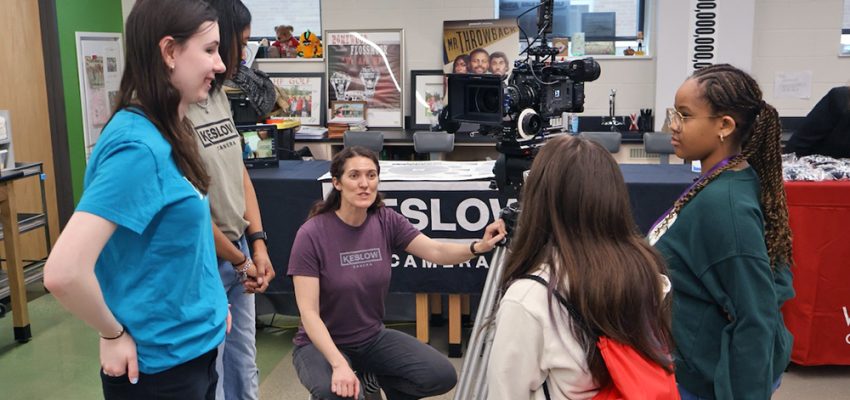
The answer, increasingly, lies in fostering diverse talent from the earliest stages of education. It lies in programs that ignite curiosity and confidence in young minds, particularly those historically underrepresented in these critical fields. This is precisely why events like the Girls STEAM Celebration, held at H-F High School on April 11, where Homewood and Flossmoor junior high students learned about science careers, are not just inspiring — they are foundational. As an AI specialist, writer, and tech enthusiast, I see a direct, undeniable link between such initiatives and the vibrant, inclusive future of AI we are striving to build. These events are crucial for empowering girls in STEAM, fostering their innate curiosity, and preparing them for leadership roles in the very fields that will define our tomorrow.
Empowering Girls in STEAM: Bridging the Gap to Tomorrow’s Innovations
The Girls STEAM Celebration serves as a powerful beacon, shining a light on the myriad possibilities within science, technology, engineering, arts, and mathematics for young women. But why is this focus on girls so critical? The statistics paint a stark picture: women currently hold only about 28% of jobs in science, technology, engineering, and mathematics (STEM) fields, and this representation often dwindles further in cutting-edge areas like AI and machine learning. This ‘leaky pipeline’ phenomenon, where girls and women are lost at various stages from education to career, deprives society of invaluable perspectives and talent.
Consider the implications for AI development. When the teams designing and deploying artificial intelligence are homogenous, the risk of embedding biases into algorithms escalates. AI systems trained predominantly by one demographic may not fully understand or cater to the needs of others, leading to inequitable outcomes in areas from healthcare diagnostics to financial services. A diverse workforce, starting with initiatives focused on empowering girls in STEAM, brings a wider range of experiences, problem-solving approaches, and ethical considerations to the table. This leads to more robust, fair, and innovative solutions that benefit everyone.
Early exposure is key to disrupting long-standing stereotypes. Unfortunately, many girls, influenced by societal norms or lack of visible role models, begin to disengage from STEM subjects as early as middle school. Events like the celebration at H-F High School counter this by providing hands-on experiences, showcasing relatable female professionals, and demystifying complex concepts. They transform abstract subjects into tangible, exciting career paths. Moreover, the ‘A’ in STEAM is particularly significant; integrating the arts fosters creativity, critical thinking, communication, and ethical reasoning – skills that are absolutely indispensable for the responsible development and deployment of AI technologies. The future of technology isn’t just about code; it’s about context, creativity, and compassion, all nurtured within the holistic framework of STEAM education.
From Classrooms to Code: The Direct Path to AI Leadership
The foundational skills cultivated through a comprehensive STEAM education directly feed into the core competencies required for a career in AI. Let’s break down these connections:
* **Science** provides the understanding of the natural world, fostering the scientific method, data analysis, and empirical reasoning essential for designing intelligent systems that interact with real-world phenomena.
* **Technology** is the bedrock. Learning programming languages (like Python, R, Java), understanding data structures, and grasping software development principles are the direct pathways into machine learning engineering, data science, and AI application development.
* **Engineering** focuses on problem-solving, design, and implementation. This is crucial for building AI models, designing neural networks, developing robotic systems, and creating scalable AI infrastructure.
* **Arts** contribute immensely to the human-centered design of AI. User interface/user experience (UI/UX) design for AI applications, ethical framework development, creative problem-solving, and even the narrative crafting around AI’s societal impact fall under the purview of the arts. This interdisciplinary approach ensures AI is not just functional but also intuitive, ethical, and aesthetically pleasing.
* **Mathematics** is the very language of AI. From linear algebra and calculus underpinning machine learning algorithms to probability and statistics for data analysis and predictive modeling, a strong mathematical foundation is non-negotiable for anyone aspiring to build or understand AI at a deep level.
Students who engage deeply with these disciplines are not just learning facts; they are developing the analytical thinking, computational skills, and creative problem-solving abilities that are the hallmark of successful AI professionals. They are being prepared for roles as diverse as data scientists, machine learning engineers, AI ethicists, robotics specialists, and even prompt engineers – a burgeoning field that demands a blend of technical understanding and linguistic artistry. The celebration event, by exposing junior high students to various science careers, effectively plants the seeds for these future specializations, demonstrating the tangible applications of their classroom learning.
Trailblazers like Dr. Fei-Fei Li, a leading voice in artificial intelligence and computer vision; Joy Buolamwini, whose groundbreaking research exposed bias in AI algorithms; and Kate Crawford, an influential scholar researching the social and political implications of AI, serve as inspiring examples of women making profound impacts in the field. These role models, often highlighted at such events, demonstrate not only what is possible but also the crucial importance of diverse voices in shaping AI for the common good. Mentorship and access to such figures are vital components of empowering girls in STEAM and guiding them through their educational and professional journeys.
Building a Sustainable Future: STEAM, AI, and Net-Zero Innovation
The original event’s setting, a Net Zero building, adds another fascinating layer to its significance. A Net Zero building is designed to produce as much energy as it consumes, minimizing its carbon footprint. This context offers a powerful illustration of how STEAM principles are applied to real-world challenges like sustainability and environmental protection. It also subtly highlights the critical role AI is playing in this global endeavor.
Artificial intelligence is rapidly becoming an indispensable tool in the fight against climate change and for promoting sustainable practices. Consider smart grids that optimize energy distribution, AI-powered systems that enhance the efficiency of renewable energy sources, and machine learning models that predict climate patterns with greater accuracy. AI is also revolutionizing agriculture through precision farming, reducing waste, and enabling intelligent resource management. In manufacturing, AI optimizes supply chains and minimizes energy consumption. In urban planning, it helps design smart cities with efficient transportation and waste management systems.
The students attending the celebration in a Net Zero building were not just learning about science careers; they were immersed in an environment that physically embodies the future they could help build. This living laboratory demonstrates the practical application of STEAM concepts – from energy efficiency and materials science to smart systems and data analytics – all areas where AI plays an increasingly vital role. Educating the next generation about both the immense power of AI and its profound ethical and environmental implications is paramount. Events held in sustainable environments like Net Zero buildings intrinsically link technological innovation with responsible stewardship of our planet, fostering a holistic understanding of future challenges and solutions.
By exposing students to such integrated environments, we are cultivating a generation that understands that the future of technology is not just about raw power or computational prowess, but about responsible innovation. It’s about developing intelligent solutions that address societal needs while simultaneously protecting our natural resources and striving for a Net Zero world. This holistic perspective is crucial for the AI architects of tomorrow.
Cultivating a Culture of Curiosity and Resilience
Beyond the acquisition of specific technical skills and knowledge, participation in STEAM initiatives fosters a vital mindset: one of curiosity, experimentation, and resilience. The journey of scientific discovery and technological innovation is rarely linear. It’s filled with challenges, unexpected failures, and the need for iterative problem-solving. This is particularly true in the rapidly evolving field of AI, where algorithms are constantly being refined, models are tested and retrained, and new paradigms emerge with dizzying speed.
By engaging in hands-on projects and collaborative activities at events like the Girls STEAM Celebration, students learn to approach problems with an open mind, to experiment without fear of failure, and to view setbacks as opportunities for learning and growth. They develop critical thinking skills, the ability to break down complex problems into manageable parts, and the capacity to work effectively in teams – all indispensable qualities for future innovators. This focus on process over just product helps young minds move from a ‘fixed mindset,’ where abilities are seen as static, to a ‘growth mindset,’ where intelligence and talent can be developed through hard work and dedication.
Creating an environment that encourages intellectual bravery, where questioning assumptions is celebrated, and where diverse perspectives are valued, is key to nurturing the next generation of AI leaders. The collaborative spirit often found at such events builds confidence and empowers participants to see themselves as active contributors to scientific and technological advancements, rather than mere consumers of technology. This culture of curiosity and resilience ensures that when these young women enter the professional world, particularly in dynamic fields like AI, they will be equipped not just with technical expertise but also with the mental fortitude to navigate complex challenges and drive groundbreaking innovations.
In conclusion, the Girls STEAM Celebration at H-F High School, like countless similar initiatives around the globe, represents more than just a day of learning; it is an investment in our collective future. By providing junior high students with early exposure to diverse career paths in science, technology, engineering, arts, and mathematics, we are systematically addressing gender disparities and ensuring that the architects of tomorrow’s AI are as diverse as the world it serves. The critical importance of empowering girls in STEAM cannot be overstated, for it is through their perspectives, creativity, and unique problem-solving approaches that we will unlock AI’s full potential for good.
The seeds planted at these events blossom into formidable careers, shaping industries, and driving responsible innovation. As André Lacerda, I firmly believe that the most robust, ethical, and universally beneficial AI will be built by diverse, inclusive teams. By championing programs that encourage girls in STEAM, we are not just fostering individual success; we are laying the groundwork for a more equitable, sustainable, and intelligent future for all of humanity. The journey from enthusiastic junior high student to pioneering AI specialist is paved with curiosity, mentorship, and opportunities like these celebrations, and I look forward to witnessing the profound impact these young women will undoubtedly make.










