
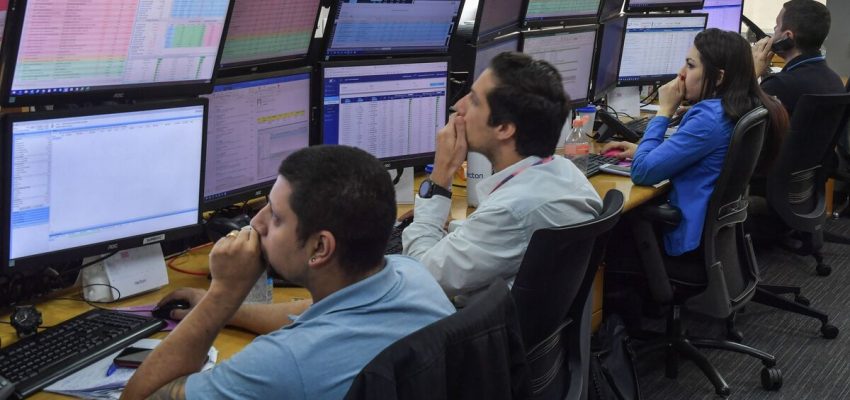

The world of work is in constant flux, a dynamic landscape shaped by technological innovation, global shifts, and evolving human aspirations. While change has always been a constant, the current pace feels unprecedented, driven largely by the exponential advancements in artificial intelligence. As an AI specialist, writer, and tech enthusiast, I’ve witnessed firsthand how rapidly AI is reshaping industries, redefining roles, and creating entirely new paradigms for professional growth. This isn’t merely an upgrade; it’s a fundamental reimagining, and it underscores a critical truth: **now would be a good time for a career tune-up.**
Many of us operate under the assumption that our career path is a fixed journey, but in reality, it’s more akin to navigating a rapidly changing river. The skills that were valuable yesterday might be commoditized or automated tomorrow. The industries that once offered stable trajectories might be disrupted by agile, AI-powered newcomers. This isn’t a cause for alarm, but rather a powerful call to action. It’s an invitation to proactively assess your professional standing, recalibrate your skills, and strategically position yourself for the opportunities that lie ahead. Ignoring these tectonic shifts would be akin to driving a car with a check engine light on, hoping for the best. A comprehensive professional evaluation isn’t just advisable; it’s becoming an indispensable exercise for sustained relevance and success.
### Career Tune-Up: Why Now is the Time for a Strategic Review
The notion of a **career tune-up** might sound like another item on an already overwhelming to-do list, but its importance cannot be overstated. We are currently experiencing a confluence of forces that demand a closer look at our professional trajectories. Two primary reasons stand out, intertwining to create an urgent mandate for career assessment and recalibration. First, the relentless march of technological innovation, particularly in artificial intelligence, is fundamentally altering the nature of work. Second, the global economic and social shifts are reshaping employee expectations and the very structure of organizations.
Let’s delve into the first point: the AI revolution. Generative AI, large language models (LLMs) like GPT-4, and advanced machine learning algorithms are no longer theoretical concepts; they are actively integrating into daily operations across virtually every sector. From automating repetitive administrative tasks to assisting in creative endeavors, developing complex code, and even generating sophisticated marketing campaigns, AI is proving its capability to augment – and in some cases, replace – human labor. A report by McKinsey & Company in 2023 suggested that automation and AI could displace millions of jobs globally by 2030, but also create new ones, highlighting a significant skills gap. This isn’t about robots taking over; it’s about the nature of tasks evolving. Jobs requiring rote, predictable cognitive work are most susceptible to automation, while roles demanding creativity, complex problem-solving, critical thinking, emotional intelligence, and ethical judgment become increasingly valuable. This dynamic necessitates a proactive professional check-up to ensure your skillset aligns with the capabilities that AI cannot easily replicate or, more importantly, with the skills needed to *work effectively with* AI.
The second compelling reason for a **career tune-up** stems from the broader shifts in the global job market. The past few years have brought seismic changes, including the rapid acceleration of remote and hybrid work models, the ‘Great Resignation’ (or ‘Great Reshuffle’ as some prefer to call it), and a renewed focus on work-life balance and purpose-driven employment. Employees are no longer solely motivated by compensation; they seek flexibility, personal growth, and alignment with organizational values. This has led to a more competitive, yet also more fluid, job market. Companies are increasingly seeking candidates who not only possess technical prowess but also exhibit adaptability, resilience, and strong interpersonal skills. Furthermore, the gig economy continues to expand, offering new avenues for freelance work and project-based engagements, but also demanding a high degree of self-management and entrepreneurial spirit. Understanding these evolving dynamics, and how they impact your market value and future prospects, is a crucial component of any effective professional review. Without a clear understanding of where you stand relative to these shifts, you risk being left behind in a rapidly advancing professional landscape.
### Navigating the AI-Driven Future: Essential Skills for Tomorrow’s Workforce
The fundamental goal of any professional check-up today must be to identify and cultivate skills that are resilient to, and indeed enhanced by, the rise of AI. This is where an AI specialist’s perspective becomes particularly relevant. It’s not enough to be ‘aware’ of AI; true preparedness means understanding its implications for specific roles and industries, and actively working to integrate AI literacy into your professional repertoire. What exactly are these essential skills?
They can broadly be categorized into two groups: technical AI-adjacent skills and augmented human skills. On the technical front, a basic understanding of AI and machine learning concepts is becoming universally beneficial. This doesn’t mean everyone needs to become a data scientist, but rather possess a foundational grasp of how AI works, its capabilities, and its limitations. Concepts like prompt engineering for generative AI, data literacy (the ability to interpret and work with data), and even an awareness of cybersecurity principles become increasingly important as AI systems become more pervasive. Learning a programming language like Python, or even exploring no-code/low-code AI tools, can provide a significant edge. Companies are actively seeking professionals who can not only use AI tools but also understand how to integrate them into workflows, troubleshoot issues, and leverage them for strategic advantage. Investing in courses, certifications, or even personal projects in these areas is a powerful way to conduct a meaningful **career tune-up**.
Equally, if not more, vital are what I call augmented human skills. These are the uniquely human attributes that AI currently struggles to replicate and which become exponentially more valuable in an AI-powered world. High-level cognitive abilities such as critical thinking, complex problem-solving, and strategic decision-making are paramount. AI can crunch data and offer predictions, but humans are still required to interpret, contextualize, and make ethical judgments. Creativity, imagination, and innovation are also irreplaceable. While generative AI can produce art or text, the original spark of an idea, the unique human perspective, and the ability to connect disparate concepts in novel ways remain human domains. Furthermore, emotional intelligence, collaboration, leadership, and cross-cultural communication skills are experiencing a resurgence in demand. As teams become more distributed and reliant on technology, the ability to build rapport, foster empathy, resolve conflicts, and inspire others becomes a cornerstone of success. A comprehensive professional assessment will undoubtedly highlight areas where these uniquely human capabilities can be strengthened, making your professional profile more robust and future-proof.
### Strategic Steps for Your Career Tune-Up: A Proactive Approach
So, how does one actually perform a meaningful **career tune-up**? It begins with introspection and moves into strategic action. This isn’t a one-time event but an ongoing process of self-assessment and adaptation. Here’s a structured approach:
1. **Self-Assessment and Visioning:** Start by taking an honest inventory of your current skills, strengths, passions, and values. What do you genuinely enjoy doing? What problems do you love solving? Where do you derive meaning from your work? Equally important, what are your professional aspirations for the next 3-5 years? Having a clear vision, even if it evolves, provides a compass for your journey.
2. **Market Research and Trend Analysis:** Look outwards. What are the emerging trends in your industry and adjacent ones? Which skills are in high demand? Which roles are growing, and which are declining? Resources like the World Economic Forum’s Future of Jobs Report, LinkedIn’s skills insights, and industry-specific analyses can provide invaluable data. Pay particular attention to how AI is impacting your sector and what new roles or skill combinations are appearing.
3. **Skill Gap Analysis and Learning Plan:** Compare your current skill set with the demands of your desired future roles and the evolving market. Where are the gaps? Once identified, create a concrete learning plan. This could involve online courses (Coursera, edX, Udacity, LinkedIn Learning), certifications (e.g., in AI, data analytics, project management), attending workshops, or even pursuing a higher degree. The key is consistent, deliberate learning. Dedicate specific time each week to skill acquisition.
4. **Networking and Informational Interviews:** Your network is your net worth, especially in a fluid job market. Actively engage with professionals in your field and those in areas you’re exploring. Conduct informational interviews to gain firsthand insights into emerging roles, required skills, and industry challenges. Tools like LinkedIn are indispensable for this. These conversations can reveal opportunities you might never have discovered on your own and provide valuable feedback on your potential career path.
5. **Personal Branding and Visibility:** In an increasingly digital world, your online presence is your professional storefront. Ensure your LinkedIn profile is up-to-date, reflects your current skills and aspirations, and showcases any new learning or projects. Consider creating a personal website or portfolio if your profession benefits from it. Share insights, engage in discussions, and demonstrate your expertise. A strong personal brand ensures that when opportunities arise, you are visible and recognized.
6. **Experimentation and Side Projects:** Don’t be afraid to experiment. Take on a side project that allows you to apply new skills, volunteer for a different role within your current organization, or explore freelance opportunities. These experiences provide practical learning, build your portfolio, and can lead to unexpected career turns. This iterative process of learning, applying, and refining is central to an effective professional check-up.
### Embracing the Future with Confidence
The call for a **career tune-up** is not a summons to fear, but an invitation to empowerment. The future of work, shaped profoundly by AI and rapid technological advancements, offers unprecedented opportunities for those willing to adapt and evolve. As André Lacerda, I firmly believe that artificial intelligence is not merely a disruptive force but a powerful co-pilot for human ingenuity. It’s a tool that can amplify our capabilities, streamline our efforts, and free us to focus on higher-level, more meaningful work. However, this partnership requires us to be proactive, to understand the new landscape, and to equip ourselves with the right skills.
By regularly assessing your professional trajectory, investing in continuous learning, and strategically adapting your skillset, you can not only survive but truly thrive in this dynamic era. Let this serve as your catalyst to schedule that vital **career tune-up** today. Don’t wait for external pressures to force your hand; instead, seize the initiative, embrace lifelong learning, and sculpt a future that is not just secure, but also profoundly fulfilling and impactful. The tools are available, the knowledge is accessible, and the time, unequivocally, is now.










