
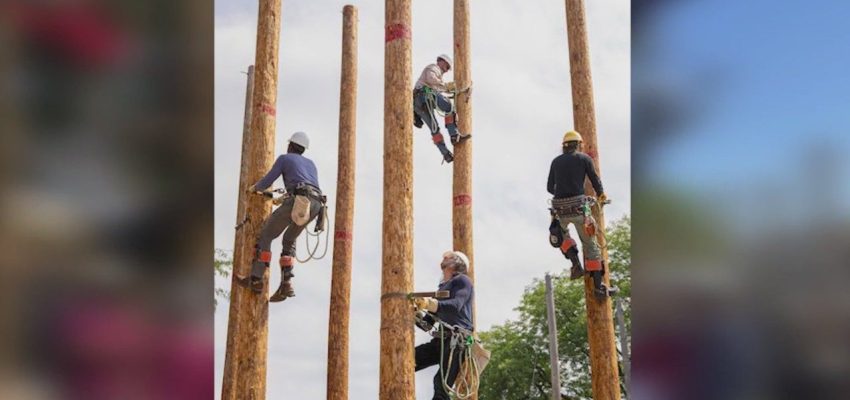

In an era often characterized by rapid technological advancement and the pervasive influence of artificial intelligence, it’s easy to assume that the future workforce will be entirely digital. Yet, a closer look at our economy reveals a powerful, undeniable truth: the demand for human expertise in hands-on professions is not just enduring, but surging. As an AI specialist and tech enthusiast, I find this convergence fascinating – how traditional craftsmanship and technical mastery are not only surviving but thriving alongside our digital evolution.
The narrative around career success has long been dominated by the pursuit of a four-year university degree, often positioning vocational paths as secondary. However, economic realities are increasingly challenging this perception. Reports from across the globe indicate a critical and growing shortage of professionals in what we commonly refer to as the skilled trades. These are the electricians, plumbers, HVAC technicians, welders, carpenters, automotive specialists, medical technicians, and countless others who form the backbone of our infrastructure, keep our homes running, and ensure our industries operate smoothly. This isn’t merely a cyclical fluctuation; it’s a systemic shift driven by an aging workforce, infrastructure needs, and a generation of new entrants who are often steered away from these vital professions.
The insights shared by figures like Dean Inesha Kelly of Dawson Technical Institute underscore this profound shift. She highlights the urgent and escalating need for individuals equipped with practical, specialized skills, emphasizing the significant workforce gaps that are emerging. This isn’t just about filling empty positions; it’s about safeguarding essential services, fostering local economies, and building a resilient society for the future. The conversation isn’t just about jobs; it’s about the fundamental components of modern life that rely on these often-overlooked experts.
Skilled Trades: Redefining Career Success in the 21st Century
The landscape of education and employment is undergoing a significant transformation. For decades, the societal emphasis on a traditional four-year college degree often overshadowed the immense value and potential of vocational training. This created a perception that jobs requiring manual or technical expertise were somehow less prestigious or less promising. However, the economic data tells a very different story. Today, many professions within the skilled trades offer not only competitive salaries but also robust job security and genuine opportunities for entrepreneurship and advancement.
Consider the aging workforce, a major contributing factor to the current demand. A significant portion of the experienced professionals in plumbing, electrical work, and construction are nearing retirement. As these seasoned individuals leave the workforce, they take with them decades of invaluable knowledge, practical wisdom, and institutional memory. This creates a vacuum that traditional university graduates are not always equipped to fill, as their training often focuses on theoretical rather than hands-on applications. The need for new entrants trained in these specific areas is critical, and trade schools are uniquely positioned to provide this essential education.
Furthermore, the sheer complexity of modern infrastructure and technology ensures a constant requirement for specialized technical support. From maintaining intricate HVAC systems in smart buildings to troubleshooting advanced automotive diagnostics or installing complex renewable energy systems, the demands for precision and expertise are only increasing. These are not simple jobs; they require continuous learning, problem-solving abilities, and a high degree of technical proficiency. The notion that these are merely “blue-collar” jobs without intellectual rigor is increasingly outdated and inaccurate.
Vocational education, often delivered through trade schools, community colleges, and apprenticeships, provides a direct pipeline to these in-demand careers. These programs are typically shorter, more focused, and significantly more affordable than a traditional university education, offering a rapid return on investment. Students gain practical, hands-on experience, often working with industry-standard tools and technologies from day one. This practical application of knowledge is a crucial differentiator, ensuring graduates are job-ready and possess the competencies employers desperately seek. The affordability of these options, as highlighted by Dean Kelly, is a game-changer for many, reducing student debt and accelerating entry into a stable career.
Beyond the Stigma: The Economic Imperative and Changing Perceptions
One of the biggest hurdles for the growth of the skilled trades has been a persistent societal stigma. For too long, parents and educators often pushed the idea that success was synonymous with a bachelor’s degree, inadvertently devaluing vocational paths. This mindset led to a decline in enrollment in trade programs, exacerbating the current workforce shortages.
However, this perception is rapidly changing, driven by economic realities and a growing awareness of the true value of these professions. The high cost of a four-year degree, coupled with the potential for significant student debt and uncertain job prospects in some fields, has made vocational training an increasingly attractive alternative. Many trade school graduates enter the workforce faster, earn competitive wages sooner, and incur substantially less debt. In fact, numerous trade professions now boast average salaries that rival or even exceed those of many four-year degree holders, especially when considering the opportunity cost of lost earnings during prolonged university studies.
Beyond personal financial benefits, the economic imperative for robust skilled trades is undeniable. These professions are crucial for local economies, often providing essential services that cannot be outsourced or automated away. They build and maintain homes, commercial properties, and public infrastructure. They service vehicles, install critical communication networks, and support healthcare facilities. Their work directly impacts public safety, economic stability, and the overall quality of life in communities. A shortage in these areas can lead to significant delays in construction, higher costs for repairs, and a general decline in the efficiency of essential services.
Moreover, many roles within the trades offer a strong foundation for entrepreneurship. An electrician, plumber, or HVAC technician with a few years of experience can often start their own business, becoming job creators within their communities. This path offers not only financial independence but also the flexibility and autonomy that many modern workers seek, providing a robust career trajectory that is both personally fulfilling and economically impactful.
The Future-Proofing Power of Practical Expertise
In a world increasingly shaped by AI and automation, concerns about job displacement are legitimate. Yet, the skilled trades stand out as remarkably resilient. While AI can optimize routes for a delivery driver or automate certain manufacturing processes, it cannot yet replicate the nuanced problem-solving, manual dexterity, critical thinking, and on-site adaptation required by a master carpenter framing a complex roof, an electrician diagnosing an intermittent fault in an aged building, or a plumber navigating a burst pipe in a crowded basement.
Indeed, technology often serves to *enhance* rather than replace these roles. Modern diagnostic tools assist auto mechanics; augmented reality can guide welders; CAD software helps designers and fabricators. AI might help schedule maintenance or predict equipment failures, but human hands and minds are still needed to perform the repairs and installations. This synergy between human expertise and technological tools makes these professions incredibly future-proof. They combine timeless craftsmanship with cutting-edge innovation, ensuring their continued relevance and evolution.
The emphasis on lifelong learning is also a hallmark of successful professionals in the trades. New materials, evolving building codes, smarter technologies, and more efficient practices constantly emerge. Those in the trades must continuously update their skills and knowledge, making them agile and adaptable members of the workforce. This continuous professional development ensures that they remain at the forefront of their fields, capable of tackling new challenges and adopting innovative solutions.
Ultimately, investing in vocational education and promoting career paths in the skilled trades is an investment in our collective future. It’s about recognizing the dignity of all forms of labor, valuing diverse forms of intelligence, and ensuring that our society has the foundational expertise needed to thrive. As we continue to push the boundaries of technology, let us not forget the indispensable human element that builds, maintains, and services the very world around us.
The narrative around career success is broadening, and rightly so. The critical demand for skilled trades professionals is not a temporary trend but a powerful indicator of where genuine opportunities lie. For individuals seeking stable, well-paying, and profoundly impactful careers, vocational education offers a direct and often superior pathway. It’s time to champion these vital professions and ensure that future generations understand the immense value and bright prospects awaiting them in the world of hands-on expertise. The future isn’t just digital; it’s also expertly crafted, maintained, and built by those with the skills to make it real.










