

In the intricate tapestry of modern healthcare, nurses are the unwavering rhythm section, the compassionate backbone, and often, the first and last line of defense for patients. Their role transcends mere medical tasks; they are educators, advocates, counselors, and healers. Yet, across the globe, and particularly within the United States, a critical challenge looms large: a deepening nursing workforce shortage. This isn’t just a statistical anomaly; it’s a societal concern that threatens the quality and accessibility of healthcare for millions. It demands innovative solutions, proactive engagement, and a visionary approach to talent development. Enter initiatives like the groundbreaking collaboration between Birmingham City Schools (BCS) and the University of Alabama at Birmingham (UAB). This partnership isn’t just a program; it’s a dedicated pipeline designed to cultivate the next generation of healthcare heroes, offering students early exposure and comprehensive training that promises to reshape their professional trajectories and fortify our communities’ health infrastructure.
### Nursing Career Pathways: Building a Foundation for Success
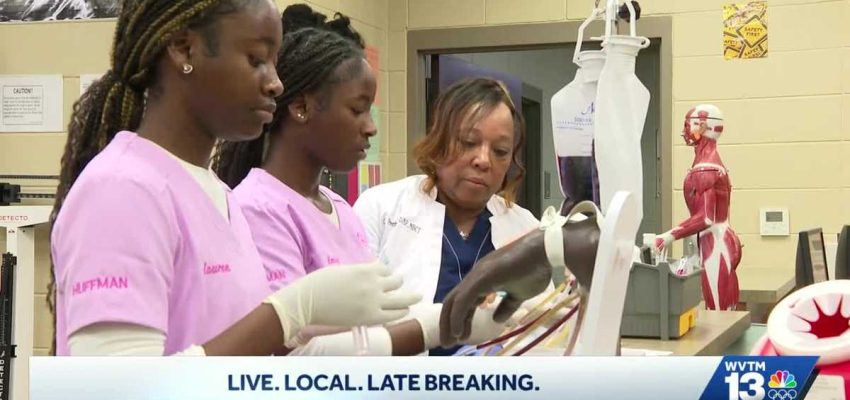
The initiative, aptly named ‘Pathways to Professional Nursing,’ represents a forward-thinking model for workforce development. At its core, the program aims to provide high school students within Birmingham City Schools with an unparalleled early insight into the demanding yet incredibly rewarding world of nursing. This isn’t merely a series of theoretical lectures; it’s about hands-on experience, mentorship, and a clear vision of the diverse **nursing career pathways** available to them. Students gain invaluable exposure to clinical environments, learning directly from seasoned professionals and immersing themselves in the daily realities of patient care long before they step foot onto a university campus as a nursing major.
UAB, a globally recognized academic medical center and a cornerstone of healthcare in Alabama, plays a pivotal role in this collaboration. Its involvement ensures that the curriculum and training provided to BCS students are not only rigorous but also aligned with the highest standards of professional nursing education. Students might engage in simulated clinical scenarios in UAB’s state-of-the-art simulation labs, offering a safe yet realistic environment to practice essential skills like patient assessment, medication administration, and emergency response. They may also participate in shadowing opportunities, observing nurses in various specialties – from intensive care units to pediatrics – gaining a holistic understanding of the profession’s breadth. This early exposure helps demystify the nursing profession, allowing students to see themselves in these vital roles and solidifying their commitment to pursuing **nursing career pathways**.
Moreover, the program likely integrates elements of dual enrollment or specialized high school tracks, allowing students to earn college credits or certifications, such as a Certified Nursing Assistant (CNA), while still in high school. This acceleration not only gives them a head start on their academic journey but also equips them with practical skills that are immediately applicable in healthcare settings. Such foundational training is crucial for building confidence and competence, easing the transition from high school to higher education and ultimately, into the workforce. By offering these concrete steps and clear **nursing career pathways**, the program acts as a powerful motivator and a practical guide for aspiring nurses.
### Addressing the Looming Shortage: The Urgency of Proactive Education
The urgency behind initiatives like ‘Pathways to Professional Nursing’ cannot be overstated. The United States is grappling with a severe and escalating nursing shortage, a crisis compounded by several intersecting factors. The Bureau of Labor Statistics projects roughly 177,400 openings for registered nurses each year, on average, over the next decade. This demand is fueled by an aging population, as Baby Boomers require more extensive and long-term medical care, increasing the overall need for healthcare services. Simultaneously, a significant portion of the existing nursing workforce is nearing retirement age, creating a substantial vacuum that new graduates struggle to fill.
Beyond demographics, the COVID-19 pandemic exacerbated burnout and stress among nurses, leading many to leave the profession prematurely or reduce their hours. This has placed immense pressure on an already strained system. Furthermore, the bottleneck isn’t solely in attracting students; there’s also a critical shortage of nursing educators. Without enough qualified faculty, nursing schools face limitations in expanding their enrollment capacities, even as interest in the profession remains high. This creates a vicious cycle where the very institutions meant to solve the shortage are hampered by it.
In this context, programs that proactively engage young students, like the BCS-UAB collaboration, are not just beneficial; they are essential. They create a robust talent pipeline, identifying and nurturing potential healthcare professionals from diverse backgrounds. By investing in these early **nursing career pathways**, communities like Birmingham are not only addressing a regional need but also contributing to a national solution. Such programs help to diversify the nursing workforce, ensuring that the healthcare providers reflect the communities they serve, which has been shown to improve patient outcomes and trust in the healthcare system. It’s an investment in both human capital and public health infrastructure.
### Beyond the Classroom: Real-World Impact and Future Implications
The benefits of ‘Pathways to Professional Nursing’ extend far beyond simply producing more nurses. For the students involved, it’s a transformative experience. They gain a competitive edge in college admissions, particularly for highly sought-after nursing programs like UAB’s, and enter higher education with a solid foundation of knowledge and practical skills. This early start can alleviate the financial burden of college by potentially shortening the time to degree completion or opening doors to scholarships specifically for participants in such programs. More importantly, they gain clarity and confidence in their chosen profession, reducing the likelihood of mid-program changes and ensuring a more efficient progression along their chosen **nursing career pathways**.
For UAB, the program cultivates a direct feeder system of well-prepared, highly motivated students, enhancing the diversity and quality of its nursing school cohorts. For Birmingham City Schools, it provides an invaluable opportunity to offer advanced, career-focused education, empowering students with tangible skills and a clear trajectory toward high-demand, high-impact careers. This partnership strengthens the local economy by developing and retaining skilled professionals within the community, fostering a healthier, more robust local workforce.
Looking ahead, the landscape of nursing will continue to evolve rapidly, driven by technological advancements. As these students embark on their **nursing career pathways**, they will undoubtedly encounter a healthcare landscape increasingly shaped by artificial intelligence, telemedicine, and data-driven patient care. Future nurses will need to be adept not only in clinical skills but also in leveraging technology for diagnostics, monitoring, and personalized treatment plans. Programs that emphasize critical thinking, adaptability, and a foundational understanding of healthcare systems, like the one in Birmingham, inherently prepare students for these future challenges, ensuring they are not just ready for today’s healthcare but for tomorrow’s innovations as well. This holistic preparation is vital for creating a resilient and future-proof healthcare workforce, capable of navigating complexities and embracing new tools.
In an era where the demands on our healthcare system are ever-increasing, the vision and commitment demonstrated by Birmingham City Schools and UAB offer a beacon of hope. The ‘Pathways to Professional Nursing’ program is more than just an educational initiative; it’s a strategic investment in the health, well-being, and economic vitality of a community. By identifying and nurturing future nurses from an early age, it directly addresses the critical workforce shortage, ensuring that compassionate, skilled caregivers are ready to meet the challenges of tomorrow.
This collaborative model serves as a powerful testament to what can be achieved when educational institutions and healthcare providers unite with a shared purpose. It provides a blueprint for other regions grappling with similar challenges, illustrating the profound impact of proactive, partnership-driven approaches to talent development. As these young students embark on their crucial **nursing career pathways**, they carry with them the promise of a healthier future for all, embodying the very essence of care, dedication, and service that defines the noble profession of nursing.










