
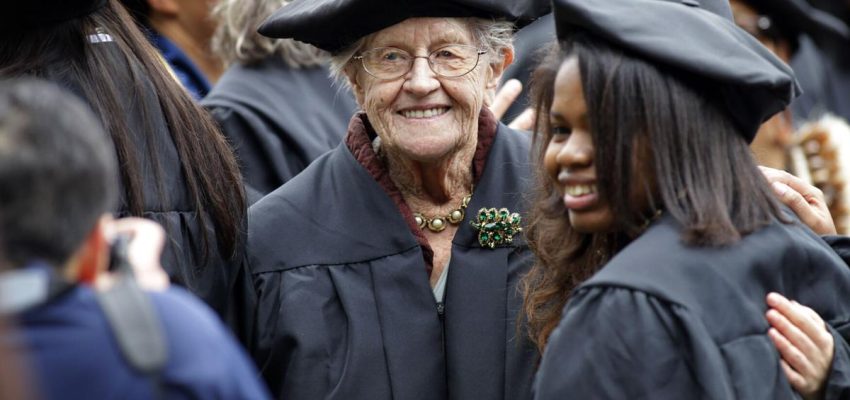

The landscape of education is undergoing a profound transformation, moving far beyond the traditional image of young students embarking on their first academic journey. Today, a powerful demographic shift is reshaping classrooms, online platforms, and professional development programs worldwide. Millions of adults are actively re-engaging with education, whether to acquire new skills, pivot careers, or simply pursue a long-held passion. This burgeoning group, driven by an insatiable hunger for knowledge and adaptability, has emerged as the ‘new majority’ student, signaling a fundamental recalibration of what it means to learn in the 21st century. As an AI specialist and tech enthusiast, I find this evolution not only fascinating but also critical to understanding how we will navigate the complexities of an increasingly technology-driven world.
Historically, education was often viewed as a linear path: primary school, secondary school, and perhaps a university degree, followed by a lifelong career. That paradigm, however, has been rendered obsolete by the accelerated pace of innovation, economic shifts, and an ever-evolving job market. The concept of a single career for life has given way to a dynamic journey, often requiring multiple transitions and continuous skill acquisition. This article delves into the forces propelling this transformative trend, exploring the motivations behind these dedicated individuals and examining the profound implications for both personal growth and societal progress.
Adult Learners: The Driving Force Behind the Evolving Educational Landscape
The surge in the number of **adult learners** returning to education is not merely a statistical anomaly; it is a direct response to a world in perpetual motion. These individuals, often juggling professional responsibilities, family commitments, and financial obligations, are consciously choosing to invest their time and resources in further learning. Their motivations are multifaceted, but broadly fall into two critical categories: career advancement and personal enrichment. Many seek to climb the corporate ladder, secure promotions, or transition into more lucrative or fulfilling roles. The demand for specific skills – particularly in technology, data science, and, of course, artificial intelligence – has created significant gaps in the workforce, prompting experienced professionals to reskill or upskill.
Consider the impact of artificial intelligence itself. While AI holds immense promise for efficiency and innovation, it also necessitates a significant re-evaluation of human roles in the workplace. Tasks once performed by humans are increasingly being automated, leading to a pressing need for a workforce capable of collaborating with AI, managing AI systems, and developing new AI applications. This imperative is a major driver for many **adult learners** who recognize that staying relevant means staying educated. They are enrolling in everything from credit and non-credit courses to specialized certificates, micro-credentials, and full degree programs. This modular approach to learning, with its focus on specific, often immediately applicable skills, is particularly appealing to adults who need flexible, efficient pathways to new competencies.
Beyond career aspirations, a significant portion of these returning students are driven by pure intellectual curiosity and personal interest. They might be pursuing a hobby, learning a new language, delving into philosophy, or exploring a creative art form – passions that might have been deferred during their earlier, more career-focused educational pursuits. This demographic illustrates a broader societal recognition that learning is an inherent human drive, not confined to youth, and that personal growth continues throughout life. Institutions, in turn, are adapting to this demand by offering diverse formats, from evening classes and weekend workshops to fully online programs and hybrid models, making education more accessible than ever before to these highly motivated individuals. The growth of platforms offering accessible courses on everything from coding to creative writing further demonstrates this shift, democratizing education and empowering **adult learners** to tailor their learning journeys to their unique needs and schedules.
Navigating a Dynamic World: The Impetus for Lifelong Learning
The concept of lifelong learning, once an abstract ideal, has now become a practical necessity. The digital revolution, spearheaded by advancements in artificial intelligence and automation, has fundamentally altered the global economy. Jobs that were once secure are now vulnerable, while entirely new industries and professions emerge with astonishing speed. This creates a continuous cycle of skill obsolescence and demand for new proficiencies. For **adult learners**, returning to school is not a luxury; it’s a strategic imperative for navigating this turbulent landscape.
Data consistently supports this trend. For example, reports from organizations like the National Center for Education Statistics (NCES) in the US, or various European statistical agencies, indicate a steady increase in the enrollment of students aged 25 and older in higher education and vocational training programs over the past two decades. While specific numbers fluctuate, the underlying trend of millions of adults annually engaging in some form of post-secondary learning remains robust. This demographic often brings invaluable real-world experience to the classroom, enriching discussions and providing a unique perspective that younger students may not yet possess. They are pragmatic learners, seeking knowledge that they can immediately apply, demonstrating a high degree of motivation and self-direction.
Moreover, the pandemic accelerated this shift, forcing many to re-evaluate their career paths and seek new opportunities in a rapidly changing labor market. Online learning platforms saw unprecedented growth, demonstrating their critical role in providing flexible and scalable educational solutions for adults. This convenience, combined with the often lower cost of online courses or micro-credentials compared to traditional degrees, has removed many barriers that previously deterred **adult learners**. The rise of micro-credentials, in particular, offers a targeted approach to skill development, allowing individuals to acquire specific, verifiable competencies in a shorter timeframe, directly addressing market demands without committing to a multi-year degree program.
Another significant factor is the increasing awareness of mental agility and cognitive health. Engaging in continuous learning is not just about career; it’s also about keeping the mind sharp, fostering intellectual curiosity, and promoting overall well-being. Many older **adult learners** view education as a means to stay intellectually active and connected, demonstrating that the pursuit of knowledge is inherently valuable, extending beyond mere economic utility. This holistic view of education further solidifies the position of adults as key participants in the ongoing evolution of learning.
The Future of Work and Education: Empowering the ‘New Majority’
The emergence of **adult learners** as the ‘new majority’ student has profound implications for the future of both work and education. For educational institutions, it necessitates a fundamental rethinking of curricula, delivery methods, and student support services. Universities, community colleges, and vocational schools must become more agile, offering programs that are responsive to industry needs, flexible in their scheduling, and accessible to a diverse range of learners with varying backgrounds and life experiences. The traditional academic calendar and degree structures are giving way to more modular, competency-based approaches that cater to the episodic learning needs of adults.
From a societal perspective, a continuously educated adult population is a cornerstone of a resilient and innovative economy. In an era where technological advancements, especially in AI, are redefining industries at an unprecedented pace, a workforce committed to lifelong learning is crucial for maintaining competitiveness and fostering economic growth. Governments and industries are increasingly recognizing this, investing in initiatives that support adult education, reskilling programs, and talent development. These investments are vital not only for individual career trajectories but also for national prosperity, ensuring that societies can adapt and thrive amidst global changes.
Furthermore, the integration of AI into learning itself holds immense potential for **adult learners**. AI-powered platforms can offer personalized learning paths, identify skill gaps, provide adaptive content, and even act as intelligent tutors, making education more efficient and effective. Imagine an AI system that analyzes an individual’s career goals, current skills, and learning style to recommend a tailored curriculum of micro-credentials and online courses, all while accommodating their busy schedule. This synergy between AI and adult education promises to unlock even greater potential for continuous professional development and personal growth, further cementing the role of adults at the forefront of the educational revolution.
The rise of **adult learners** is more than a trend; it’s a paradigm shift reflecting a fundamental redefinition of education in the 21st century. These highly motivated individuals are not merely returning to school; they are actively shaping the future of learning, demonstrating an unyielding commitment to personal growth and professional adaptability in an increasingly complex world. Their journey underscores a vital truth: in an age of rapid technological advancement and societal change, the pursuit of knowledge is not a finite process confined to youth, but a lifelong endeavor that empowers individuals and strengthens communities.
As we look ahead, the systems that support lifelong learning must continue to evolve, embracing flexibility, technological innovation, and a deep understanding of the diverse needs of this ‘new majority.’ The future belongs to those who are willing to learn, unlearn, and relearn, making the **adult learners** of today the pioneers of tomorrow’s adaptable and informed society. Their sustained engagement in education will not only define their individual successes but also collectively determine our capacity to navigate the opportunities and challenges presented by an ever-changing world.










