

In an era increasingly defined by artificial intelligence and automation, discussions often revolve around the jobs of tomorrow – those requiring advanced digital literacy, complex problem-solving, and a nuanced understanding of emerging technologies. Yet, amidst this forward-looking discourse, it is crucial not to overlook the foundational industries and the skilled trades that remain the bedrock of any thriving economy. Indeed, the very future of advanced manufacturing, logistics, and national infrastructure relies heavily on a robust, well-trained workforce capable of mastering both traditional craftsmanship and modern technological integration.
Philadelphia, a city with a storied industrial past and a vibrant innovative present, is now at the forefront of demonstrating this synergy. The launch of the Welder B Program, a collaborative effort by The Skills Initiative, PIDC (Philadelphia Industrial Development Corporation), and Hanwha Philly Shipyard, represents more than just a training initiative. It is a strategic investment in human potential, a commitment to economic revitalization, and a blueprint for how communities can adapt to and thrive in the evolving landscape of advanced manufacturing. As an AI specialist, I find immense value in examining programs like this, as they reveal the critical intersection where human skill meets technological advancement, forging paths for sustainable growth and meaningful **shipbuilding careers**.
Shipbuilding Careers: A New Horizon for Philadelphia
Philadelphia’s identity has long been intertwined with its maritime heritage. From its pivotal role in the American Revolution as a bustling port to its contributions in two World Wars through massive naval construction, the city’s relationship with shipbuilding is deep-seated. The Philadelphia Navy Yard, once the nation’s oldest and largest naval shipyard, stands as a testament to this legacy. While its primary function as a naval base concluded in the 1990s, the Navy Yard has since been meticulously transformed into a dynamic urban campus – a hub for business, research, and advanced manufacturing, meticulously blending historical preservation with cutting-edge innovation. This remarkable transformation underscores the city’s resilience and its forward-thinking approach to economic development.
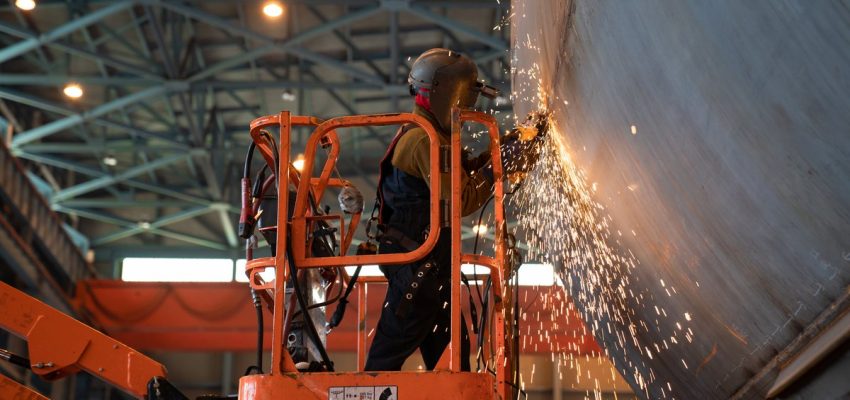
Today, Hanwha Philly Shipyard, formerly known as Philly Shipyard, continues this grand tradition. As one of the largest commercial shipyards in the United States, it plays a vital role in domestic vessel construction, specializing in large, complex commercial vessels such as containerships, tankers, and offshore wind installation vessels. The sheer scale and complexity of these projects demand an exceptionally skilled workforce, particularly in critical areas like welding. Welding, far from being a static trade, is an intricate craft requiring precision, specialized knowledge of metallurgy, and an unwavering commitment to safety and quality. It is the very backbone of shipbuilding, ensuring the structural integrity and longevity of vessels that will traverse the world’s oceans for decades.
However, like many industrial sectors, shipbuilding faces a persistent challenge: a growing skills gap. An aging workforce, coupled with a societal shift away from vocational training in previous decades, has led to a scarcity of qualified individuals ready to take on these demanding yet rewarding roles. This is where initiatives like the Welder B Program become indispensable. By intentionally creating clear pathways for Philadelphia residents, particularly those from underserved communities, this program addresses a critical industry need while simultaneously fostering significant economic opportunity. It’s about more than just filling job vacancies; it’s about empowering individuals with high-quality, sustainable **shipbuilding careers** that offer competitive wages and benefits, contributing directly to the local economy and bolstering American industrial capacity. The average hourly wage for skilled welders in the shipbuilding sector can be substantial, reflecting the high demand and specialized nature of the work, often ranging from $25 to $35 an hour, with potential for overtime and growth.
Bridging the Skills Gap with the Welder B Program
The Welder B Program is a powerful example of what can be achieved when public, private, and non-profit sectors collaborate with a shared vision. The Skills Initiative brings its expertise in workforce development and training, ensuring that the curriculum is robust, relevant, and responsive to industry needs. PIDC, as Philadelphia’s primary economic development engine, provides crucial support in connecting local residents with these opportunities and fostering the economic environment for such programs to thrive. And Hanwha Philly Shipyard, as the end employer, ensures that the training directly translates into high-quality jobs, creating a direct pipeline from classroom to career.
The program is meticulously designed to equip participants with the fundamental skills required for entry-level welding positions in a demanding shipyard environment. This isn’t merely about teaching someone to hold a torch; it’s about comprehensive training that covers various welding techniques (such as Shielded Metal Arc Welding – SMAW, Gas Metal Arc Welding – GMAW, and Flux-Cored Arc Welding – FCAW), blueprint reading, metallurgy basics, safety protocols, and quality control. Graduates of the program emerge not just as welders, but as adaptable technicians ready to contribute to a complex manufacturing process. The emphasis on hands-on training, often in realistic simulated environments, is critical, allowing individuals to develop proficiency and confidence under expert guidance.
Beyond technical skills, the program also instills essential soft skills crucial for workplace success: teamwork, problem-solving, attention to detail, and a strong work ethic. These are often as valuable as technical acumen, particularly in a collaborative industrial setting like a shipyard where coordination and communication are paramount. The long-term vision extends beyond initial employment; it aims to foster career progression, encouraging participants to pursue further certifications, specialize in advanced welding techniques, and ultimately climb the ranks within the shipyard, potentially into supervisory or even engineering roles. This commitment to continuous learning and professional development is a hallmark of truly impactful workforce initiatives, transforming short-term job placements into lifelong **shipbuilding careers**.
Welding in the Age of AI: The Future of Advanced Manufacturing
As an AI specialist, I often ponder how traditional industries will evolve in an increasingly automated and data-driven world. The shipbuilding industry, far from being immune to these changes, is actively embracing them. While the image of a welder might evoke a sense of traditional craftsmanship, the reality in modern shipyards is a fascinating blend of human expertise and advanced technology.
Robotic welding systems, guided by sophisticated AI algorithms, are already prevalent in certain aspects of shipbuilding, particularly for repetitive tasks or in hazardous environments. These robots can achieve unparalleled precision and speed, enhancing efficiency and consistency. However, they do not entirely replace human welders. Instead, they augment their capabilities. The future welder in an advanced shipyard is not just a skilled artisan but also a technician who might program, monitor, and troubleshoot these robotic systems. They become supervisors of automation, collaborators with intelligent machines, requiring a new blend of digital literacy and traditional craft.
Furthermore, technologies like augmented reality (AR) and virtual reality (VR) are revolutionizing training and operational processes. Imagine a welding apprentice practicing complex welds in a safe, simulated VR environment, receiving instant feedback from an AI-powered tutor. Or an experienced welder using AR glasses to overlay digital blueprints and welding parameters directly onto the workpiece, ensuring perfect alignment and precise execution. Data analytics, driven by AI, can optimize welding parameters, predict equipment maintenance needs, and enhance quality control throughout the entire shipbuilding process, minimizing waste and maximizing output.
This convergence of traditional skills with cutting-edge technology underscores the critical importance of programs like the Welder B Initiative. They are not merely training welders for yesterday’s jobs, but preparing a workforce equipped to navigate and excel in the advanced manufacturing landscape of tomorrow. These new professionals will be indispensable in integrating intelligent systems, working with smart materials, and adapting to increasingly complex designs. Their human judgment, problem-solving abilities, and intricate understanding of materials and processes will complement the speed and precision of AI, creating a powerful synergy that pushes the boundaries of what is possible in maritime construction. The essence of these **shipbuilding careers** will be defined by continuous learning, adaptability, and a willingness to embrace technological partners.
Ultimately, the success of Philadelphia’s Welder B Program lies not just in filling immediate job openings but in its visionary approach to workforce development. It acknowledges that human skill, particularly in complex trades, remains irreplaceable, yet recognizes the imperative to evolve alongside technology. By investing in its residents and providing them with pathways to high-quality **shipbuilding careers**, Philadelphia is not just building ships; it is building a stronger, more resilient, and technologically advanced community. This initiative stands as a beacon, illustrating how targeted vocational training can effectively bridge the gap between traditional industry demands and the innovations of Industry 4.0, fostering both economic prosperity and individual empowerment.
In conclusion, the Welder B Program in Philadelphia is far more than a local training effort; it’s a microcosm of the global shift towards smarter, more integrated manufacturing. It represents a proactive response to the evolving demands of industry, demonstrating how foundational skills, when nurtured and integrated with modern technological understanding, remain absolutely vital. For regions seeking sustainable economic growth and a competitive edge in the 21st century, the lesson is clear: invest in your people, provide them with relevant, high-quality training, and connect them directly to industries that are ready to innovate and grow. The future of advanced manufacturing, whether in shipbuilding, aerospace, or renewable energy, depends on a workforce that is both skilled in the traditional crafts and adept at leveraging the power of AI and automation.
Programs like this exemplify a critical truth in our AI-driven world: technology thrives when it augments human capability, rather than merely replacing it. By empowering individuals with the skills to operate, manage, and innovate within technologically advanced environments, we ensure that the human element remains central to progress. Philadelphia’s commitment to creating robust **shipbuilding careers** through this partnership is not just about a job; it’s about contributing to a future where human ingenuity and technological advancement work hand-in-hand to build stronger industries and more prosperous communities.










