
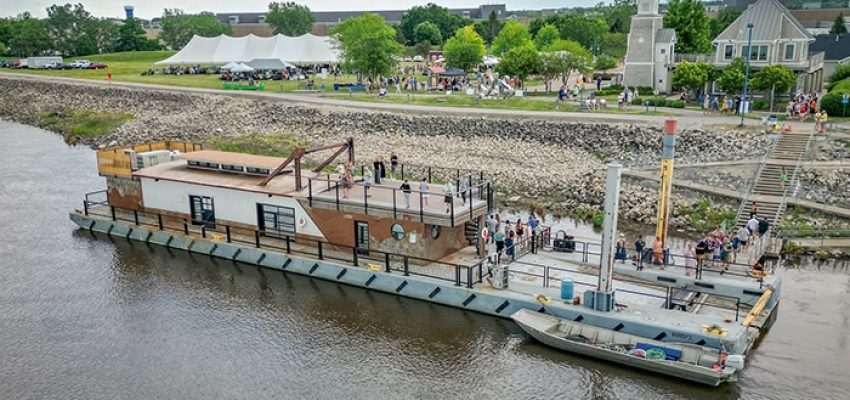

The rhythmic ebb and flow of rivers, the vast expanse of oceans – these waterways have historically been the lifeblood of trade, exploration, and human connection. Yet, despite their undeniable importance, the maritime sector often remains a hidden world to many, especially to younger generations considering their career paths. We speak of digital transformation and AI revolutionizing industries, but what about the foundational sectors that keep our global economy afloat? How do we ensure a steady stream of skilled professionals for an industry that is simultaneously ancient and on the cusp of profound technological change?
Enter innovative solutions like the ‘floating classroom’ – a concept that is not just a vessel for learning, but a visionary bridge connecting aspiring minds directly to the heart of river and ocean careers. In an era where screens often dominate experience, these unique initiatives offer a tangible, immersive pathway into a world critical for global supply chains, environmental stewardship, and national security. As an AI specialist and tech enthusiast, I’m fascinated by how traditional industries are embracing the future, and few transitions are as compelling as that unfolding in the maritime world. This article will delve into the profound impact of such hands-on learning environments, exploring how they are vital for fostering the next generation of maritime professionals and preparing them for a future increasingly integrated with artificial intelligence and advanced technologies.
### Maritime Education: Anchoring Future Professionals in a Digital Sea
For centuries, maritime education has relied on a blend of theoretical knowledge and practical apprenticeship. Sailors learned by doing, mentored by seasoned mariners on actual voyages. While simulators and advanced training facilities are now commonplace, nothing quite replicates the dynamic, unpredictable environment of a real vessel on the water. This is precisely where the ‘floating classroom’ concept excels. Imagine students not just reading about navigation charts or engine mechanics, but actively engaging with them as they navigate a river, feeling the vibrations of the engine, and understanding the complex interplay of currents and controls.
These floating learning centers serve as dynamic laboratories, offering an unparalleled experiential learning opportunity. Traditional academic settings, while crucial for foundational knowledge, often struggle to convey the unique demands and practicalities of a career at sea or on inland waterways. The physical environment of a floating classroom immerses students in the very context of their future profession. They witness firsthand the challenges of logistics, the importance of teamwork, and the sheer scale of maritime operations. This direct exposure is invaluable for high school students or those in early collegiate programs who might otherwise never consider a career in shipping, port management, marine engineering, or river piloting. It demystifies the industry, showcasing it not as an archaic field, but as a vibrant, essential, and technologically evolving sector.
One of the significant hurdles in attracting new talent to maritime professions is the aging workforce. Many experienced professionals are nearing retirement, creating a critical demand for skilled replacements. Furthermore, the perception of maritime careers often lags behind reality, with lingering images of arduous, isolated journeys rather than the diverse, high-tech roles that increasingly define the industry. By bringing the classroom to the river, these programs effectively dismantle such misconceptions, presenting a modern, engaging, and highly relevant career path. They allow students to interact with active professionals, ask questions in real-time, and gain a profound appreciation for the dedication and expertise required. This hands-on, contextual learning accelerates understanding and fosters a deeper passion for the field, an element often missing in purely theoretical instruction. It’s about cultivating not just skills, but a genuine affinity for the water and the intricate ecosystem it supports.
### Navigating the Digital Tides: AI and the Future of Maritime Careers
The maritime industry, much like any other global sector, is undergoing a profound digital transformation. Artificial intelligence (AI) is no longer a distant concept but an active force reshaping everything from ship design and autonomous navigation to predictive maintenance and optimized supply chains. This rapid evolution demands a new kind of maritime professional – one who is not only proficient in traditional seafaring skills but also adept at understanding and leveraging advanced technologies. This is where the forward-thinking aspect of maritime education truly shines, particularly initiatives that recognize and prepare for this technological shift.
Consider the advent of autonomous vessels. While fully crewless ships are still in their nascent stages, semi-autonomous features are already becoming commonplace, assisting in navigation, collision avoidance, and even mooring. Future maritime professionals will need to be skilled in monitoring AI systems, interpreting sensor data, troubleshooting complex software, and even intervening in critical situations where human judgment remains paramount. Similarly, AI-driven predictive maintenance systems are transforming vessel upkeep, using algorithms to analyze vast amounts of data from engine sensors, hull stress monitors, and weather patterns to forecast potential failures before they occur. This shifts the role of marine engineers from reactive repairs to proactive system management and data interpretation.
Smart ports, powered by AI and the Internet of Things (IoT), are optimizing cargo handling, reducing turnaround times, and enhancing security. Professionals working in port operations will increasingly rely on AI tools for resource allocation, traffic management, and supply chain visibility. Even environmental stewardship in the maritime sector is being revolutionized by AI, with systems capable of monitoring ocean health, detecting pollution, and optimizing routes to minimize fuel consumption and emissions. These advancements underscore a critical point: the maritime industry is becoming increasingly data-intensive and technology-driven.
A ‘floating classroom’ offers a unique opportunity to introduce students to these cutting-edge technologies within a relevant context. While a dedicated AI lab might seem more appropriate for deep dives into algorithms, the floating classroom provides the *application ground*. Students can learn about GPS and AIS systems, understand the principles behind electronic charting, and even explore the potential of drone technology for inspection and monitoring, all while onboard a functioning vessel. This hands-on exposure, even if basic, cultivates a digital mindset and sparks curiosity about how AI and other emerging technologies will integrate with traditional maritime practices. It prepares them not just for current roles, but for the fluid, adaptable, and technologically rich careers that await them. It bridges the gap between the physical reality of a ship and the digital infrastructure that increasingly underpins its operation.
### Beyond the Vessel: Cultivating a Sustainable Blue Economy Workforce
The impact of innovative maritime education initiatives extends far beyond simply filling job vacancies. They are foundational to cultivating a robust and sustainable Blue Economy, a concept encompassing the sustainable use of ocean resources for economic growth, improved livelihoods, and ocean ecosystem health. A well-trained, adaptable maritime workforce is critical for achieving these goals, especially in an era of climate change and increasing global trade demands.
These programs foster not only technical skills but also a deep sense of environmental responsibility. Onboard a floating classroom, students can directly observe the environmental challenges faced by waterways – from pollution to habitat degradation – and learn about sustainable practices in shipping and navigation. This experiential learning imbues them with a stewardship mindset, which is crucial for the future of an industry grappling with emissions regulations, ballast water management, and the protection of marine biodiversity. AI, for instance, is playing a growing role in optimizing routes to avoid sensitive marine areas or in developing cleaner propulsion systems, and future professionals must be equipped to understand and implement these solutions.
Furthermore, these initiatives contribute significantly to local and regional economic development. By creating a pipeline of skilled professionals, they bolster industries that rely heavily on maritime transport, from agriculture and manufacturing to energy and tourism. They provide pathways to stable, high-paying jobs, often in communities that have historically been connected to waterways. This economic uplift can be transformative, revitalizing waterfronts and fostering a sense of community pride in their maritime heritage.
The ‘floating classroom’ model also serves as an excellent platform for promoting diversity and inclusion within the maritime sector. Historically male-dominated, the industry is striving for greater representation of women and minority groups. Offering engaging, accessible, and exciting entry points like a floating classroom can inspire a wider range of students to consider these careers, breaking down traditional barriers and enriching the workforce with diverse perspectives and talents. It’s about ensuring that the future of maritime is not only technologically advanced but also equitably represented. These programs are not just about teaching skills; they’re about building a resilient, innovative, and responsible workforce capable of navigating the complex challenges and opportunities of the 21st century’s interconnected global economy.
### Conclusion:
The journey of a floating classroom is more than just a trip down the river; it’s a voyage into the future of an indispensable global industry. By offering direct, hands-on exposure to the realities and opportunities within maritime careers, these innovative educational models are effectively bridging the gap between classroom theory and real-world application. They are not merely filling immediate workforce needs but are strategically cultivating a generation of professionals who are not only skilled in traditional maritime practices but are also digitally literate, environmentally conscious, and ready to embrace the transformative power of artificial intelligence and other emerging technologies.
As we look ahead, the continued success and expansion of such maritime education initiatives will be paramount. They represent a vital investment in our economic resilience, environmental sustainability, and technological advancement. By inspiring and equipping the next generation with the knowledge, experience, and forward-thinking mindset required to navigate increasingly complex waters, we ensure that the engines of global commerce continue to turn, responsibly and efficiently, far into the future. The river, after all, has always been a conduit of progress, and with these floating classrooms, it’s once again charting a course for innovation.










