

The future of work is not merely approaching; it is unfolding with unprecedented speed, driven by the relentless march of artificial intelligence and advanced technology. For students standing at the precipice of their academic journeys, the world of possibilities can be both exhilarating and daunting. How does one prepare for professions that may not yet exist? How do they navigate a landscape where skills become obsolete as quickly as new ones emerge? This profound challenge underscores the critical importance of early and effective career exploration, a pursuit that now, more than ever, must be guided by an understanding of technological evolution, particularly in the realm of AI.
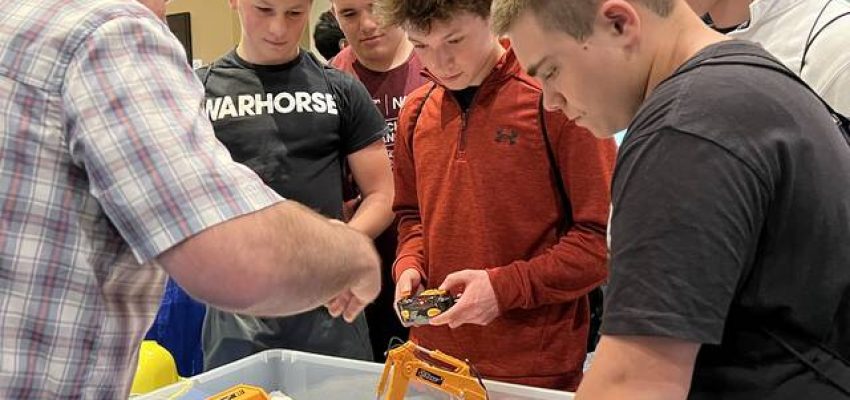
Recent initiatives, such as the Junior Achievement of NEPA’s JA Inspire Career Exploration Experience, exemplify a proactive approach to this challenge. Thousands of regional students have had the opportunity to engage with potential career paths through immersive, interactive activities. This hands-on engagement is a vital counterpoint to abstract theoretical learning, offering a tangible glimpse into diverse industries and the roles within them. As an AI specialist and tech enthusiast, I see these programs not just as career fairs, but as critical incubators for future talent, helping young minds to visualize their place in a world increasingly shaped by algorithms, data, and intelligent systems.
Career Exploration in the Age of AI
The advent of artificial intelligence is fundamentally altering the global labor market. Reports from institutions like the World Economic Forum consistently highlight that AI and automation are poised to displace certain routine jobs while simultaneously creating entirely new categories of employment. This isn’t merely a shift; it’s a paradigm transformation. Traditional vocational guidance, often predicated on stable industry structures, struggles to keep pace. What students need today is a form of career exploration that acknowledges this fluidity, embracing a mindset of continuous learning and adaptability.
Consider the direct impact of AI on job roles. We are witnessing a surge in demand for AI engineers, machine learning specialists, data scientists, and prompt engineers—roles that barely existed a decade ago. These positions require a blend of mathematical acumen, programming proficiency, and a nuanced understanding of AI ethics and model interpretability. But the influence of AI extends far beyond these specialized technical roles. Virtually every sector is experiencing an AI-driven metamorphosis.
In healthcare, AI assists in diagnostics, drug discovery, and personalized treatment plans, creating new roles for medical professionals who can effectively interact with and interpret AI outputs. In the creative industries, generative AI tools are becoming collaborators for artists, writers, and designers, necessitating skills in AI-human co-creation. Even in sectors like agriculture, AI optimizes crop yields and resource management, calling for agronomists and farmers who are also adept at leveraging data analytics. This pervasive integration means that virtually every future professional will, in some capacity, be an AI-augmented professional, making broad-based career exploration that incorporates technological literacy more vital than ever.
The challenge, therefore, is not just to prepare students for existing jobs, but to equip them with the foresight and foundational understanding to adapt to future roles. This requires educational initiatives that move beyond mere information dissemination, focusing instead on fostering curiosity, critical thinking, and problem-solving skills in contexts that mirror real-world technological challenges. Early exposure to the implications of AI, both positive and negative, helps cultivate a generation that is not only proficient in using these tools but also responsible in their application, understanding the ethical frameworks and societal impacts.
Navigating the New Frontier: Essential Skills for the Future Workforce
If AI is reshaping the landscape of work, then the skills required to thrive within it are undergoing a parallel evolution. The emphasis is shifting from rote memorization and procedural tasks—which AI can often perform more efficiently—to uniquely human capabilities. Critical thinking, creativity, complex problem-solving, and emotional intelligence are no longer just ‘soft skills’; they are core competencies for navigating the AI era. Students engaging in career exploration today must understand that their future success will hinge significantly on their ability to think innovatively, collaborate effectively, and adapt rapidly.
Digital literacy, of course, remains paramount, but it now encompasses more than just basic computer proficiency. It involves data fluency—the ability to understand, analyze, and interpret data to make informed decisions. It means an understanding of algorithms, not necessarily to code them from scratch, but to comprehend their logic and limitations. Furthermore, an ethical compass is becoming an indispensable tool. As AI systems become more autonomous and influential, professionals in all fields will face complex ethical dilemmas, from data privacy to algorithmic bias. Future workforces need individuals who can not only leverage AI’s power but also guide its development and deployment responsibly.
Adaptability and resilience are perhaps the most crucial meta-skills. The rapid pace of technological change means that job roles, required skill sets, and even entire industries can transform within a few years. A static skill set is a liability. Instead, students must cultivate a mindset of lifelong learning, viewing each career path not as a destination, but as a series of evolving challenges and opportunities for growth. This often begins with effective career exploration that allows them to experiment with different interests and understand how diverse skill sets can be applied across various domains.
Educational institutions and programs like Junior Achievement are rising to this challenge by integrating project-based learning, interdisciplinary studies, and real-world simulations. These approaches move beyond theoretical knowledge, demanding that students apply their learning to solve practical problems, fostering creativity and collaboration. For instance, workshops focused on sustainable technologies or virtual reality development offer a tangible taste of future industries, encouraging students to develop both technical expertise and the soft skills necessary to thrive in collaborative, innovation-driven environments. By understanding these skill demands early, students can make more informed choices about their academic pursuits and extracurricular activities, aligning them with the demands of an AI-powered future.
The Power of Experiential Learning: Shaping Tomorrow’s Innovators
The original report highlighted the power of “interactive activities” in fostering career exploration, and this aspect cannot be overstated. In an age where information is abundant but experience is often scarce for young people, hands-on learning environments become invaluable. Theoretical knowledge, while essential, often fails to convey the nuances, challenges, and daily realities of a profession. Experiential learning bridges this gap, offering a sandbox where students can try out roles, make mistakes, and learn from direct engagement.
Events like JA Inspire, for example, go beyond static booths and brochures. They simulate real-world workplaces, allowing students to operate equipment, engage in mock client meetings, or participate in coding challenges. Imagine a student interacting with a robotic arm, programming it to perform a simple task, or using virtual reality headsets to walk through a simulated architectural design. These aren’t just fun activities; they are profound learning experiences. They demystify complex fields, making them accessible and exciting. Such engagements can spark a lifelong passion, revealing aptitudes a student might never have discovered through conventional classroom learning.
Moreover, direct interaction with professionals from various industries provides invaluable mentorship and insight. Hearing firsthand accounts of daily challenges, career trajectories, and the skills deemed most crucial by those in the field offers a perspective that textbooks cannot replicate. These encounters can often lead to networking opportunities, informal mentoring relationships, and a clearer understanding of the educational pathways required for specific careers. For students grappling with the abstract concept of ‘future jobs,’ these human connections provide concrete examples and relatable journeys.
The efficacy of experiential learning in enhancing career exploration is backed by educational psychology. Active learning, where students are directly involved in the learning process, leads to deeper understanding and retention than passive reception of information. When students can see, touch, and do, they develop a more robust mental model of what a career entails, making their decision-making process more informed and resilient. In an era where the pace of change is accelerating, offering these ‘test drives’ of future careers is not a luxury, but a necessity, empowering students to make intentional choices about their educational and professional trajectories.
As we look ahead, the imperative to equip the next generation with the tools for effective career exploration becomes paramount. The rapidly evolving landscape, largely driven by advancements in artificial intelligence, demands a holistic approach that integrates traditional learning with dynamic, experiential opportunities. It’s about cultivating a mindset of curiosity, adaptability, and continuous learning, ensuring that students are not just prepared for the jobs of tomorrow, but are also empowered to innovate and shape them.
The success of initiatives like Junior Achievement’s Career Exploration Experience demonstrates the profound impact of connecting young minds with real-world possibilities. By fostering environments where students can interact with emerging technologies, develop critical skills, and engage with industry professionals, we lay the groundwork for a future workforce that is not only competent but also confident and ethically responsible. As André Lacerda, I believe our role is to illuminate these pathways, guiding students to embrace the incredible opportunities that the age of AI presents, transforming uncertainty into an exciting frontier of discovery and innovation.










