
As an enthusiast of artificial intelligence and a keen observer of technological evolution, I often find myself pondering the future of work. While much of the dialogue gravitates towards algorithms, data science, and virtual realities, it’s crucial to remember that the bedrock of our physical world – the infrastructure that moves goods, builds cities, and powers agriculture – still relies heavily on the ingenuity and skill of human hands and minds. It’s a compelling juxtaposition: the abstract power of AI informing decisions, while tangible power generated by sophisticated machines enables our daily lives.
In this vein, the story of young students immersing themselves in the intricacies of diesel technology, as exemplified by programs like the one hosted by the North Dakota State College of Science (NDSCS) in partnership with Titan Machinery, offers a powerful reminder of the enduring importance of vocational education. This isn’t just about turning wrenches; it’s about diagnostic expertise, problem-solving, and mastering complex systems that are essential to our modern existence. These hands-on experiences are not merely educational; they are foundational, shaping the next generation of professionals who will literally keep our world running. They highlight a truth often overlooked in our increasingly digital age: the demand for highly skilled individuals in technical trades remains robust, and the pathways to successful diesel technician careers are ripe with opportunity and innovation.
Diesel Technician Careers: A Foundation for Modern Infrastructure
To truly appreciate the significance of a program like the one at NDSCS, one must first understand the pervasive role of diesel technology in our global economy. From the vast fields tilled by agricultural machinery to the colossal trucks that transport goods across continents, from the construction equipment shaping our urban landscapes to the generators powering remote communities, diesel engines are the workhorses of progress. They are the arteries of commerce and the backbone of industry, providing the dependable power necessary for critical operations worldwide.
Modern diesel technician careers are far more complex and intellectually demanding than many might initially imagine. Gone are the days when a basic understanding of mechanics sufficed. Today’s diesel engines are sophisticated marvels of engineering, integrating advanced electronic control units (ECUs), intricate fuel injection systems, complex emission control technologies, and an array of sensors that generate vast amounts of diagnostic data. A skilled diesel technician must be proficient not only in mechanical repair but also in computer diagnostics, electrical troubleshooting, hydraulic systems, and even fundamental data interpretation. They are the frontline experts who decode error codes, perform intricate component replacements, calibrate systems to exacting standards, and ensure machinery operates at peak efficiency while adhering to stringent environmental regulations.
Consider the sheer scale: the global market for diesel engines was valued at over $200 billion in recent years and continues to grow, driven by sectors like construction, agriculture, and power generation. This robust market translates directly into a consistent demand for skilled technicians. The U.S. Bureau of Labor Statistics projects a steady need for diesel service technicians and mechanics, with thousands of job openings anticipated each year, largely due to replacing workers who retire or transfer to different occupations. These aren’t just jobs; they are critical roles that ensure continuity in vital sectors, making the cultivation of interest in these fields through initiatives like the NDSCS camp incredibly valuable. The precision required for modern common rail direct injection systems, the mastery of exhaust gas recirculation (EGR) and selective catalytic reduction (SCR) systems for emission control, and the integration of telematics for predictive maintenance all underscore the sophisticated nature of contemporary diesel technician careers.
Hands-On Learning: Bridging Theory and Practical Expertise
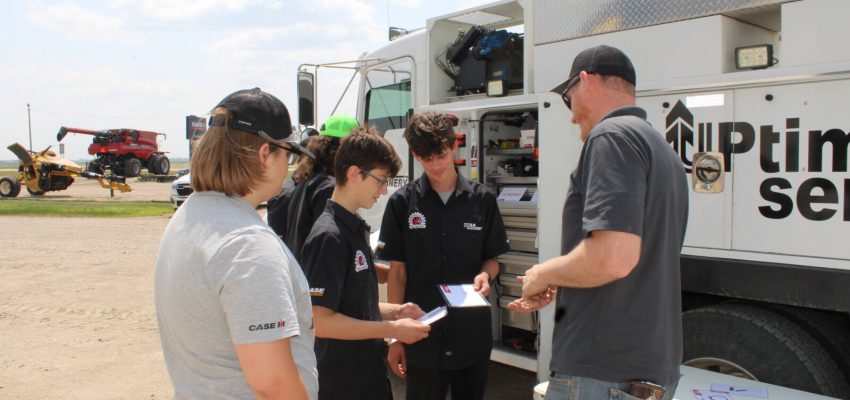
The most effective learning often happens not in a lecture hall but with hands-on engagement, where theory meets practical application. This principle is at the heart of the NDSCS camp, a collaboration that offers high school students an invaluable window into the world of diesel technology. Programs like this provide a tangible experience that traditional classroom settings simply cannot replicate. Imagine a teenager, perhaps with a nascent interest in how things work, getting the opportunity to dissect an engine, diagnose a simulated fault using industry-standard software, or operate heavy machinery under expert supervision. This direct engagement sparks curiosity, builds confidence, and solidifies theoretical knowledge in a way that is both memorable and deeply educational.
These camps typically immerse participants in a range of activities designed to mimic real-world scenarios. Students might learn about preventative maintenance, master the use of specialized diagnostic tools, understand the principles of hydraulic systems, or even engage in basic welding. Crucially, they are often exposed to actual equipment from leading manufacturers, provided by industry partners like Titan Machinery. This direct interaction with powerful, complex machines—be it a massive tractor, an excavator, or a heavy-duty truck—is transformative. It moves beyond abstract concepts to concrete reality, allowing students to feel the weight of a component, hear the roar of an engine, and witness firsthand the power they could one day command and maintain.
Industry partnerships are the unsung heroes of such vocational training. Companies like Titan Machinery bring not only equipment but also experienced technicians who serve as mentors, sharing their real-world insights and passion for the trade. This collaboration ensures that the curriculum is current, relevant, and directly aligned with industry needs, effectively bridging the notorious “skills gap.” For students, it provides direct exposure to potential employers and career paths, allowing them to make informed decisions about their future education and professional aspirations. NDSCS, with its long-standing reputation as a premier technical college, serves as an ideal host, offering state-of-the-art facilities and a strong legacy of preparing students for successful diesel technician careers. Such camps are not just about training; they are about inspiring the next generation to consider vital roles that are often overlooked but are absolutely essential to our global infrastructure.
The Evolving Landscape of Diesel Technology and Future Skills
While diesel technology has been a cornerstone of industry for over a century, it is by no means a static field. Like all areas of engineering, it is constantly evolving, driven by demands for greater efficiency, reduced emissions, and the integration of smart technologies. The future of diesel technician careers will be defined by adaptability and a commitment to lifelong learning. Technicians will increasingly work with hybrid diesel-electric systems, alternative fuels such as biodiesel and renewable diesel, and potentially even hydrogen combustion or fuel cell technologies that aim to decarbonize heavy-duty applications. Electrification is making inroads into certain segments, particularly for smaller machinery and urban transport, but diesel’s power density and efficiency for heavy-duty, long-haul, and off-road applications remain unparalleled for the foreseeable future.
This evolution means that the skill set required for a successful diesel technician is expanding. Future professionals will need to understand not only internal combustion principles but also battery management systems, electric motors, power electronics, and sophisticated software interfaces. The ability to diagnose issues across diverse power sources and integrated systems will be paramount. Moreover, the integration of advanced telematics, IoT sensors, and even artificial intelligence in predictive maintenance models will transform how technicians approach their work. AI algorithms can analyze operational data to forecast equipment failures, optimize maintenance schedules, and improve fuel efficiency, requiring technicians to interpret and act on these data-driven insights. My own work in AI often highlights how digital intelligence can augment human expertise, and this synergy is becoming increasingly evident even in the seemingly traditional field of diesel mechanics.
The demand for skilled professionals who can navigate this complex, evolving landscape will only intensify. These are stable, well-paying careers that offer a clear path for professional growth and continuous learning. For young people considering their options, exploring vocational paths like those in diesel technology opens doors to a future that is both challenging and incredibly rewarding. It’s about building a robust skill set that blends mechanical aptitude with digital literacy, ensuring they are prepared for the powerful machines of today and the innovative technologies of tomorrow.
In conclusion, the partnership between institutions like NDSCS and industry leaders such as Titan Machinery is a brilliant testament to proactive career development. By offering tangible, hands-on experiences, these programs are not just teaching technical skills; they are igniting passions and shaping the essential workforce that keeps our modern world moving. They exemplify how foundational vocational training, particularly in fields as critical as diesel technology, forms an indispensable pillar of our economic and societal stability.
The future is a fascinating blend of advanced digital intelligence and robust physical infrastructure. As an AI specialist, I’m continually inspired by the human ingenuity that builds, maintains, and evolves the machinery around us. The young individuals who participate in these immersive camps are stepping into a future where their expertise in diesel technician careers will be more vital than ever, bridging the gap between traditional mechanics and cutting-edge innovation. Their hands, guided by knowledge and experience, will continue to power the progress that defines our world, ensuring that even as we build smart cities and complex AI systems, the essential work of physically moving and building remains expertly managed.