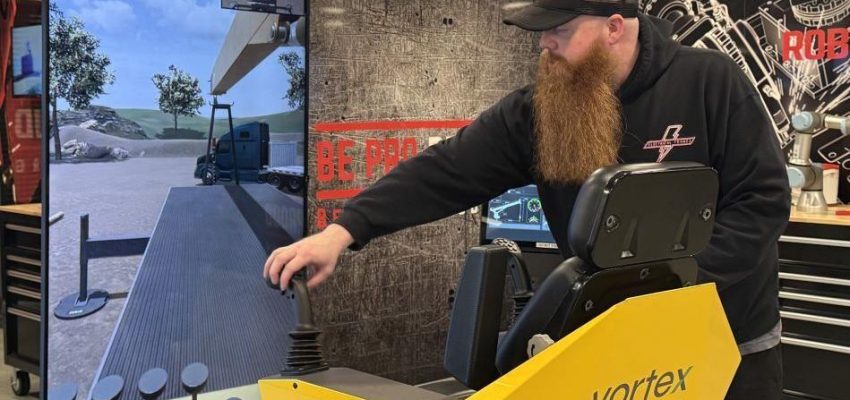

In an era increasingly defined by artificial intelligence, the discourse often centers on groundbreaking algorithms, neural network architectures, and the ethical dilemmas posed by autonomous systems. While theoretical understanding remains foundational, a critical shift is underway: the recognition that true mastery, the ability to innovate and solve real-world problems with AI, stems from hands-on engagement. Just as a craftsman hones their trade through countless hours of practical application, the next generation of AI specialists, data scientists, and engineers must move beyond textbook knowledge to cultivate deep, actionable expertise.
The rapid evolution of AI technologies means that what is cutting-edge today might be commonplace tomorrow. Academia, while essential for foundational knowledge, sometimes struggles to keep pace with industry demands. This creates a widening gap between theoretical comprehension and the real-world application of AI. The challenge isn’t merely about understanding *how* an algorithm works, but *why* it works in certain contexts, *how* to implement it efficiently, and *how* to debug it when it inevitably fails. This nuanced understanding, vital for anyone aspiring to contribute meaningfully to the AI revolution, is cultivated not just in lecture halls, but in labs, on projects, and through direct, iterative experimentation. It’s about bridging the conceptual with the concrete, turning abstract ideas into tangible solutions that drive progress.
Practical AI Skills: The New Cornerstone of Education
The landscape of education is experiencing a profound transformation, driven by the imperative to prepare students for a job market where innovation and adaptability are paramount. For those entering the field of artificial intelligence, theoretical knowledge, while necessary, is no longer sufficient. The demand from industry leaders is unequivocally for individuals who possess strong Practical AI Skills – the ability to not only comprehend complex algorithms but also to implement, optimize, and deploy them in real-world scenarios. This shift reflects a broader recognition that learning by doing is the most effective pathway to genuine proficiency in a rapidly evolving domain like AI.
Consider the iterative nature of AI development. It’s rarely a linear process; rather, it involves hypothesis testing, data cleaning, model training, evaluation, and often, significant debugging and refinement. Each step requires a deep understanding of the tools and methodologies involved, but more importantly, an intuitive grasp of how these elements interact. Without practical engagement, students might understand the concept of overfitting, for instance, but struggle to identify and mitigate it in a live project. They might grasp the theoretical underpinnings of a convolutional neural network but find themselves at a loss when tasked with configuring one for a specific image classification task using real, messy datasets.
Research consistently shows that experiential learning enhances retention and fosters problem-solving abilities far more effectively than passive learning. A 2018 report by IBM highlighted a significant skills gap in areas like AI and data science, emphasizing that while academic institutions are producing graduates, many lack the applied experience crucial for immediate contribution. This isn’t a criticism of academia, but a call for greater integration of hands-on components. Organizations across the globe, from startups to multinational corporations, are actively seeking talent that can hit the ground running, individuals who have grappled with the complexities of real-world data, understood the nuances of model deployment, and navigated the ethical considerations inherent in AI system design.
The complexity of AI in practice extends beyond coding. It encompasses data curation, feature engineering, model selection, hyperparameter tuning, and performance optimization – a symphony of tasks that require not just intellectual understanding, but also a feel for the data and the models themselves. Furthermore, ethical AI design, fairness, and transparency, while discussed theoretically, become acutely tangible when one is building a system that will impact real people. Understanding bias in a dataset or the interpretability of a black-box model is fundamentally different when you are the one responsible for its real-world implications. This necessitates a learning environment where students can experiment freely, fail safely, and learn from their mistakes in a controlled, yet realistic, setting, thereby developing truly valuable Practical AI Skills.
From Classrooms to Codebases: Bridging the Theory-Practice Divide
To effectively cultivate these indispensable Practical AI Skills, educational institutions, industry partners, and individual learners must actively seek and create opportunities for direct engagement. The traditional lecture-and-exam model, while foundational for theoretical understanding, must be augmented by robust practical components that immerse students in the realities of AI development. This paradigm shift encourages a more dynamic, exploratory learning journey, where theoretical knowledge is immediately put to the test.
One of the most effective methods is **project-based learning**. Instead of abstract assignments, students tackle real-world problems, often working in teams. This could involve developing a sentiment analysis tool for social media data, building a recommendation engine, or creating an AI-powered diagnostic assistant. Such projects compel students to confront challenges like data scarcity, computational constraints, and the need for robust evaluation metrics. Similarly, **hackathons and coding challenges** provide intensive, time-bound environments where participants apply their skills under pressure, fostering rapid learning and innovative problem-solving. Platforms like Kaggle, for instance, offer a wealth of datasets and competitions that simulate real-world data science challenges, allowing individuals to benchmark their abilities against a global community.
**Internships, apprenticeships, and co-op programs** represent another crucial bridge. These opportunities provide invaluable exposure to industry-standard tools, workflows, and team dynamics. Working alongside experienced professionals, students gain insights into project management, software engineering best practices, and the commercial pressures that shape AI product development. They learn to navigate version control systems, understand agile methodologies, and contribute to production-grade codebases. This immersive experience is often where the theoretical concepts from textbooks truly coalesce into actionable understanding, turning nascent interest into genuine expertise.
Beyond formal programs, **contributing to open-source AI projects** offers a democratic pathway to practical experience. Engaging with established communities on platforms like GitHub allows individuals to contribute to popular libraries (e.g., TensorFlow, PyTorch), collaborate with diverse teams, and have their code reviewed by seasoned developers. This not only hones coding skills but also provides exposure to collaborative development and code quality standards. Personal projects, though often overlooked, are equally vital. Building a unique AI application from scratch, even a small one, forces the learner to confront every aspect of the development lifecycle, from ideation and data collection to deployment and maintenance. These endeavors are often driven by genuine curiosity and passion, leading to deeper learning and a stronger portfolio.
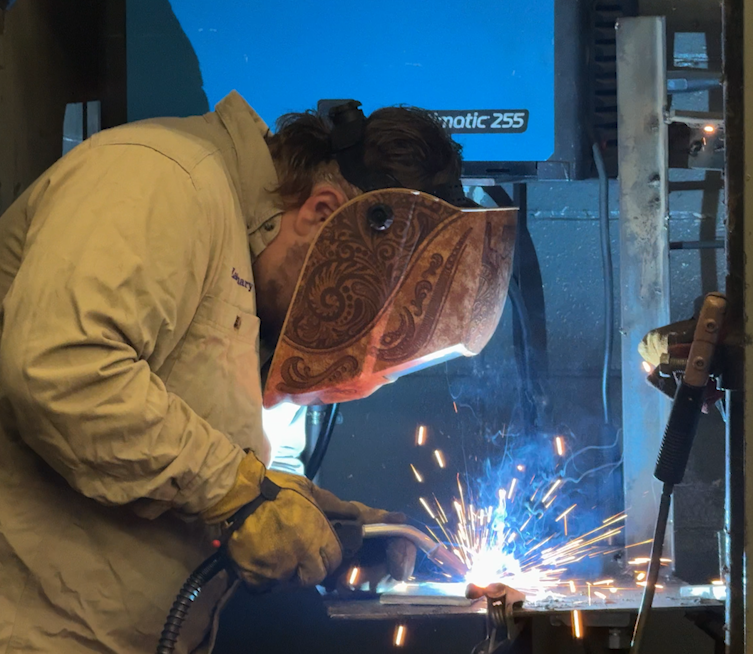
The technological advancements themselves are also facilitating more engaging practical learning. **Simulations and virtual laboratories**, leveraging sophisticated software and cloud computing resources, allow students to experiment with complex AI systems without the need for expensive physical hardware. Digital twins, virtual replicas of physical systems, enable engineers to test AI models in a simulated environment before deployment, reducing risks and accelerating development cycles. Even in traditional trade professions, AI is enhancing practical training; augmented reality (AR) can overlay digital instructions onto real-world equipment, guiding technicians through complex repairs, while AI-powered analytics can optimize training programs based on individual progress.
Forging the Future: Initiatives Cultivating Real-World AI Expertise
Recognizing the paramount importance of Practical AI Skills, numerous initiatives around the world are actively working to reshape education and workforce development. These programs are designed to move beyond passive learning, immersing participants in environments where they can apply AI concepts to tangible challenges, often with direct industry relevance. The success of these models underscores a global commitment to cultivating an AI-competent workforce.
Leading technology companies, for example, have launched their own specialized programs. Google’s AI Residency and Microsoft’s AI School are prime examples, offering intensive, project-based training to aspiring AI researchers and engineers. These programs often blend cutting-edge research with hands-on development, allowing participants to contribute to significant advancements while simultaneously honing their applied expertise. Universities are also increasingly adopting innovative curricula, integrating capstone projects, industry collaborations, and even dedicated AI incubators where students can develop and launch their own AI-driven ventures. This blend of academic rigor with entrepreneurial spirit is proving incredibly effective in preparing graduates for the dynamic demands of the AI industry.
Furthermore, non-profit organizations and government-backed initiatives are playing a crucial role in democratizing access to AI education. Bootcamps, specialized short-term training programs, have surged in popularity, offering intensive, job-focused curricula that emphasize immediate practical application. These programs often focus on specific tools and techniques, such as deep learning with Python or natural language processing, enabling participants to acquire highly sought-after Practical AI Skills in a condensed timeframe. Some initiatives even offer scholarships or free training to underrepresented groups, ensuring that the benefits of the AI revolution are accessible to a broader demographic.
The key to these successful models lies in their emphasis on experiential learning. They prioritize problem-solving, collaborative work, and continuous feedback. They understand that mastery in AI is not just about understanding theories but about developing an intuitive sense for data, algorithms, and systems – a sense that can only be developed through repeated interaction and experimentation. The curriculum often mirrors real-world development cycles, introducing students to version control, agile methodologies, and the complexities of deploying AI models in cloud environments. This comprehensive approach ensures that learners are not only technically proficient but also possess the soft skills – critical thinking, adaptability, communication, and ethical reasoning – that are essential for navigating the complex world of AI. It’s through these concerted efforts that we are steadily building a workforce capable of harnessing AI’s full potential.
In conclusion, as artificial intelligence continues its relentless march, transforming industries and redefining job roles, the emphasis on Practical AI Skills will only intensify. The era of purely theoretical AI understanding is giving way to a new paradigm where hands-on experience, real-world application, and continuous learning are paramount. From academic institutions integrating robust project-based learning to industry-led apprenticeships and innovative bootcamps, the commitment to bridging the gap between theory and practice is a shared imperative. These initiatives are not just about training the next generation of AI professionals; they are about equipping them with the agency to shape a future where AI serves humanity effectively and ethically.
The journey to AI mastery is an ongoing one, characterized by curiosity, persistence, and a willingness to get one’s hands dirty with data and code. For aspiring AI specialists and seasoned professionals alike, embracing a mindset of continuous practical engagement is no longer an option but a necessity. By investing in comprehensive, experience-driven education, we empower individuals to not only understand the algorithms but to innovate with them, solve pressing global challenges, and ultimately, build a more intelligent and prosperous future for all.