
In a world increasingly shaped by algorithms, neural networks, and machine learning, the field of Artificial Intelligence stands as one of the most exciting and transformative frontiers of human innovation. As an AI specialist and tech enthusiast, I’ve witnessed firsthand the breathtaking pace at which AI evolves, redefining industries from healthcare to finance, entertainment to logistics. This rapid acceleration, while exhilarating, also presents a unique challenge for aspiring professionals: how does one effectively navigate such a complex, ever-shifting landscape to build a meaningful career? The academic foundations are crucial, undoubtedly, but the true crucible for expertise, I believe, lies in practical, hands-on experience – much like an internship program that allows students to immerse themselves in real-world scenarios, shadowing experts and learning by doing. The journey into AI is not merely about understanding complex theoretical models; it’s about applying them, refining them, and often, inventing new ones, all within the dynamic context of real-world problems.
The demand for skilled AI professionals is skyrocketing. Reports from sources like LinkedIn and the World Economic Forum consistently highlight AI and Machine Learning Specialists among the top emerging job roles globally. However, the path to becoming proficient in AI is far from linear. It requires a blend of deep technical knowledge, creative problem-solving, ethical awareness, and a keen understanding of various domain applications. This is where the concept of experiential learning becomes not just beneficial, but absolutely indispensable. Imagine stepping out of the classroom, where theoretical concepts are meticulously taught, and into a lab or a tech company’s innovation hub, where those theories are tested, sometimes fail, and are ultimately transformed into groundbreaking solutions. This transition from abstract knowledge to tangible application is precisely what equips the next generation of AI leaders and innovators. It’s about gaining an intimate understanding of the ‘how’ and ‘why,’ not just the ‘what.’
AI Career Exploration: Bridging Theory and Practice
The chasm between academic theory and real-world application is a common challenge across many STEM fields, but it is particularly pronounced in Artificial Intelligence due to its rapid evolution and interdisciplinary nature. Universities provide an invaluable bedrock of knowledge in mathematics, statistics, computer science, and core AI concepts like deep learning architectures, natural language processing, and computer vision. Yet, knowing the intricacies of a convolutional neural network is one thing; deploying it to accurately classify medical images in a clinical setting or to enhance autonomous driving systems is another entirely. This is where **AI career exploration** through structured programs offers an unparalleled advantage.
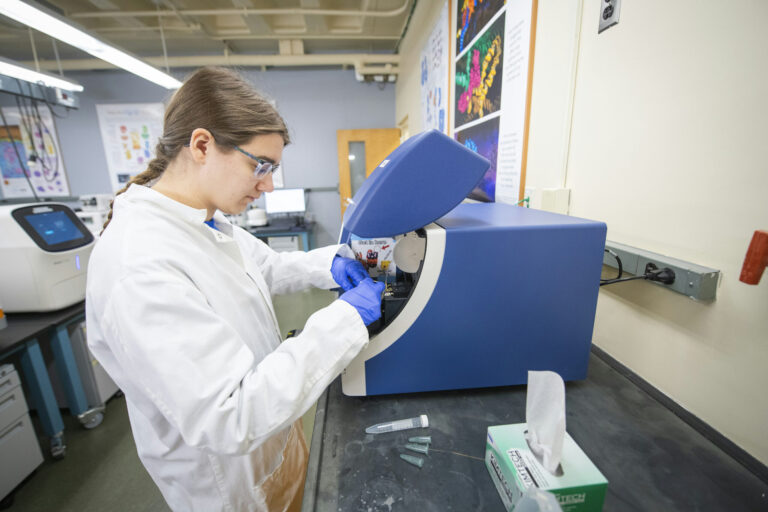
Experiential learning initiatives, be they formal internships, apprenticeships, or project-based collaborations, serve as vital bridges. They allow individuals to apply their classroom knowledge to live datasets, grapple with imperfect real-world data, and understand the practical constraints and ethical considerations inherent in AI development. In such environments, learning isn’t confined to textbooks; it’s a dynamic process of experimentation, debugging, iteration, and collaboration. Participants might find themselves shadowing senior data scientists as they engineer features for a predictive model, observing machine learning engineers fine-tuning algorithms for optimal performance, or working alongside AI researchers pushing the boundaries of generative AI. This ‘shadowing’ is not passive observation; it often involves active participation, contributing to code reviews, brainstorming sessions, and even small, independent projects that feed into larger initiatives. For instance, an intern might be tasked with cleaning and preprocessing a massive, unstructured dataset – a seemingly mundane but critically important task that teaches invaluable lessons about data integrity and real-world data challenges.
Furthermore, these programs expose aspiring AI professionals to the diverse facets of the industry that extend beyond just coding. They learn about project management, stakeholder communication, the business implications of AI deployments, and the crucial role of interdisciplinary teams comprising domain experts, ethicists, and UI/UX designers. This holistic exposure is vital for comprehensive **AI career exploration**, helping individuals identify not just *what* they can do with AI, but *where* their specific talents and passions align within the broader AI ecosystem. Is it in cutting-edge research, developing robust MLOps pipelines, crafting ethical AI frameworks, or translating complex AI solutions for business leaders? These are questions best answered through direct engagement, not solely through theoretical study.
The Unseen Curricula: Mentorship and Hands-On Learning in AI
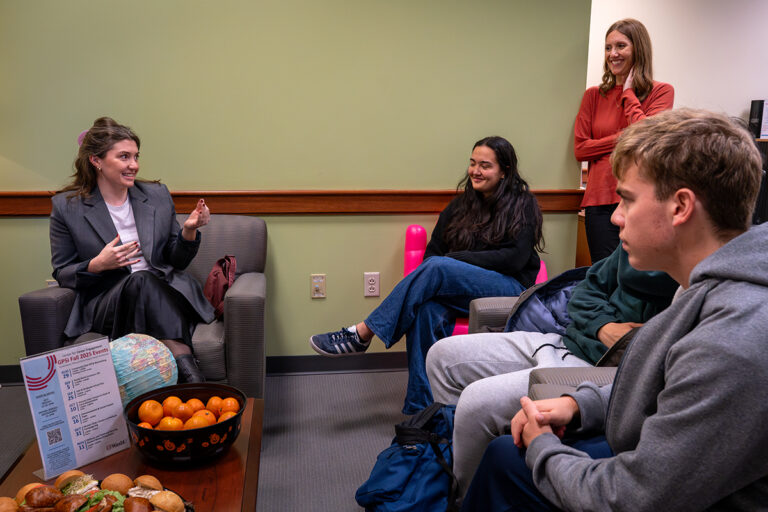
Beyond the structured tasks, one of the most profound benefits of experiential programs in AI is the access they provide to mentorship. In a field as complex and rapidly changing as AI, guidance from experienced professionals is invaluable. A mentor can illuminate best practices, offer insights into industry trends, help navigate technical roadblocks, and provide career advice that transcends academic counseling. This ‘unseen curricula’ of mentorship is often where true learning accelerates. Imagine having an expert AI engineer explain their decision-making process when choosing between different model architectures or a seasoned data scientist detailing how they approach feature selection for optimal model performance. These are the nuances that cannot be fully captured in a lecture hall but are absorbed through active collaboration and direct observation.
Hands-on learning in AI often involves working on projects that have real-world implications, even if they are proof-of-concept models. This could range from developing a sentiment analysis tool for customer feedback, optimizing a recommendation engine, or contributing to an open-source library that supports responsible AI development. The process of taking a problem from conception to a working solution, even a rudimentary one, is transformative. It develops critical skills such as problem decomposition, algorithm selection, programming proficiency (especially in Python, with libraries like TensorFlow, PyTorch, and scikit-learn), model evaluation, and deployment strategies. For example, an aspiring AI engineer might spend weeks wrestling with data preprocessing, only to discover the power of a specific imputation technique, learning far more deeply than any textbook could convey. Moreover, the emphasis on robust documentation, version control, and collaborative coding in such programs prepares individuals for the realities of professional software development.
Companies and research institutions increasingly recognize the imperative of fostering new talent through these channels. Many, much like Kaiser Permanente’s initiative in healthcare, are investing in AI talent development programs. These initiatives are not just about finding future employees; they are about contributing to the broader AI ecosystem, ensuring a steady pipeline of skilled professionals who can drive innovation responsibly. Such programs often expose participants to cutting-edge tools and cloud platforms (AWS, Azure, GCP) that are standard in industry but might be less accessible in an academic setting. Furthermore, the collaborative nature of these experiences fosters ‘soft skills’ that are often overlooked but are equally critical in AI: teamwork, communication, adaptability, and resilience in the face of complex challenges. The ability to articulate complex technical concepts to non-technical stakeholders, for instance, is a skill honed through practical application and mentorship.
Cultivating the Next Generation of AI Innovators
The impact of robust experiential learning programs extends far beyond the individual participant; it plays a crucial role in cultivating the next generation of AI innovators who will shape the future of technology and society. By providing early exposure to real-world AI challenges and ethical considerations, these programs instill a sense of responsibility and foresight in nascent professionals. Participants learn not just *how* to build AI, but *why* certain ethical guardrails are necessary, how to mitigate bias in data and models, and the societal implications of their work. This is particularly vital as AI systems become more autonomous and influential in critical domains like healthcare, finance, and criminal justice.
These programs also serve as powerful catalysts for diversity and inclusion within the AI field. By offering accessible pathways and mentorship, they can attract individuals from underrepresented backgrounds who might otherwise feel intimidated or lack the necessary connections to enter such a specialized domain. A more diverse talent pool leads to more robust, equitable, and innovative AI solutions, as varied perspectives help identify and address potential biases or blind spots in data and algorithm design. Statistics show that companies with diverse teams are more innovative and achieve better business outcomes, and the same principle applies with even greater weight to AI development.
Looking ahead, the individuals currently participating in these experiential learning programs are the very architects of tomorrow’s AI landscape. They will be the ones pushing the boundaries of foundation models, designing intelligent agents, and integrating AI seamlessly into every aspect of human life. Their early exposure to practical problem-solving, ethical dilemmas, and collaborative innovation equips them with the adaptability and critical thinking skills necessary to navigate an ever-changing technological frontier. The hands-on experience gained today will translate into leadership roles, groundbreaking research, and responsible AI deployments in the years to come, ensuring that the incredible power of artificial intelligence is harnessed for collective good.
In conclusion, while academic rigor forms the bedrock of an AI education, it is the bridge of practical, experiential learning that truly transforms aspiring enthusiasts into proficient AI specialists. Programs that offer opportunities for **AI career exploration** through hands-on projects, direct mentorship, and exposure to real-world challenges are not just valuable; they are indispensable. They provide the ‘unseen curricula’ that builds resilience, hones critical thinking, and fosters a deep understanding of the ethical and societal implications of artificial intelligence.
As we stand on the cusp of an AI-driven future, the responsibility of cultivating knowledgeable, skilled, and ethically-minded professionals rests heavily on providing these crucial avenues for development. For anyone looking to make a significant impact in this dynamic field, seeking out and engaging with such experiential learning opportunities is not merely a recommendation but a necessity. It is through this blend of theoretical knowledge and practical application that the next generation will truly chart their course and unlock the full, transformative potential of AI.