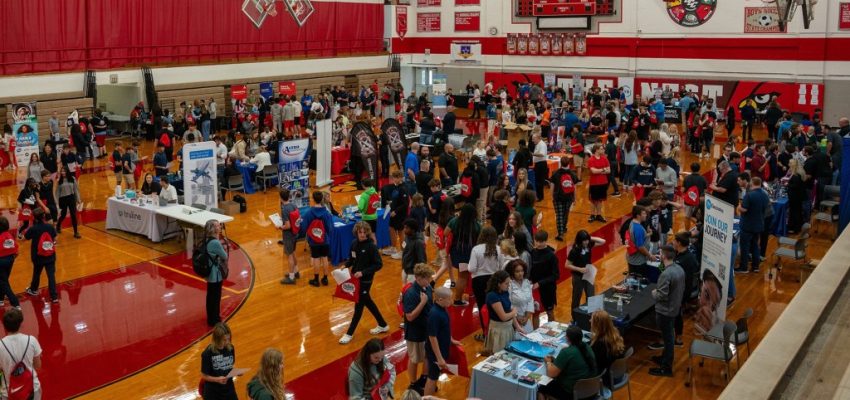

In an era defined by rapid technological advancement, the landscape of nearly every industry is undergoing a profound transformation. Manufacturing, often perceived as a traditional sector, is at the forefront of this revolution, driven by the pervasive influence of artificial intelligence. It’s a shift that demands a new perspective, new skills, and a forward-thinking approach to workforce development. This is precisely why initiatives like the 2025 Think Manufacturing Career Expo, entering its 12th year and scheduled to take place at North High School in Eastlake, are more critical than ever.
Hosted by the Alliance for Working Together Foundation (AWT), this event serves as a vital bridge between the innovators of today and the workforce of tomorrow. It’s not just about showcasing existing jobs; it’s about illuminating the boundless possibilities that emerge when human ingenuity collaborates with intelligent machines. As an AI specialist and enthusiast, I find these moments particularly inspiring, for they signify a collective commitment to shaping a future where technology empowers, rather than displaces, human potential. Manufacturing is no longer merely about brute force or repetitive tasks; it’s a high-tech domain, a crucible of innovation where AI, robotics, and data analytics converge to create unprecedented efficiencies and entirely new career paths.
Manufacturing Careers: Navigating the AI Revolution
The image of a manufacturing plant often conjures visions of noisy assembly lines and highly repetitive manual labor. While such elements still exist, they are increasingly complemented, and in many cases, augmented or replaced, by sophisticated automation and artificial intelligence systems. We are firmly in the age of Industry 4.0, a paradigm shift characterized by the integration of cyber-physical systems, the Internet of Things (IoT), cloud computing, and, crucially, AI. This transformation is not just a technological upgrade; it’s a fundamental reimagining of what manufacturing careers entail.
AI’s influence permeates every stage of the manufacturing lifecycle. In product design, generative AI algorithms can rapidly explore thousands of design permutations, optimizing for weight, material usage, and structural integrity far beyond human capacity. This means designers of the future will spend less time on iterative drawing and more time on guiding AI, interpreting results, and focusing on creative problem-solving. On the production floor, AI-powered predictive maintenance systems analyze sensor data from machinery to anticipate failures before they occur, dramatically reducing costly downtime and extending equipment lifespans. This shifts the role of a maintenance technician from reactive repair to proactive data analysis and system optimization, requiring skills in sensor diagnostics, data interpretation, and machine learning fundamentals.
Quality control, traditionally a meticulous and often tedious human task, is being revolutionized by AI-driven vision systems. These systems can inspect products with unparalleled speed and accuracy, identifying defects that might be missed by the human eye, ensuring consistent product quality at scale. Furthermore, robotics, once a staple of automotive plants, are now becoming more versatile and accessible. Collaborative robots, or cobots, work alongside human operators, handling repetitive or dangerous tasks, thereby freeing human workers to focus on more complex, value-added activities. This creates demand for robotics engineers, AI programmers, and automation specialists who can design, deploy, and manage these intelligent systems, effectively merging the digital and physical worlds.
Even beyond the factory floor, AI is optimizing supply chain management, using sophisticated algorithms to forecast demand, manage inventory, and streamline logistics, leading to more resilient and efficient operations. This means new roles in supply chain analytics, demand planning with AI, and even ethical AI deployment, as businesses grapple with the implications of automated decision-making. The global market for AI in manufacturing is projected to grow significantly, indicating a burgeoning demand for professionals equipped with these modern skills. Data from various market research firms consistently points to a compound annual growth rate (CAGR) exceeding 20% for AI in manufacturing over the next decade, underlining the immense opportunity within these evolving manufacturing careers.
The Skills Gap and the New Manufacturing Professional
While the opportunities presented by AI in manufacturing are vast and exciting, they also highlight a growing challenge: the skills gap. The rapid pace of technological change often outstrips the traditional educational pipeline, leaving many industries scrambling for talent that possesses the requisite blend of technical prowess and critical thinking. The new manufacturing professional is not just an engineer or a technician; they are increasingly a data scientist, an AI integration specialist, a cybersecurity analyst, and a human-machine interface designer, all rolled into one.
These roles demand proficiency in areas like machine learning algorithms, industrial IoT protocols, cloud computing platforms, and advanced data visualization tools. Beyond the hard skills, soft skills such as adaptability, problem-solving, interdisciplinary collaboration, and continuous learning are paramount. A successful professional in this landscape must be able to work alongside AI, understanding its capabilities and limitations, and leveraging it to enhance productivity and innovation. They must be adept at translating complex data into actionable insights and at communicating effectively across diverse teams, from engineers to business strategists.
This is where career expos like Think Manufacturing prove invaluable. They serve as a crucial interface, connecting aspiring students and job seekers directly with companies that are actively embracing these advanced technologies. Attendees can experience firsthand demonstrations of robotics, virtual reality simulations of factory floors, and interact with professionals who are living and breathing the future of manufacturing. These interactions are vital for demystifying complex technologies and showcasing the tangible paths into these innovative manufacturing careers. Moreover, such events often highlight the importance of STEM (Science, Technology, Engineering, and Mathematics) education, emphasizing foundational knowledge in these areas as a springboard for specialization in AI, robotics, and automation. By fostering these connections, the AWT Foundation and similar organizations play a pivotal role in ensuring that the next generation is not only aware of these opportunities but also equipped with the tools to seize them.
From Eastlake to the Global Stage: The Ripple Effect of Local Initiatives
The 2025 Think Manufacturing Career Expo, while rooted in a specific community at North High School in Eastlake, represents a micro-cosmic reflection of a global trend. Local initiatives like this are the bedrock upon which future economic vitality and technological leadership are built. The Alliance for Working Together (AWT) Foundation, by spearheading this event for over a decade, demonstrates a profound understanding of this principle. Their mission, which typically involves fostering partnerships between educators, manufacturers, and the community, is essential for cultivating a robust local talent pipeline that can sustain and propel the region’s industrial sector.
By bringing together local manufacturers, educators, and students, these expos provide an indispensable platform for dialogue and discovery. Students from Eastlake and surrounding areas gain exposure to cutting-edge technologies and diverse job functions they might not otherwise encounter. They can engage with engineers demonstrating automated welding, programmers explaining machine vision, or data analysts discussing predictive analytics in real-time manufacturing scenarios. This hands-on, interactive experience can ignite a passion for technology and engineering, guiding students towards relevant academic pathways and ultimately, into fulfilling manufacturing careers.
Furthermore, these local events play a crucial role in combating misconceptions about manufacturing. They showcase modern facilities that are clean, safe, and technologically advanced, dismantling outdated stereotypes of dark, dirty factories. They highlight the intellectual rigor and creativity involved in designing, operating, and optimizing these complex systems. The ripple effect of such expos extends beyond individual career choices; they contribute to strengthening regional economies by ensuring a steady supply of skilled labor for local industries. This local investment in talent development contributes to a broader national capacity for innovation, allowing regions to attract new businesses, retain existing ones, and stay competitive on the global stage, especially in an era where technological prowess is a key differentiator.
The longevity of the Think Manufacturing Career Expo – now in its 12th year – is a testament to its sustained impact and the ongoing need for such initiatives. It underscores the continuous evolution of the manufacturing sector and the commitment of organizations like AWT to keep pace with these changes, particularly in integrating advanced concepts like AI and smart factory principles into career exploration and development. These events are not just job fairs; they are portals to the future, inviting young minds to ‘think manufacturing’ not as a relic of the past, but as a dynamic and innovative frontier.
The future of manufacturing is undeniably intertwined with artificial intelligence. From the design studio to the factory floor, and across the entire supply chain, AI is reshaping processes, enhancing efficiency, and, most importantly, creating a wealth of new and exciting manufacturing careers. Events like the 2025 Think Manufacturing Career Expo are vital catalysts in this evolution, bridging the gap between education and industry, and inspiring the next generation to embrace the opportunities that this technological revolution presents. They demonstrate that manufacturing is no longer a traditional industry but a vibrant, high-tech ecosystem demanding innovation, adaptability, and a new blend of human and artificial intelligence.
As we look ahead, the continued success of the manufacturing sector, both locally and globally, will hinge on our collective ability to nurture talent that can navigate and lead in this AI-driven landscape. Investing in STEM education, supporting career development initiatives, and fostering strong industry-education partnerships are paramount. The synergy between human creativity and AI’s analytical power holds the promise of an industrial future that is not only more productive but also more sustainable and inclusive. It is an exciting journey, and I encourage everyone – students, educators, and industry leaders alike – to engage with these transformative opportunities and contribute to shaping the intelligent factories and innovative careers of tomorrow.