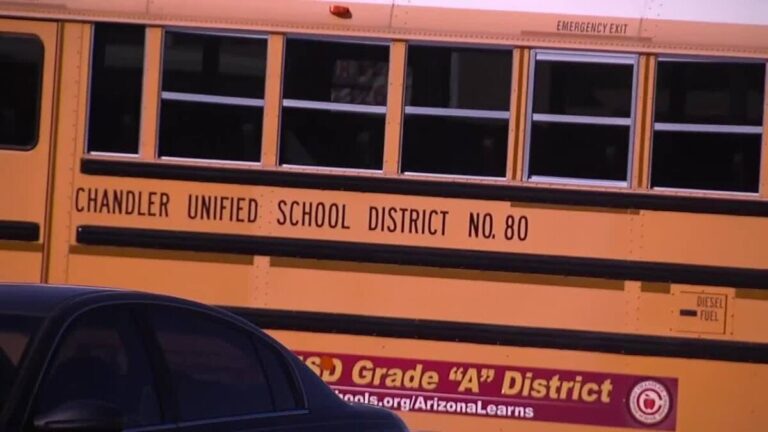
In the bustling corridors of the East Valley, a seemingly localized challenge concerning student transportation has brought into sharp focus a much larger, more pressing issue facing communities worldwide: the imperative to nurture and protect access to vital career and technical education. School districts in the East Valley are grappling with the potential loss of student access to the highly regarded East Valley Institute of Technology (EVIT) campuses, all due to the absence of a renewed intergovernmental agreement for busing. While this might appear to be a logistical or bureaucratic hiccup, it represents a profound threat to educational equity and, more critically, to the development of the essential capabilities our societies need to thrive in an era increasingly defined by artificial intelligence and rapid technological advancement.
As an AI specialist and someone deeply invested in the intersection of technology and human potential, I see this local predicament as a powerful microcosm. It underscores the fragility of pathways that lead young individuals to acquire tangible, in-demand expertise – skills that are not only recession-proof but are also becoming indispensable in an AI-augmented world. The ability to innovate, maintain, and adapt to emerging technologies rests squarely on the shoulders of a well-trained populace. When access to programs fostering these very competencies is jeopardized, we risk not only individual futures but also the collective economic resilience and technological leadership of our communities. This article will delve into why safeguarding these educational avenues is more critical than ever, especially as we navigate the exciting, yet challenging, terrain of the AI revolution.
Future Workforce Skills: A Foundation for Economic Resilience
The narrative around education often centers on traditional four-year degrees, yet the backbone of our modern economy, particularly in a hyper-connected, tech-driven world, relies heavily on vocational and technical proficiencies. Institutions like the East Valley Institute of Technology (EVIT) are not merely alternative schools; they are incubators for the competencies that power industries. Offering programs ranging from advanced manufacturing, culinary arts, healthcare sciences, and cosmetology to automotive repair, welding, and sophisticated IT and cybersecurity, EVIT provides practical, hands-on training that translates directly into high-demand careers.
Consider the impact of such programs. They address the critical ‘skills gap’ – a chasm between the abilities employers need and those available in the labor market. According to a 2021 report by the National Association of Manufacturers (NAM), nearly 2.1 million manufacturing jobs could go unfilled by 2030, largely due to a lack of skilled workers. Similarly, the cybersecurity field faces a global talent shortage of over 3.4 million people, as highlighted by ISC². These aren’t just abstract statistics; they represent tangible opportunities for individuals and significant vulnerabilities for businesses and national security. Career and Technical Education (CTE) programs are specifically designed to fill these voids, equipping students with certifications and practical experience that make them job-ready upon graduation or provide a strong foundation for further specialized training.
Moreover, the rise of artificial intelligence is not solely about automating tasks; it’s about transforming entire industries and creating entirely new job categories. While AI streamlines repetitive processes, it simultaneously amplifies the need for human skills that are inherently complex and adaptive. We need AI trainers who understand data ethics, robotics technicians who can maintain sophisticated automated systems, prompt engineers who can effectively communicate with large language models, and skilled tradespeople who can work alongside or integrate AI tools into their craft. An electrician using AI to optimize building energy systems, a mechanic diagnosing vehicle issues with AI-powered diagnostics, or a manufacturing technician programming collaborative robots – these are the real-world applications of AI that demand a blend of traditional technical expertise and digital literacy. Thus, the foundation laid by comprehensive CTE programs directly cultivates these vital **future workforce skills**.
The economic ripple effect is substantial. By fostering a local pool of skilled talent, communities attract new businesses, support existing ones, and reduce unemployment rates. Students, many of whom might not thrive in conventional academic settings, find purpose and pathways to self-sufficiency. Losing access to these programs isn’t just about a missed bus; it’s about stifling economic growth, exacerbating the skills gap, and denying a generation the chance to build fulfilling, impactful careers in an increasingly technological world.
Bridging the Gap: The Imperative of Accessible Technical Education
The specific challenge in the East Valley – the lack of an intergovernmental agreement for busing – might seem like a minor administrative hurdle, but its implications are far-reaching. For many students, reliable transportation is not a convenience; it is the absolute gateway to opportunity. Without it, the specialized training offered at EVIT becomes geographically and economically inaccessible. This isn’t just about equity; it’s about whether we truly believe in maximizing human potential across all demographics.
Imagine a student passionate about aviation technology, eager to learn how to maintain and repair aircraft – a sector that continually demands highly skilled technicians. If the bus route vanishes, that student, particularly if they lack personal transportation or financial means, may be forced into a less desirable, less suitable educational path. The dream of a fulfilling career in a high-growth industry dims, simply because of a bureaucratic impasse. This scenario plays out in various forms when access to CTE programs is curtailed.
These programs offer more than just job training; they provide practical problem-solving abilities, critical thinking, teamwork, and a strong work ethic – all invaluable soft skills that complement technical expertise. They also often lead to industry-recognized certifications, which act as immediate credentials for employment, bypassing the often-lengthy and expensive four-year degree track for those seeking direct entry into the workforce. For instance, an HVAC technician with a specific certification can immediately contribute to the energy efficiency and comfort of buildings, a vital service in any climate.
The historical context of vocational training has often been undervalued, seen as a secondary option. However, in an age where AI is automating routine tasks, the demand for human skills in complex problem-solving, creative application, and hands-on maintenance is surging. The ability to physically build, repair, and innovate remains uniquely human, even as AI assists and enhances these processes. The foundational skills taught in programs like EVIT – precision, diagnosis, practical engineering, and craftsmanship – are precisely the types of **future workforce skills** that will be most resistant to full automation and most highly valued in an AI-integrated economy.
The intergovernmental agreement, therefore, is not just about funding buses; it’s about a collective societal commitment to ensuring that every student, regardless of their background or zip code, has the chance to acquire these invaluable capabilities. It’s about recognizing that investing in accessible technical education is investing in the long-term prosperity and adaptability of our communities in the face of unprecedented technological change. Without such an agreement, we risk creating a deeper divide, where opportunities for a skilled career become a privilege rather than an accessible pathway for all.
Cultivating Talent: Collaborative Solutions for a Tech-Driven Tomorrow
The challenges faced by the East Valley school districts, while specific to their region, echo a broader call to action for communities everywhere. Safeguarding access to career and technical education requires a multi-faceted, collaborative approach involving policymakers, educators, businesses, and parents. It’s not enough to simply acknowledge the value of these programs; proactive measures are needed to ensure their sustainability and expansion.
One crucial avenue is the re-evaluation of funding models. Intergovernmental agreements, while sometimes complex, are essential mechanisms for pooling resources and sharing responsibilities. Policymakers must prioritize finding sustainable solutions that ensure consistent funding for transportation and program development. This might involve exploring state-level grants specifically allocated for CTE accessibility, or encouraging innovative public-private partnerships where local businesses, who directly benefit from a skilled labor force, contribute to transportation or program costs. For example, a major tech company needing a steady stream of IT professionals might invest in local high school computer science programs or busing initiatives.
Beyond funding, communities can leverage technology itself to enhance accessibility. While an immediate solution to the busing issue isn’t AI-driven, in the long term, AI could optimize transportation routes, reduce costs, and even predict demand fluctuations, making logistics more efficient. More broadly, AI can transform CTE delivery: virtual reality (VR) simulations for hands-on training in dangerous environments (like welding or advanced manufacturing), AI-powered tutors offering personalized learning experiences, and predictive analytics that identify emerging job trends to keep curricula relevant and agile. These are not futuristic fantasies; they are tools already being implemented in progressive educational institutions.
Moreover, a sustained dialogue between industries and educational institutions is vital. Businesses can provide invaluable input on the most in-demand **future workforce skills**, ensuring that CTE programs remain aligned with industry needs. Internships, apprenticeships, and mentorship programs sponsored by local companies can provide students with real-world experience and direct pathways to employment, strengthening the entire ecosystem. Advocacy from parents and community leaders is also paramount, pushing for legislative support and increased public awareness of the profound impact of these programs.
Ultimately, cultivating talent for a tech-driven tomorrow means fostering an environment where every student can envision a viable, fulfilling career path. It means tearing down barriers, whether logistical or financial, that prevent aspiring welders from learning their craft, future healthcare professionals from gaining clinical experience, or nascent IT specialists from mastering cybersecurity. It means investing in the infrastructure – physical and educational – that empowers individuals to not just survive but thrive in an economy shaped by AI, ready to adapt, innovate, and contribute meaningfully.
The challenge in the East Valley serves as a potent reminder: the seemingly small details of local governance can have monumental consequences on individual lives and the collective future. Ensuring that students can access critical career and technical programs like those at EVIT is not merely about providing a ride; it’s about laying the groundwork for a robust, resilient **future workforce skills** capable of navigating and shaping the complexities of an AI-powered world. It’s about recognizing that every student equipped with valuable expertise strengthens the entire community, fostering innovation, economic stability, and social mobility.
As we look ahead, the integration of artificial intelligence will continue to redefine industries and create new demands for human ingenuity and skill. Our collective responsibility is to ensure that education systems are agile, adaptable, and, crucially, accessible. We must champion policies and foster collaborations that prioritize vocational and technical training, recognizing it as an indispensable pillar of modern education. By doing so, we empower the next generation not just to participate in the AI revolution, but to lead it, creating a more prosperous and equitable future for all.