
In an era defined by unprecedented technological advancement, few fields capture the imagination and promise of transformation quite like Artificial Intelligence. As an AI specialist and enthusiast, I’m constantly struck by the sheer velocity of innovation and the profound impact AI is having across every conceivable sector. This rapid evolution isn’t just reshaping industries; it’s creating an entirely new landscape of professional possibilities, igniting a fervent interest among students and seasoned professionals alike: the world of AI career opportunities.
Just as past generations explored paths in traditional manufacturing or burgeoning IT, today’s students are gazing into a future where AI is not merely a tool but a foundational layer of society. The questions are no longer ‘if’ AI will transform our world, but ‘how’ and ‘who’ will be at the helm. It’s an exciting time to be alive, particularly for those with a curiosity for learning, a passion for problem-solving, and a desire to build the future. The pace of change can seem dizzying, but it also presents a unique invitation: to become an architect of tomorrow. As we navigate this complex yet exhilarating landscape, understanding the diverse facets of AI career opportunities becomes paramount for anyone looking to make a meaningful mark.
AI career opportunities: A Spectrum of Innovation
The perception of an AI professional often conjures images of a solitary coder hunched over lines of complex algorithms. While coding is certainly a foundational skill for many, the reality of AI career opportunities is far richer and more varied than one might imagine. The field is inherently interdisciplinary, drawing on mathematics, statistics, computer science, cognitive science, philosophy, and even linguistics. This means that a multitude of skill sets can find a home within AI, contributing to its development and deployment in unique ways.
Consider the role of a Machine Learning Engineer. These professionals are the architects of intelligent systems, designing, building, and deploying algorithms that learn from data. They might work on recommendation systems for e-commerce, predictive maintenance for industrial machinery, or even sophisticated fraud detection tools in finance. Their work demands strong programming skills (often in Python or R), a deep understanding of machine learning models, and the ability to work with large datasets. Similarly, Data Scientists are crucial, serving as the bridge between raw data and actionable insights. They not only clean and analyze vast amounts of information but also develop the statistical models that power AI applications, often communicating complex findings to non-technical stakeholders.
Beyond these core roles, the spectrum expands dramatically. Natural Language Processing (NLP) Engineers, for instance, specialize in teaching computers to understand, interpret, and generate human language – powering everything from chatbots and virtual assistants to advanced translation services. Computer Vision Engineers, on the other hand, equip machines with the ability to ‘see’ and interpret visual data, critical for autonomous vehicles, medical imaging analysis, and facial recognition technologies. Then there are AI Researchers, pushing the boundaries of what’s possible, exploring new algorithms, theoretical frameworks, and innovative applications that will define the next generation of AI. These are just a few examples of the myriad of AI career opportunities emerging in this dynamic field.
But the demand isn’t solely for those with deep technical expertise. As AI systems become more pervasive, the ethical implications become increasingly complex. This has given rise to roles like AI Ethicists, who ensure that AI systems are developed and deployed responsibly, fairly, and transparently, mitigating biases and preventing harm. UX/UI Designers specializing in AI are also vital, tasked with making complex AI interactions intuitive and user-friendly. Project Managers with an understanding of AI development cycles are in high demand to shepherd these intricate projects from conception to completion. This broad appeal means that students from diverse academic backgrounds – not just STEM – can find compelling AI career opportunities by specializing or adapting their skills.
Transforming Industries: AI’s Pervasive Impact and New Roles
What makes AI career opportunities particularly exciting is that they are not confined to the tech sector. Artificial intelligence is a general-purpose technology, much like electricity or the internet, permeating and transforming every industry imaginable. This means that the skills cultivated in AI development are transferable and highly valued across a vast array of traditional fields, fundamentally reshaping job functions and creating entirely new ones.
Take manufacturing, for instance – an industry often perceived as traditional. AI is revolutionizing factory floors through predictive maintenance, optimizing supply chains, enhancing quality control with computer vision, and powering collaborative robots (cobots) that work alongside human employees. This isn’t about replacing human workers wholesale but rather augmenting their capabilities and creating new roles focused on managing, programming, and maintaining these intelligent systems. For students interested in manufacturing, understanding AI now means they’re not just learning about current processes, but also preparing for roles like AI-driven production optimizers, robotic systems integrators, or smart factory managers. The skills for these AI career opportunities involve a blend of engineering, data analysis, and an understanding of operational technology.
In healthcare, AI is assisting in diagnostics, personalizing treatment plans, accelerating drug discovery, and streamlining administrative tasks. This has created roles for AI specialists in medical imaging, bioinformatics, and health data analytics. The financial sector leverages AI for algorithmic trading, fraud detection, personalized banking, and risk assessment, demanding experts in financial AI and quantitative analysis. Even creative fields like art, music, and writing are seeing AI emerge as a collaborative partner, leading to roles like AI content creators or AI-assisted designers.
The World Economic Forum consistently highlights AI as a top driver of job growth, predicting the creation of millions of new jobs by the mid-2020s, even as some existing roles evolve. This growth isn’t just about technical specialists; it’s about a broader societal need for individuals who can understand, implement, and ethically govern AI technologies. The economic impact is profound: Statista projects that the global AI market will reach nearly $2 trillion by 2030, underscoring the immense investment and expansion fueling these AI career opportunities.
Preparing the Next Generation for an AI-Powered World
Given the explosive growth and pervasive impact of AI, preparing the next generation to thrive in an AI-powered world is not just an educational goal; it’s an economic imperative. For students currently navigating their academic choices, understanding the pathways into AI career opportunities is crucial. This journey often begins with a strong foundation in STEM fields – science, technology, engineering, and mathematics – which provide the analytical and problem-solving skills essential for AI.
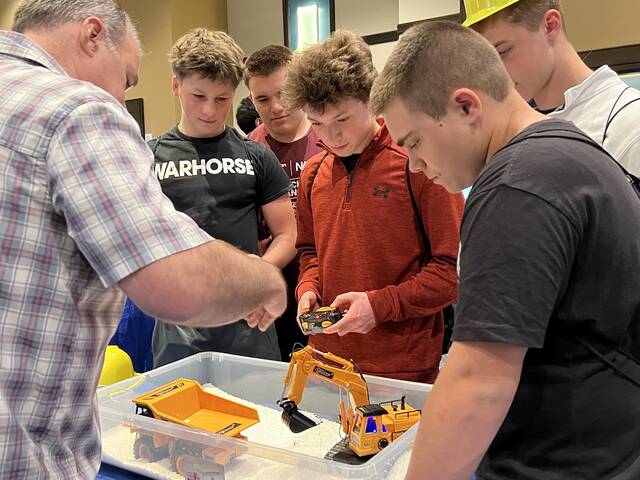
However, education for an AI future extends beyond traditional academics. It involves fostering critical thinking, creativity, and adaptability. The ability to learn continuously and pivot skills will be invaluable, as AI itself is an ever-evolving domain. Furthermore, an understanding of ethics, philosophy, and societal impact is increasingly vital. As AI systems become more autonomous, the human element of judgment, compassion, and responsibility becomes even more pronounced. Educational institutions are responding by developing specialized AI programs, offering bootcamps, and integrating AI concepts across various curricula. Initiatives that allow students to explore and learn about AI through workshops, hackathons, and mentorship programs, much like career day events in other industries, are paramount.
Practical experience is also a cornerstone for aspiring AI professionals. Internships, personal projects, and participation in online communities or open-source AI projects can provide invaluable hands-on learning and build a portfolio that showcases skills. Developing ‘soft skills’ such as communication, collaboration, and problem-solving is equally important, as AI projects are often complex, multidisciplinary endeavors requiring effective teamwork. For instance, an AI specialist might need to explain a complex model’s limitations to a business executive or collaborate with a domain expert who understands the problem but not the AI solution.
The journey into AI career opportunities is an exciting one, but it requires dedication and a forward-looking mindset. Students today are not just preparing for jobs that exist; they are preparing for roles that haven’t even been conceived yet. This requires a flexible mindset, a willingness to embrace continuous learning, and an unyielding curiosity about the possibilities that AI unlocks. The future belongs to those who are ready to engage with technology not just as users, but as creators and innovators.
The landscape of AI career opportunities is undoubtedly one of the most dynamic and promising frontiers of our time. From the intricate logic of machine learning algorithms to the profound ethical considerations of autonomous systems, AI offers a wealth of pathways for individuals eager to make a significant impact. It is a field that demands both intellectual rigor and imaginative foresight, attracting a diverse array of talent to tackle some of humanity’s most pressing challenges. As an AI specialist, I am consistently inspired by the ingenuity and dedication I witness, and I firmly believe that the greatest innovations in AI are yet to come, driven by the next generation of professionals.
For students, educators, and professionals alike, embracing artificial intelligence is no longer optional; it is a vital step toward shaping a prosperous and innovative future. By fostering curiosity, investing in robust education, and providing platforms for hands-on experience, we can collectively empower individuals to not just participate in the AI revolution, but to lead it. The invitation to explore and contribute to this transformative field is open, and for those ready to answer the call, a world of fascinating AI career opportunities awaits, promising a future that is as intelligent as it is impactful.