
In the realm of crime and justice, the narrative often captivates us through dramatic portrayals on screen. We witness brilliant detectives piecing together clues, often with a seemingly effortless speed that resolves complex cases within a single episode. Yet, the true bedrock of criminal investigation lies not in dramatic twists, but in the meticulous, often unseen, work of dedicated scientists who operate behind the scenes. They are the unsung heroes who transform raw evidence into irrefutable facts, guiding the pursuit of truth.
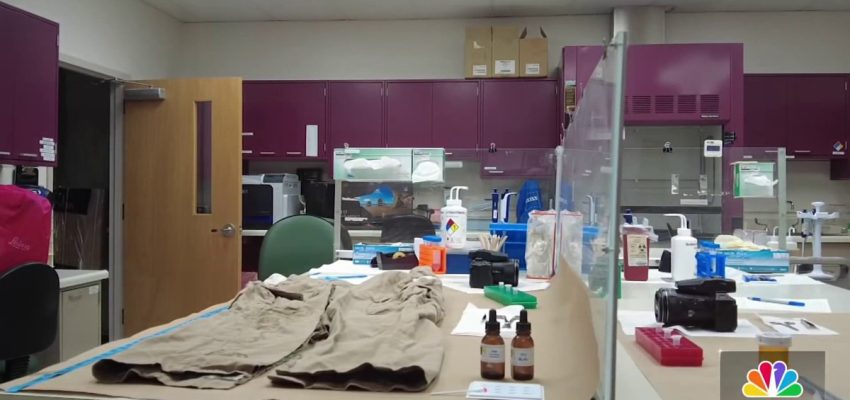
Recently, the Connecticut state forensics lab offered a rare glimpse into this vital world, peeling back the curtain during National Forensic Science Week. With over 100 professionals working daily to solve crimes, their initiative to give students an inside look highlights a crucial reality: while the outcomes of their work make headlines, the intricate process itself largely occurs away from public view. This valuable endeavor not only demystifies a critical field but also serves as an inspiring beacon for those considering a path in this demanding yet profoundly rewarding discipline. As an AI specialist and tech enthusiast, I find the intersection of science, technology, and justice to be one of the most compelling frontiers, and few fields exemplify this better than forensic science. Let’s explore the multifaceted landscape of these essential roles and understand what truly defines forensic science careers.
Forensic Science Careers: Unveiling the Scientific Detectives
At its core, forensic science is the application of scientific principles and methods to legal problems, primarily in the context of criminal and civil laws. It’s a field built on observation, rigorous analysis, and an unwavering commitment to objective truth. Contrary to the rapid-fire deductions often seen on television, the real-world practice of forensic science is a methodical journey, sometimes taking weeks or months to yield conclusive results. The so-called ‘CSI effect,’ where jurors expect every case to have definitive forensic evidence, underscores both the public’s fascination with the field and a common misunderstanding of its complexities and limitations.
The daily grind for professionals in forensic science careers is far from glamorous. It involves precise lab work, extensive documentation, and a deep understanding of scientific protocols. From the moment evidence is collected at a crime scene, often by trained forensic technicians or police officers, it enters a chain of custody that ensures its integrity until it reaches the laboratory. Here, a diverse team of specialists, each trained in specific scientific disciplines, examines everything from a single strand of hair to complex digital data. Their ultimate goal is to provide unbiased scientific information that can help investigators understand how a crime occurred, identify perpetrators, or exonerate the innocent. This work is not about intuition; it is about empirical data, reproducible results, and the unwavering pursuit of justice through scientific rigor.
The demand for forensic scientists continues to grow globally, driven by advancements in technology, increasingly sophisticated criminal methods, and a greater emphasis on evidence-based justice systems. According to the U.S. Bureau of Labor Statistics, employment of forensic science technicians is projected to grow 10 percent from 2022 to 2032, faster than the average for all occupations. This growth reflects the critical need for experts who can navigate the complexities of modern crime, ensuring that scientific insight remains at the forefront of legal proceedings. Whether working for state labs, federal agencies like the FBI, private forensic companies, or academic institutions, these professionals are indispensable components of the justice system.
A Kaleidoscope of Specializations: Pathways into Forensic Investigation
The term ‘forensic scientist’ is an umbrella for a vast array of highly specialized roles, each requiring distinct expertise and offering unique challenges. Aspiring professionals in forensic science careers can choose from a multitude of paths, each playing a crucial role in the investigative process.
-
Forensic Biology and DNA Analysis: Perhaps one of the most revolutionary advancements in criminal justice, DNA analysis allows for the identification of individuals from even minute biological samples such as blood, saliva, hair, or skin cells. Forensic biologists work meticulously to extract, amplify, and analyze DNA profiles, often comparing them to suspect samples or national databases like CODIS (Combined DNA Index System). This field has not only helped solve countless cold cases but also exonerated many wrongly accused individuals, cementing its status as a cornerstone of modern forensic investigation.
-
Forensic Chemistry and Toxicology: These experts analyze unknown substances found at crime scenes, ranging from illicit drugs to accelerants used in arson, and even poisons. Forensic toxicologists, in particular, play a vital role in determining the presence and effects of drugs and alcohol in biological samples from victims or suspects, providing crucial insights into cause of death or impairment. Their work often involves sophisticated analytical instrumentation, like mass spectrometry and gas chromatography, to identify and quantify substances with incredible precision.
-
Digital Forensics: In our increasingly digitized world, cybercrime is rampant, and almost every criminal activity leaves a digital footprint. Digital forensic analysts are the modern-day detectives of the cyber realm, recovering data from computers, smartphones, tablets, and cloud storage. They uncover deleted files, trace communications, and analyze network activity to reconstruct events and identify perpetrators in cases ranging from fraud and identity theft to child exploitation and terrorism. This specialization is rapidly expanding, requiring a unique blend of technical IT skills, legal knowledge, and an understanding of criminal psychology.
-
Forensic Ballistics and Firearms Examination: These specialists examine firearms, ammunition, and bullet trajectories to link weapons to crimes and reconstruct shooting incidents. They can determine if a specific bullet was fired from a particular gun by analyzing unique microscopic markings left on projectiles and cartridge cases. This often involves microscopic comparison, test firing, and extensive knowledge of firearm mechanics.
-
Forensic Anthropology and Pathology: When human remains are discovered, forensic anthropologists help identify victims, determine age, sex, ancestry, and estimate time since death, often from skeletal remains. Forensic pathologists, who are medical doctors, perform autopsies to determine the cause and manner of death, providing crucial information in suspicious or unexplained fatalities. Their work is vital in cases involving skeletal remains, mass disasters, or when the cause of death is not immediately apparent.
-
Trace Evidence Analysis: This field involves the examination of minute materials transferred between individuals, objects, and locations during a crime. This can include fibers, hairs, paint chips, glass fragments, soil, and gunshot residue. Even microscopic traces can provide critical links and corroborating evidence, helping to place a suspect at a scene or connect victims and perpetrators.
Each of these specializations demands a strong scientific background, typically a bachelor’s or master’s degree in a relevant scientific discipline (e.g., chemistry, biology, computer science, forensic science itself), followed by specialized training and often certification. Beyond academic qualifications, successful forensic scientists possess an acute attention to detail, strong analytical and problem-solving skills, excellent communication abilities for report writing and expert testimony, and an unwavering ethical compass.
The Future of Forensic Science: Embracing Innovation and AI
The landscape of forensic science is in constant evolution, driven by technological advancements. Current labs are already leveraging cutting-edge tools like advanced imaging techniques, high-resolution mass spectrometry for identifying complex compounds, and rapid DNA analyzers that can process samples in a fraction of the traditional time. The integration of robotics in laboratories is automating routine tasks, increasing throughput and precision while minimizing human error.
Looking ahead, the role of artificial intelligence (AI) is poised to fundamentally reshape many aspects of forensic science careers. As an AI enthusiast, I see immense potential for these technologies to augment human capabilities, making investigations faster, more comprehensive, and more accurate. AI algorithms excel at pattern recognition, which is critical in forensics. Imagine AI systems that can:
-
Enhance Fingerprint and Facial Recognition: AI can analyze vast databases of fingerprints or facial images with unprecedented speed and accuracy, identifying matches or even predicting characteristics from partial prints.
-
Automate Evidence Analysis: AI could rapidly sift through trace evidence, identifying and categorizing fibers, paints, or even soil compositions far more efficiently than human eyes.
-
Predictive Crime Analysis: By analyzing historical crime data, AI could help identify crime hotspots, predict future criminal trends, and even link seemingly disparate cases based on subtle patterns that human analysts might miss.
-
Digital Evidence Triage: In digital forensics, AI can quickly process enormous volumes of data, flagging relevant files, communications, or anomalous activities, significantly reducing the manual review time for analysts.
-
Advanced Reconstruction and Simulation: AI-powered tools could create more accurate 3D crime scene reconstructions or simulate bullet trajectories with greater precision, aiding in visual evidence presentation and understanding complex events.
However, the integration of AI also brings new challenges, particularly regarding data privacy, algorithmic bias, and the need for robust validation protocols. The ethical implications of AI in justice systems are profound, requiring careful consideration and the development of transparent, explainable AI models. Ultimately, AI will likely serve as a powerful assistant, automating repetitive tasks and uncovering hidden correlations, thereby freeing forensic scientists to focus on complex analysis, interpretation, and expert testimony—areas where human critical thinking and judgment remain irreplaceable. The future of forensic science careers will undoubtedly involve a close collaboration between human expertise and intelligent machines.
The work undertaken by the Connecticut state forensics lab, and countless others like it, is a testament to the vital role science plays in upholding justice. Their decision to open their doors, even for a brief period, is more than just a public relations exercise; it’s an investment in the next generation of scientific detectives. It offers a tangible connection to a career that, while demanding, offers profound satisfaction in contributing to a safer, more just society.
For students and aspiring professionals, understanding the depth and breadth of forensic science careers is the first step toward a fulfilling journey. It’s a call to those with a keen scientific mind, an unwavering ethical compass, and a desire to make a tangible difference in the world. The path is challenging, but the impact of uncovering truth through scientific rigor is immeasurable, ensuring that justice, in all its complexity, remains within reach.