
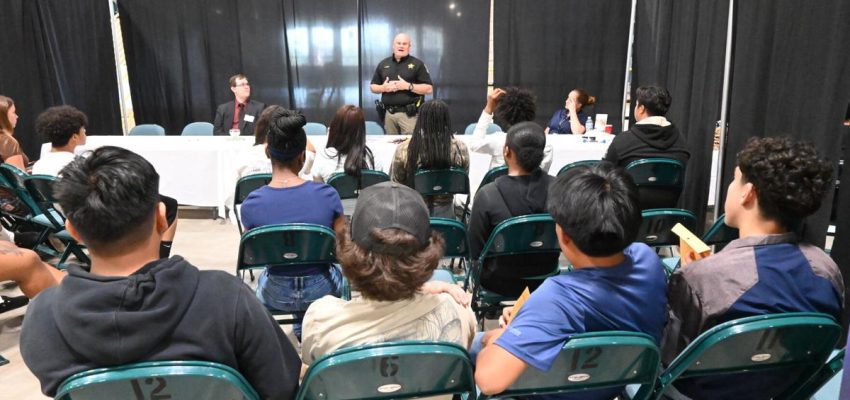

In an increasingly interconnected and technologically advanced world, the journey of discovering a future career path can feel both exhilarating and daunting for high school students. While traditional career fairs, like the Duplin County Schools Career and College Fair, continue to play a vital role in connecting young minds with educational opportunities and potential employers, a seismic shift is underway beneath the surface of the global economy: the rise of artificial intelligence. As an AI specialist, writer, and tech enthusiast, I’ve witnessed firsthand the profound implications of this technology, not just on industries, but on the very nature of work itself. For today’s students, exploring career options means looking beyond conventional roles and understanding how AI will reshape every facet of the professional landscape.
The imperative to prepare for an AI-driven future isn’t a distant concern; it’s a present reality. Automation, advanced analytics, and machine learning are already transforming sectors from healthcare and finance to agriculture and creative arts. This isn’t just about replacing human jobs; it’s about augmenting human capabilities, creating entirely new roles, and demanding a fresh set of skills. The students of today are the architects of tomorrow’s AI-integrated society, and understanding how to proactively engage with this technological evolution is paramount to their success and fulfillment.
Navigating AI Careers: A New Compass for Tomorrow’s Professionals
The concept of Navigating AI Careers has rapidly moved from a niche discussion to a mainstream imperative for educators, parents, and students alike. What exactly does it mean to navigate a career in the age of AI? It implies understanding not only the direct roles within artificial intelligence – such as AI developer or machine learning engineer – but also how AI is integrating into and transforming virtually every other profession. It’s about developing a strategic foresight, recognizing emerging trends, and cultivating a versatile skill set that allows individuals to adapt and thrive.
The traditional career landscape, often segmented into well-defined disciplines, is becoming increasingly fluid. AI is blurring boundaries, demanding interdisciplinary knowledge, and fostering collaboration between humans and intelligent systems. Consider the field of medicine: AI isn’t just assisting with diagnostics; it’s powering drug discovery, personalizing treatment plans, and streamlining administrative tasks. A future doctor might spend less time on routine data entry and more on complex patient interaction, ethical decision-making, and interpreting AI-generated insights. Similarly, in agriculture, AI-powered sensors and drones are optimizing crop yields and resource management, creating new roles for agricultural technologists who understand both agronomy and data science. These examples underscore that a career in the AI era doesn’t necessarily mean becoming an AI programmer; it means understanding how AI can enhance one’s chosen field.
The global AI market size, valued at over $150 billion in 2023, is projected to grow exponentially, potentially exceeding $1.8 trillion by 2030. This growth translates directly into new job opportunities. Roles like AI Ethicist, Prompt Engineer, AI Consultant, Data Scientist, Machine Learning Operations (MLOps) Engineer, and AI-powered UX/UI Designer were either non-existent or barely recognized a decade ago. Each of these professions requires a unique blend of technical acumen, critical thinking, and often, strong communication and ethical reasoning skills. For high school sophomores attending career fairs today, these emerging roles represent frontiers of innovation and substantial career growth, provided they are equipped with the right guidance and foundational knowledge.
The Shifting Sands of Employment: How AI is Reshaping Industries
The impact of artificial intelligence on the job market is multifaceted, characterized by both displacement and creation. While fears of widespread job losses often dominate headlines, the reality is more nuanced. Historical parallels, such as the industrial revolution or the dawn of the internet, show that technological advancements tend to create more jobs than they destroy, though the nature of those jobs changes dramatically. AI is no exception. Routine, repetitive tasks are prime candidates for automation, freeing up human workers to focus on activities requiring creativity, complex problem-solving, emotional intelligence, and strategic thinking.
For instance, customer service representatives might find AI chatbots handling basic inquiries, allowing human agents to address more intricate or emotionally charged situations. Accountants might leverage AI tools to automate data reconciliation, dedicating more time to financial analysis and strategic advising. The banking sector, once heavily reliant on manual data processing, now uses AI for fraud detection, personalized financial advice, and risk assessment, fostering new demand for specialists who can develop, maintain, and oversee these intelligent systems. Even creative fields are not immune; AI-powered tools are assisting graphic designers, writers, and musicians, changing workflows and opening avenues for entirely new forms of artistic expression and collaboration.
This transformation necessitates a fundamental shift in how we approach education and career planning. It’s no longer enough to specialize in a single, narrow field without understanding its intersection with technology. The most resilient professionals in the AI age will be those who can understand and interact with AI, leverage its capabilities, and critically assess its outputs. They will be lifelong learners, continuously updating their skills to remain relevant in a rapidly evolving technological landscape. This foresight makes the task of Navigating AI Careers for students not just about choosing a job, but about cultivating a mindset of continuous adaptation and innovation.
Essential Skills for the AI-Driven Workforce and Pathways to Success
Preparing for a career in the age of AI goes beyond just learning to code, though foundational computational thinking is undoubtedly valuable. The essential skills for the AI-driven workforce are a blend of technical proficiency, critical soft skills, and an ethical compass. These include:
- Critical Thinking and Problem-Solving: AI provides answers, but humans must ask the right questions, interpret complex data, and identify novel solutions that AI alone cannot conceive.
- Creativity and Innovation: As AI handles routine tasks, human creativity becomes even more vital for generating new ideas, designing solutions, and pushing boundaries.
- Digital Literacy and Data Fluency: Understanding how AI works, how to interact with AI tools, and how to interpret data are foundational. This doesn’t mean everyone needs to be a data scientist, but everyone needs to be data-aware.
- Adaptability and Continuous Learning: The pace of technological change demands a growth mindset. Future professionals must be willing and able to learn new tools and concepts throughout their careers.
- Ethical Reasoning and AI Governance: With AI’s growing power comes immense responsibility. Understanding the ethical implications of AI, fairness, bias, privacy, and accountability will be crucial for developers and users alike.
- Collaboration and Communication: Working effectively with diverse teams, including human-AI collaboration, and clearly communicating complex technical concepts will be indispensable.
For high school students, the journey to acquire these skills can begin long before college. Extracurricular activities like robotics clubs, coding camps, debate teams, and science fairs offer practical experience. Online courses platforms such as Coursera, edX, and Khan Academy provide accessible introductions to programming, data science, and AI fundamentals. Even seemingly unrelated subjects like philosophy, sociology, and literature become more relevant when viewed through the lens of AI ethics and societal impact.
Formal education pathways are also evolving. Universities are rapidly introducing specialized degrees in Artificial Intelligence, Machine Learning, Data Science, and even AI Ethics. However, a traditional degree in engineering, computer science, mathematics, or even disciplines like psychology or linguistics, can be profoundly enhanced by minors or concentrations in AI. The key is to seek out programs that emphasize interdisciplinary learning and practical application, ensuring students are well-equipped for Navigating AI Careers in diverse fields. Internships and apprenticeships, even in non-traditional tech companies that are adopting AI, are invaluable for gaining real-world experience and networking.
Events like the Duplin County Schools Career and College Fair, while perhaps not exclusively focused on AI, serve as critical touchpoints. They offer students the opportunity to ask questions, discover unexpected connections, and begin to envision how their interests intersect with technological advancements. Educators and career counselors at these events bear the important responsibility of highlighting AI’s pervasive influence and guiding students towards fields that offer both personal fulfillment and future resilience. By inviting representatives from AI-driven companies, or even professionals who utilize AI in non-tech roles, these fairs can become powerful platforms for demystifying the future of work.
In conclusion, the era of artificial intelligence is not merely an evolution; it’s a revolution that demands foresight, adaptability, and a proactive approach to career development. For high school students, understanding how to navigate this new landscape is paramount to unlocking a future rich with opportunity and innovation. The traditional methods of career exploration must now be augmented with an awareness of AI’s transformative power, ensuring that young people are not just prepared for jobs that exist today, but for those yet to be imagined.
As André Lacerda, I believe passionately that by fostering a culture of curiosity, critical thinking, and continuous learning, we can empower the next generation to not only adapt to the AI future but to actively shape it. The journey of Navigating AI Careers is an exciting one, full of potential for those willing to embrace change and commit to lifelong growth. Let us equip our students with the knowledge and skills they need to lead us into a smarter, more innovative tomorrow.










